Gudi Padwa 2016 Celebration in India
Gudi Padwa 2016 will be celebrated on the 8th
of April (Friday) which guarantees us an extended weekend to celebrate this
auspicious day in style. It is the festival that ushers in the New Year. As per
Hindu / lunar calendar it falls on the Indian month of Chaitra. Just like all
the Indian festivals even Gudi Padwa has a rich and varied history associated
with it. This festival, celebrated predominantly in Maharashtra, Konkan regions
and Goa also has many tales and legends related to it. In the South Indian
states of Karnataka and Andhra Pradesh it is called Ugadi. This festival
entails a visually delightful vibrancy and an atmosphere of revelry. Unlike the
western civilization which celebrates the 31st of December with
binge drinking, Indians celebrate Gudi Padwa, said to be the Indian New Year
day, with devotion and prayers.
Padwa is a Sanskrit word which means first.
Gudi Padwa is celebrated on the first day of the lunar calendar. Gudi Padwa is
a celebration of victory from all forms of evil.
This auspicious day ushers in prosperity
and fortune into a household. It is a good day to start new projects and buy
new and expensive items. Listed below are some of the facts of Gudi Padwa.
Gudi
Padwa and the Legend of Chatrapati Shivaji
The victory or victories of the most
revered Hindu king and a righteous man, Shivaji led to the celebration of Gudi
Padwa. Maharashtrians believe that it was their beloved king who first raised a
Gudi. This tradition caught on and every Maharashtrian household hoists a Gudi
on this day.
Gudi
Padwa and the Legend of Lord Rama
Legend has it that when Lord Rama returned
to His kingdom Ayodhya after an exile of 14 years, the people of Ayodhya
welcomed Him by raising Gudis out of their windows. This day coincides with the
first day of ‘Chaitra Navratri’ and ‘Ghatasthapana’ and is hence considered
extremely auspicious.
Gudi,
a Symbol of Victory
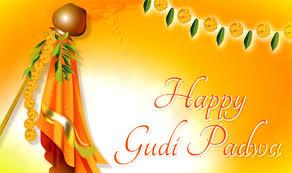
A hoisted Gudi is the most common sight on
this auspicious day. People proudly and prominently hoist an ornately decorated
bamboo stick with an inverted copper vessel outside their windows or the main
gate of their house. This emblem is called a Gudi and it is wrapped in bright
yellow and green clothes adorned with zari work which is tied to the tip of the
bamboo. It is further decorated with mango and neem leaves, garland made of marigold
flowers and red flowers. An inverted copper or silver pot is placed on the top
of the bamboo which captures and transmits the positive vibrations found in
abundance in the atmosphere on Gudi Padwa.
Different Names of Gudi Padwa in India
Gudi Padwa is celebrated in different parts
of India under different names. The names may be different but the belief in
this day is the same throughout.
|
Different
Names of the Festival |
Regions |
|
Gudi Padwa |
Maharashtra, Goa |
|
Goru Bihu |
Assam |
|
Ugadi |
Karnataka, Andhra Pradesh |
|
Vishu |
Kerala |
|
Baisakhi |
Punjab |
|
Puthandu |
Tamil Nadu |
|
Naba Barsha |
West Bengal |
Food
Items Made During Gudi Padwa
No Indian festival is complete with a
special delicacy that marks that day. Gudi Padwa is no different. Neem leaves
are consumed on this day, either raw or mixed with jaggery and tamarind. This
is a tradition followed by most elderly. Puran Poli or Poori along with
Shrikand is prepared in Maharashtrian households. In Konkan regions Sanna’ and
‘Kanangachi Kheer’ (a type of kheer made with sweet potato, coconut milk,
jaggery and rice flour) is popular.
Post Your Ad Here
Comments