Gemstones and Semi-Precious Jewellery
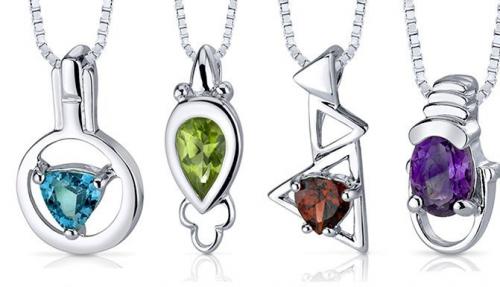
Overview
Both semi-precious and precious stones are
part of the gemstones category. A gemstone is that part of a mineral which in a
refined form is used in the creation of jewellery. ‘Semi-precious stone’ is a
term which is used commercially as a marketing tool for selling precious
stones.

Semi-precious stones are extensively used
in fashion and custom jewellery making. In order to understand semi-precious
jewelry it is essential to understand precious stones as the term semi-precious
stones is used in relation to precious stones. Diamonds, emeralds, rubies,
sapphires are Precious stones and all other stones are semi-precious stones.
Let’s have a look at these to gain a better understanding of the different
types of semi-precious stones available in the market.
Amethyst
Amethyst is of a vibrant purple color. It belongs to the
quartz group of minerals and receives its color from aluminum and iron
impurities.
Citrine
Citrine comes from a family of quartz gemstones. The word
‘Citrine’ is derived from a French word and means lemon. It is of a golden
color.
Turquoise
Turquoise is of a bluish-green color and
is derived from the word ‘Turkish’; Turkey being the country which brought the
mineral to Iran from Europe.
Blue Topaz
The Egyptians were the first to discover this stone 2000
years ago. It is made of hydroxyl and fluorine and is an aluminum silicate. In
its purest form it is colorless.
Peridot
This stone is found in only one color-vibrant green. It
falls under the olivine group of stones which is part of the
forsterite-fayalite mineral series.
Jade
Jade covers a wide range of gemstones. Nephrite and Jadeite
are the only two pure jade stones.
Garnet
The six common types of Garnets are-
Spessartie, Grossularite, Almandine, Pyrope, andradite and Uvarovite. Some
mixtures of garnets are pyrope and almandite.
Tourmaline
What makes it rare is the fact that
Tourmaline has an exclusive spectrum of colors. The word tourmaline means
‘stone of mixed colors’.
Moonstone
Moonstone is a mixture of plagioclase, albite
and sheet mica. It is an opaque and transparent obligoclase and has an
effervescent glow that makes it unique.
Malachite
Malachite is a copper carbonate and has a
distinct green veining. It is not a very hard stone and is found close to
deposits of copper ore. Malachite is most popularly extracted from Russian
Mountain mines.
Jasper
The word Jasper means ‘Spotted Stone’. It
is made of certain foreign materials that provide it its streak, appearance and
color and make up for 20% of the stone.
Rose Quarts
Rose Quarts has a unique soft pink color.
It is considered to have its derivatives from small amounts of titanium
impurities. The impurities tend to deepen the color and add a certain
cloudiness to it.
Tanzanite
Tanzanite is known for its success across
the globe and has been in demand in Tanzania since 1967. The color spectrum of
Tanzanite ranges across three colors, green, purple and blue.
Opal
These elusive stones are worn universally.
They are derived from Mexico, Brazil, United States and Australia. Each of
these can be distinguished from any other gemstone.
Pearls
Pearls are created by bivalve mollusks;
usually mussels and oysters. The difference of color depends on the type of
oyster or mussel and also varies with the change of water.
Onyx
The Onyx that is popularly used is created
by dying it to derive the jet black color that people are accustomed to. It
naturally occurs in groups of black and white. It is a cryptocrystalline type
of quartz and is chalcedony, the black form.
Aquamarine
It belongs to the same family as emerald
or beryl and is very well known for the wide array of different shades of blue.
Conclusion
With all the variety of jewellery available in the market, it is very important to understand the difference between precious and semi-precious jewelry. Be it fashion jewellery, custom jewellery or precious and semi-precious jewellery, indulging in any kind of sale or purchase should be avoided without a basic understanding and working knowledge of these.
Post Your Ad Here
Comments