Dussehra 2016 - Some Unknown Facts
According to the Vedic calendar, Vijayadashmi or Dussehra Festival is celebrated on the tenth
day of Shukla Paksha in the month of Ashvin i.e. September-October. It is
basically the tenth day after the Navratri.
Dussehra originates from a Sanskrit word "Dasha-hara", which
means the elimination of 10 evil qualities.
Dussehra is the celebration of the victory of good over evil
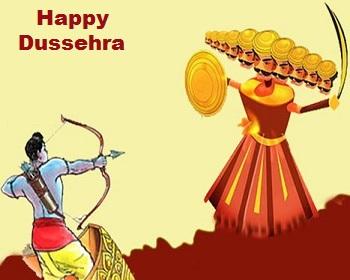
while remembering the incident of Lord Rama's victory over the demon king Ravana
to rescue his captured wife Sita. It is also celebrated by the farmers in some
regions of India like Punjab because of the good harvest season. On the first day of Navratri, people in
Punjab sow pulses, cereals, barley and other grains and after nine days, the
seeds sprout. On Vijayadashami, they immerse the seedlings in water. Farmers in
Punjab generally harvest the kharif crop after the Vijayadashmi Festival.
Dussehra 2016 is
arriving on the 11th of October according to the Gregorian calendar.
The reason why we
celebrate Vijay Dashmi every year is to remove all the bad qualities within
us and get inspired by the all the good qualities of ‘Maryada Puroshottam Shri
Rama’, the Ideal Man.
Here are some important and less facts about Dussehra festival:
- Dussehra
is called “Dashain”, in Nepal
- Dussehra
or “Dasara” is the national festival of Nepal.
- In
Himachal Pradesh, It is called “Kullu Dussehra”
- Dussehra is also known by the name of
Vijayadashmi, which means victory on the tenth day.
- The Dussehra festival is celebrated only in
India but also in countries like Bangladesh, Nepal and Malaysia with same
amount of zeal and joy
- Large dummies of demon Ravana, Kumbhkarna and
Meghnath is burnt on this day along with firecrackers.
- Dussehra celebrations started somewhere around
17th century in Mysore.
- It is believed that it was the day of Dussehra,
when great Ashoka converted to Buddhism.
- Ravana had ten heads and each head represented his
one evil so the ten evils are Jealousy, Anger, Pride, Ego, Lust, Selfishness,
Infatuation, Greed, Attachment and Hatred. Moreover Dussehra is the festival to
win over these evils.
- According to mythology, the Ram Setu (30 Km long
bridge) was built by the monkey Gods (Vanaras). Lord Rama took this path to
reach demon king Ravana in Lanka and killed him.
- It is the day of the Dussehra, when Devotees
immerse the idols of Goddess Durga after the long celebrations of Durga puja
which is known as Visarjan.
Dussehra includes
three Muhurts or timings for the rituals. The Vijay Muhurt comprises the Shami
puja for the Kshatriyas to do the puja of any Shami tree situated in the
north-east of the region. Then comes the time of the Aprahna Puja where Devi Aparajita
is worshipped to attain victory over anything. The best time to perform
Aparajita Puja is Aparahna time as per Hindu division of the time, And finally
the Dashmi Titthi or Seema Avalanghan.
This Dussehra 2016 date,
the Muhurts for the rituals are as follows:
- Vijay Muhurta - 14:09 to 14:55
Duration: 46 Minutes
- Aparanha Puja Time - 13:22 to 15:41
Duration: 2 Hours 19 Minutes
- Dashmi Tithi Starts: 22:53 on October 10, 2016
Dashmi Tithi Ends: 22:28 on
October 11, 2016
Post Your Ad Here
Comments