Driverless Car: A Tough Challenge For The Car Insurance Industry
With 94%
of car accidents happening on account of human failure, driverless cars could drastically reduce accidents. Thanks to their
video cameras and hi-tech technology, such as radar sensors,
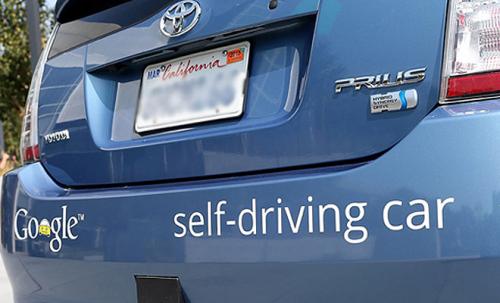
lasers and 3D mapping, navigation will be a breeze. Take for instance, Google cars have driven 1 million
automated miles of testing in since 2009. They are currently plying on test in Mountain
View, California and Austin, Texas in the United States.
Benefits of self-driven cars
Self-driving
cars largely cluster around the greater good.
1. Fewer accidents: Think about it, computers don’t get bored. They don’t drink.
They don’t take calls on their smartphones while driving. And, they know the
rules of the road. According to studies in the US, driverless cars could reduce
roughly 93% of the 6 million mishaps that are caused by human error.
2. Better road utilization: We are not very precise while driving, keeping our cars in an
even gap or a very close gap. Computers at the wheel can maintain tight gaps
with low elasticity as they move back and forth, meaning more cars on existing roads
with greater safety.
3.
Better fuel utilization: Computers can be programmed to operate the
accelerator and brake in a way that preserves the kinetic energy other than
dumping fuel on the cylinders in one moment only to convert that speed into
brake dust and heat. In fact, current cruise control can save 14% of fuel when
implemented.
4.
Greater productivity: On an average, we spend about 200 hours a
year or 45 minutes per day driving to and from office. Think of what you could have
done with that spare time.
5.
Boon for the differently-abled: Being differently-abled should not
restrict one from accessing public spaces. With self-driven cars, a new
wealth of possibilities comes to fore. For example, self-driven cars such as Absolute
Design’s Equal cater specifically to the differently-abled. With its all-electric
environment-friendly power, easy-entry design, and push-pull hand control
system, the differently-abled will enjoy a sense of freedom which was earlier
unobtainable.
Leading car manufacturers, such as Nissan,
Mercedes and General Motors, are among those who confidently say that self-driving
cars will begin to arrive as early as 2020.
What
do driverless cars hold for auto insurance companies?
Due to the breakthrough in technology,
motorists could see a gradual but substantial drop in the number and
seriousness of accidents for the long term as well as much cheaper car
insurance. Automated vehicle technologies appear to have the potential to significantly reduce the number of
automobile crashes. This could eventually lead to car insurance becoming a
significantly less profitable industry.
Google’s
self-driven cars were involved in 11 minor crashes over 6 years which is not a
lot according to Google. By comparison, the human population crashes about 0.3
times for every 100, 000 miles driven per driver according to the National Highway
Traffic Safety Administration.
Given the disruptive impact that
driverless cars may have on the auto insurance industry, auto insurers would
have to come up with insurance plans specifically designed for self-driven cars.
About Author:
Rosy Diana is web enthusiastic and self declared blogger and writes about car insurance comparison and motor insurance. She likes to cook and reading in leisure time.
Post Your Ad Here
Comments