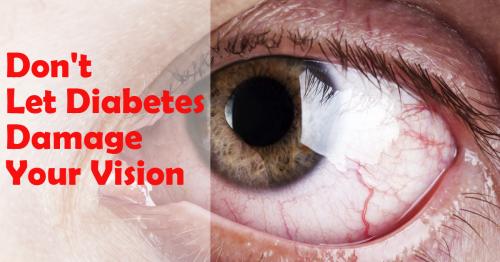
Don't Let Diabetes Damage Your Vision
Diabetic retinopathy causes progressive damage to the
retina, the light-sensitive lining at the back of the eye. It is a serious
sight-threatening complication usually seen in diabetics. The disease is
characterized by too much sugar in the blood, which can cause damage throughout
the body, including the eyes.
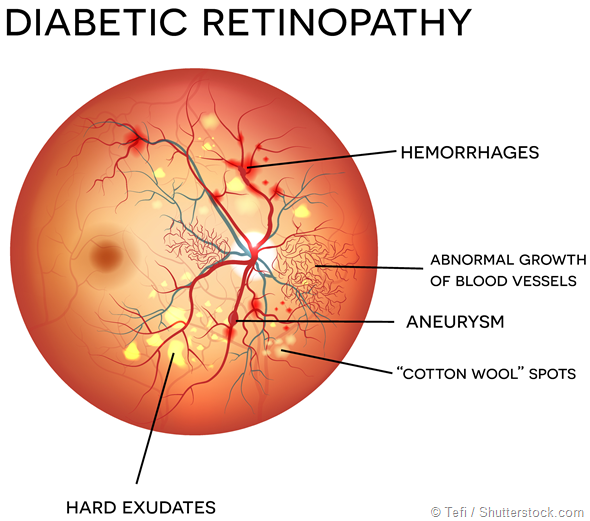
In diabetic retinopathy the blood vessels of the retina are
damaged to such an extent that may swell and start leaking blood or other
fluids. The disorder usually affects both the eyes and eventually leads to loss
of vision.
The longer a person has diabetes, the more likely they will
develop diabetic retinopathy. If left untreated, diabetic retinopathy can cause
blindness.
Common Signs/Symptoms
Some of the common symptoms of diabetic retinopathy
includes:
• Seeing spots or floaters
• Blurred vision
• Having a dark or empty spot in the center of your vision
• Difficulty seeing well at night

How Does Diabetic Retinopathy Affect Your Eye Sight
Usually when people with diabetes experience long periods of
high blood sugar, fluid can accumulate in the lens inside the eye that controls
focusing. This changes the curvature of the lens, leading to blurred vision.
However, once blood sugar levels are controlled, blurred distance vision will
improve. Thus, its important that patients with diabetes should control their
blood sugar levels as that slows down the progression of diabetic retinopathy.
Often the early stages of diabetic retinopathy have no visual symptoms.
Diabetes may also increase the risk of developing cataracts
and glaucoma at later stage. Ironically, some people even fail to realise that
they have had diabetes for several years until they begin to experience
problems with their eyes or vision.
Therefore, at Sharp Sight, we advise diabetics and also
people who have family history of diabetes to have a comprehensive dilated eye
examination once a year.
Besides, as a caution, people who have diabetes and high
blood glucose level, they have a higher risk of developing retinopathy. Blood
glucose levels are measured using the HbA1C test, or glycohemoglobin test, that
shows how well an individual's diabetes is being controlled.
If a person has both diabetes and high blood pressure, they
have a higher risk of developing advanced retinopathy. Therefore, taking steps
to prevent high blood pressure, such as giving up smoking and cutting down on
salt in diet, can help reduce risk of developing retinopathy.
Treatments
At Sharp Sight (Group of Eye Hospitals), one of the best eye
hospital in Delhi, we offer the latest Diabetic Retinopathy Treatment in
Delhi NCR at very affordable cost. The treatment procedure offered by our
ophthalmologists who are some of the best retina specialist in Delhi help to
relax and heal the damage to the retina due to complications of diabetes.
So, if you are looking for Diabetic Retinopathy Treatment in
Delhi NCR contact us immediately. Early diagnosis of diabetic retinopathy can
only help to treat and control any damage done to eyes.
To book an appointment for Diabetic Retinopathy Treatment
in Delhi, contact our representative at: Visit http://www.sharpsight.in
Post Your Ad Here
Comments