DC/DC converters explained – make sense of what they are and what they do
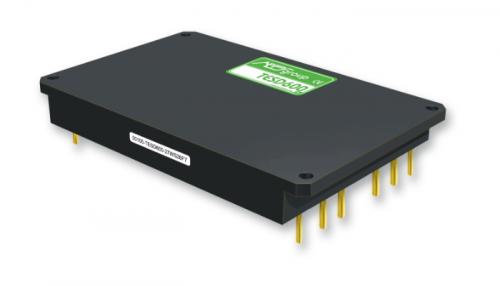
If you’re wondering what are those DC/DC converters that your power engineering friends keep talking about, then this article is here to lend a helping hand. Without further ado, let’s jump right into explaining!
DC/DC converters are there whenever you need to change the voltage
These devices are basically electronic circuitries that convert the voltage from one direct current (more about direct current here) source into a different direct current voltage level. The voltage level can be either increased or decreased according to the needs of the device that is supplied. The change in the voltage can be anything from quite low (for example in smaller batteries) to high-voltage DC transmissions (in big electric pylons). In your daily life, you’re probably using them without even knowing it – in cell phones, laptops and other devices that draw their power from batteries.
Switch mode converters – the more widely used
Most converters make use of the so-called switching technology. The input energy is temporarily stored and afterwards released to the output at another voltage level. The input energy storage happens in magnetic field components (for example inductors or transformers) or electric field components (capacitors).
The upsides of this solution are a higher efficiency, smaller required size of the components and better thermal management and endurance.
The energy stored in the switched converters can be managed in multiple ways, with the resulting output voltages being either lower than the input voltage (the so-called buck), greater than the input voltage (the so-called boost) or both (buck-boost) according to the individual converter.
The linear converters
Aside from the switched converters, the so-called linear ones also exist. These are somewhat less complex than the switching ones. Their principle is relatively simple – a linear component (or components arranged in series) is used to regulate the output, with the resulting voltage always being lower than the input. The excess voltage is dissipated as heat.
The upsides to this solution are:
Simple configuration
Fewer external parts
Low noise levels
While the downsides are:
Lower efficiency
Big heat generation
Only the lowering of the voltage is possible
Thought the majority of both switched and linear converters are unidirectional from input to output, it is possible to design the switched ones in a manner that allows for bidirectional movement.
This article deals with differences between linear and switched in more detail.
These devices are in an ever higher demand
The converters were, are and will continue to be a desired component in almost every modern industry, including automotive, telecommunications electronics, IT, military, aerospace, visual advertising and many more.
You can find them in most of the currently developed technologies in automotive industry, such as the Advanced Driving Assistant Systems, V2X communications and more.
They are also widely used in modern military equipment, including jets, UAVs, mobile security, and many cutting-edge technologies that are currently being tested.
Hand in hand with the development in the fields that need them goes the development of the converters themselves, with the increasing demands being put on them in terms of light weight, effectivity and better cooling. In short, their story is far from being over!
Are you yourself familiar with these devices? Can you name some devices where you use them daily?
Post Your Ad Here
Comments