Chinese blooming tea should be more than pretty to the eyes
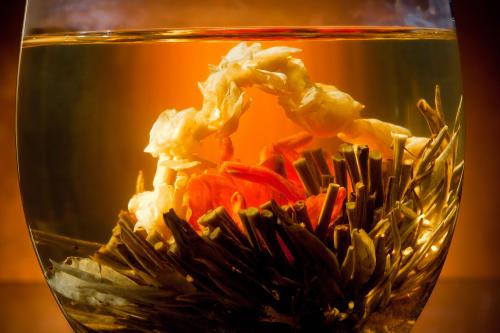
There are drinking teas and then there are teas that are brewed as much for the visual pleasure of the brewing as for the drinking. Among the latter is blooming tea.
Chinese blooming tea—also called flowering or blossoming tea—is something of a hybrid among teas. It is a drink that is brewed from tea buds and leaves from the camellia sinensis bush, with flower petals infused along with the leaves. This description might be confusing to novice tea drinkers; after all, aren’t there also scented teas that utilize flowers for scent? There certainly are.
However, scented tea—such as the Rose Black Tea offered by Wild & Bare Co. at its online tea store (wildandbare.com) merely mixes dried petals (or other dried natural materials, such as fruit) with processed tea leaves to produce a scented nectar. Neither the leaves nor the petals are especially appealing as they give up their essence in the hot water. They mostly look like soggy leaves and petals.
Chinese blooming tea, on the other hand, can be a thing of beauty. Craftsmen bundle tea leaves and petals into tight little balls. Therefore, it is not loose tea, as such. The artfully bundled leaves and petals are transformed when they enter a hot beaker of water. When they unfurl during infusion, the leaves form a floating, green pad from which a crafted “flower” rises toward the surface of the water.
The organic tea thus crafted comes in many colors and flavors, all of which can be found in a Chinese tea shop. In fact, tea shoppers are motivated more by the color and flower used in the crafted tea than they are by the composition of the tea itself. Blooming tea is very much a visual centerpiece for a tea gathering, as opposed to the pleasure that comes from sipping tea with friends.
Because of this emphasis on appearance, some blooming teas are disappointing drinks. Tea drinkers sometimes marvel at the transformation of a ball of leaves into a resplendent sight, but they hardly raise their cups to their lips. The organic tea just isn’t that flavorful. Even more disappointing is when the balled leaves fail to open as advertised and, if they do, look not at all like the picture on the tea package.
Such tea episodes are a consequence of poor shopping at an online tea store or a Chinese tea shop. As a result, selection is made of a Chinese blooming tea produced by an undependable brand, perhaps because it is less expensive. In the end, the buyer of such a tea product ends up being let down both in what he sees in the glass pot and what he tastes from his cup.
A sophisticated tea shopper soon distinguishes between reputable tea companies and the rest. He only buys organic drinking teas that can be pleasurably sipped at the same time the sewn-together leaves and petals put on a show in his pot. From such teas, contentment blooms and endures long after the pot has been emptied.
Post Your Ad Here
Comments