Cat 5 versus Cat 6
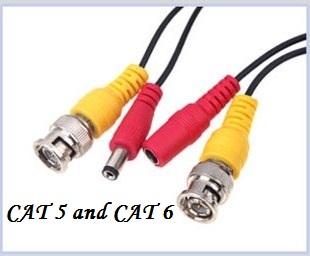
Cat 5 and Cat 6 are also known as category 5 and category 6 respectively of twisted pair copper wire cables. Both Cat 5 and Cat 6 have four sets of twisted copper wire ended by RJ45 connectors. These cables are utilized for data transmission. Telecommunication Industry Association (TIA) and Electronic Industries Association (EIA) define principles for networking cables and based on these principles the cables are categorized into diverse categories.
CAT 5
Cat 5 cable is a 5th generation networking cable and the most well known one. The Statement for Cat 5 was explained by EIA in 1985.There is two sorts of Cat 5 cables:
- Unshielded twisted pair (UTP) which is generally
utilized in the United State (US).
- Screened twisted pair (SCTP) which is more
famous in Europe. SCTP cables have an extra layer of security which works as a
shield against obstruction.
Cat 5 cables support 10 or 100Mbps Ethernet. It has 100MHZ capacity to transmit the data. Another classification that can be utilized for Cat 5 cables is strong and stranded. Strong Cat 5 cables are inflexible and more stable which makes them suitable for utilization as long distance cables. Stranded Cat 5 cables are known for their elasticity and utilized regularly as patch cables.
Benefits:
- It is approximate 40% less costly than Cat 6
cables.
- They can be utilized for a diversity of
applications, for example, in the TV and broadcasting networks for transmitting
audio and video signals or in PC systems for LAN, Ethernet or internet data.
Limitations:
- It is slower than Cat 6 cables.
CAT 6
Cat 6 is more advanced and 6th generation networking cable and has better execution. Cat 6 was explained by TIA in 2002. The structural expansion in Cat 6 when contrasted with Cat 5 is a longitudinal separator which puts aside the four sets of twisted copper wires from one another resulting in decreased crosstalk, speedier information speed and multiplying of data transmission. Cat 6 cables support gigabit Ethernet and have a capacity of 250MHZ of transmission of data. Cat 6 cables with their modern features symbolize the future of networking cables.
Cat6 Residential Standards
There are two evaluations of Cat 6 cables utilized as a part of private networks – Grade 1 and Grade 2. Both grades utilize a star topology. Both support administrations, for example, TV, satellite, CATV and information. Also Grade 2 supports multimedia and other modern services.
Benefits:
- Cat 6 cables are backward relevant with Cat 5 and
other older principles.
- Use of longitudinal separator diminishes
crosstalk and gives higher information speed.
- Applications, for example, VoIP, Video
Conferencing, streaming digital videos have better execution when utilized with
Cat 6 cables.
- It is not difficult to install.
- Cat 6 cables have the capacity to support
high-end security applications.
Limitations:
- Cat 6 is more costly than Cat 5 cables.
- Cat 6 gives gigabit speed just if all segments in
the network likewise work at that speed.
Comparisons
between Cat 5 and Cat 6
To brief the distinction between the two categories of
twisted cables, it can be said that Cat6 is faster than Cat5 additionally more
costly. Most existing networks today are still based on Cat 5. Cat6 is a best investment for
the future yet for Cat6 to be taking care of business, each part in the network
should likewise be as quick as the cable. It is ideal to go for Cat6 just if
the whole network can keep running at gigabit speed.
Post Your Ad Here
Comments