Buying Black Pearl Jewellery
Overview
These pearls are a fresh break from
the traditional white pearls. This is also one of the prime reasons behind the
popularity of black pearls. They are much popular among many women these days
because they lend an element of timeless grace and sophistication to the
overall look. These will also make a special and unique addition to the
jewellery collection of any woman.
There is only one source from which
cultured black pearls can be derived however, the way in which they are
processed can vary. As we all are aware, pearls are made naturally. However,
sometimes these natural pearls need to be processed in order to protect them
from getting dents and nicks. Processing of pearls makes them tougher and more
durable that pearls that have not been processed. There are a number of things
such as luster, thickness, color and more that must be kept in mind while
indulging in a purchase involving black pearls.

What to Look for in a Black Pearl
Thickness
The size of a black pearl is
measured in two ways. First is the shortest diameter, and the second is
measuring along the longest diameter and the one after it. The most acceptable
size for a black pearl is somewhere between 9 to 12 millimeters. These are, by
far, some of the most common.
It is very rare to find a black pearl
that has a size between 14 to 16 millimeters. Such pearls are not just
considered rare or precious, they are also considered to be of high value. An
even more rare variety of black pearls is one that lies between 16 to 18
millimeters. These tend to be even more valuable and expensive than the former
category.
The life quality and luster of a
black pearl is determined by its nacre thickness. The layers that successively
get deposited around the nucleus of the pearl are known as nacre. These can be
thick or they can be thin. The pearls with thick nacres are considered to be
more appealing and boast of a more attractive appearance than their
counterparts. The nacres also cause a considerable influence on the overtones
and luster of the pearl.
Luster
The luster of a pearl refers to the
subtle gleam or shine that the pearl carries. If we were to talk on a more
technical lever, we can say that, the amount of light that is reflected by the
surface of a pearl and the quality of light reflected is what is known as the
luster of the pearl. As the light hits the surface of the pearl, a number of
nacre layers reflect this light into various directions leading to an appealing
luster.
Quality
The outward appearance of a pearl is
known as its surface quality. Since pearls are produced naturally, they tend to
have a number of imperfections. In the case of a gemstone, imperfections are
considered to be a flaw while in the case of a pearl, they are considered to be
blemishes. A blemish on a pearl is visible to the naked eye. Identification
does not require any specific type of instrument. Surface quality is measured
in four categories: Quality A, Quality B, Quality C, and Quality D. These
ratings are scaled, based on the smoothness and amount of surface blemishes
that are visible.
Color
The pearls that are produced from the
black lipped oysters tend to be black, gray, blue or brown in color. These may
also hold attractive overtones such as pinkish gray, gold, silver etc. All
these overtones have a particular name in the jewellery industry.
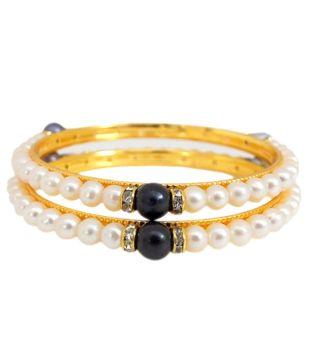
Conclusion : The popularity of black pearl jewellery is on the rise and has taken the jewellery market by a storm. Imitation bangle wholesalers indulging in the supply of artificial bangles and other bangles are also actively dealing in the supply of black pearl bangles. This only means that the trend of black pearl jewellery is here to stay.
See detail http://www.voguecrafts.com/Silver-fashion-Jewelry.php

Post Your Ad Here
Comments