A puncture can cause serious damage to a tire, but after a flat should you replace one or two tires? Here's what experts suggest is safest.

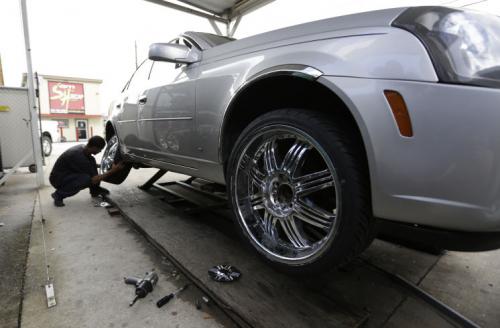
A puncture can cause serious damage to a tire, but after a flat should you replace one or two tires? Here's what experts suggest is safest.
A puncture is a pierce or break in the tire wall. It can be caused by driving over a sharp object and when the tire has experienced shock.
You can often identify a puncture just by the appearance of the tire, which will deflate faster than normal or will have an unusual shape.
Also, in the event of a puncture, the driver will notice a vibration when driving, if not difficulty controlling the vehicle.
Not all punctures require you to replace your tire. Some punctures, like those due to normal wear and tear, can simply be repaired. To that end, if the metal structure of the tire is not visible, or if the inside of the tire has not been damaged, you probably won’t need to replace it.
However, there are situations when changing two tires—usually the one directly opposite the damaged tire—is necessary.
When a puncture occurs, it is important to consider whether to change just the damaged tire or a second one as well. The fact is that in some cases, it’s necessary to replace the corresponding tire on the other side of the vehicle as well. For example, if the right front tire of your car is perforated, you may also need to change the left front tire.
If the puncture is due to wear and tear, but the opposite corresponding tire appears less damaged, ask your mechanic to take a look. You may need to check your alignment if you notice uneven wear on your tires. Irregular tire wear can be the result of misaligned wheels, which will affect the performance of the tires and significantly reduce their lifespan.
If you are unsure as to whether you need to change the two tires, seek the advice of an expert mechanic. They will explain everything and advise you on the proper new tire(s) to choose depending on your needs.

Comments