About Pneumatic Control Valves
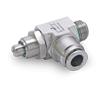 Control valves in pneumatic systems allow or inhibit the compressed fluid flow allowing you to manage the flow rate and other related quantities such as pressure, temperature, and fluid level.
Manufacturing process plants have many control loops - using control valves - networked together. They are designed to keep the pressure or temperature etc., within a certain operating range to ensure the quality of the end product.
To ensure the safe and smooth functioning of your plant, and to make the ideal quality product find pneumatic control valve suppliers who can provide you valves made with high precision and reliability.
Types of Pneumatic Control Valves
According to their function, pneumatic control valves can be classified as:
Direction control valve – These valves are used for controlling the start, stopping and direction of fluid flow
Non-return valves - These permit flow of fluid in one direction only
Pressure control valves – These valves control the pressure of the fluid that is flowing through the valve/through the sub-system controlled by the valve.
Flow control valves – These valves regulate the rate of fluid flow passing through the valve when it is open. This is done by varying the size of the flow passage based on a signal from a valve controller.
Operation of Pneumatic Flow Control Valve
Valves can be operated manually. Automatic control valves also exist. These have three main parts:
Valve actuator - which moves the valve's modulating element, such as a ball
Valve positioner - which ensures the valve has reached the desired degree of opening.
Valve body – the body of the valve which contains the actuator and positioner.
Pneumatic valve actuator
A pneumatic control valve actuator converts energy in the form of compressed fluid, into mechanical motion. It consists of a piston which develops the motive power. Air is located in the upper portion of the cylinder. If pressure rises in the system, it forces the piston to move the valve control element, hence closing or opening the valve.
Pneumatic Valve Positioner
A pneumatic valve positioner is a dedicated controller with a pneumatic nozzle and flapper arrangement and a mechanical linkage to sense the valve actuator movement. It ensures the valve control element – say ball or butterfly - moves to the desired position.
Tiny silicon chip micro-processors have enabled "smart" valve positioners which are very popular.
Pneumatic Valve Body Materials
Valve bodies are made of a wide variety of materials depending on the type of fluid flowing through the system – whether a toxic gas or a corrosive fluid or water or inflammable gas or air etc.
Carbon steel valves are used in industries calling for high heat and pressure tolerance, while the chemical industry makes extensive use of thermoplastic polymer valves. Some other types of valve bodies are:
Iron – Used for non-corrosive fluid systems
Bronze – Used in water or dilute acid systems
Monel – Used in marine seawater systems as it is resistant to non-oxidising acids
Stainless Steel – Used for oxidising or even corrosive fluid at high temperatures and pressures.
The pneumatic operation of valves is an industry standard due to reliability and affordability. So, find pneumatic control valve suppliers who can provide you high quality and reliable valves for your plant.
If you are looking for Pneumatic Fittings Suppliers In India, the author of this article suggests Sealexcel India Private Limited.
Advertise on APSense
This advertising space is available.
Post Your Ad Here
Post Your Ad Here
Comments