A Quick Guide To Two Of The Modern Dust Suppression Systems
Dust is a known health hazard. When aggregate, coal, cement, limestone, silica and various other breathable particles of dust whose size ranges from 0.1 to about 70 microns are airborne they immediately become not only a health hazard but also an occupational nuisance. Dust is also a cause of lost materials and physical discomfort and a leading cause of wear on conveying motors, belting, idlers and pulleys. Thus, it is right to say that dust is a leading cause of added operating costs and reduced productivity. The conveyor transfer points are a major source of fugitive material in the form of airborne dust or spillage. While it is not possible to get rid of all the dust in the atmosphere, dust suppression system can help reduce the quantities of dust produced since in most cases it is not possible to change the production technique or system design.
So what is dust suppression?
Dust suppression can be defined as the application of chemicals or water to body of material or to air above the material in order to prevent carrying off of fines to the air or to return the airborne fines to material bed, respectively. The common methods of dust control include the following-
- Wet system
- Surfactant and water sprays/ Fog and foam generation systems
All these systems of dust suppression require the use of different volumes of moisture.
Wet suppression:
By wetting the fine particles, you increase the weight of each and this makes them less likely remain airborne. Thus, moisture will create heavier and larger group of particles, making their movement and being carried by air difficult. For this to be achieved, spray nozzles of the right size must be used at the source of dust. In the wet system, water may also be applied so as to create some ‘curtain’ around the point where dust is released in to the atmosphere so as to ensure that any dust particles which become airborne immediately get in to contact with water, get heavy, coalesce together and fall down.
The effectiveness of wet suppression system depends on applied water’s velocity, the nozzle orifice size, and also the spray nozzles location. The most effective dust suppression system in this category must be of low velocity. This is because the high velocity movement of air in high velocity systems can still keep in suspension the air particles. Measures to make it easier for the water to merge with the dust particles, such as reducing the size of water droplet, increasing frequency of the droplets, increasing velocity of the droplet, or decreasing the droplet surface tension are some of the ways of improving the efficiency of wet systems of dust control.
Dry-fog dust suppression:
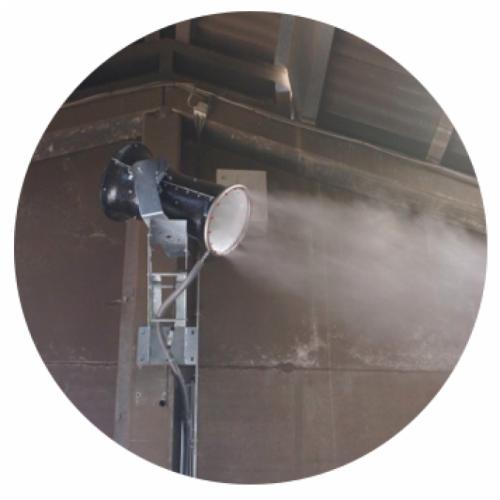
In this system, an ultra-fine system of fog suppression from a dust cannon or other device acts like fabric filter such that it cannot let pass through any dust particle without causing it to collide with fog or water droplet. Atomization can help improve the efficiency of this system in that it reduces water droplets surface tension and at the same time increases the quantity of droplets within given area, and by so doing it eliminates need of adding surfactants or water sprays.
1 people like it

Advertise on APSense
This advertising space is available.
Post Your Ad Here
Post Your Ad Here
Comments