A Guide to CNC Machining Services
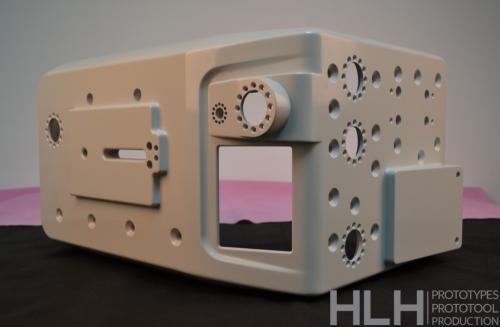
CNC machining technology is constantly improving in terms of accuracy and capabilities and its use in industry is growing all the time.CNC is now the dominating technology used in the manufacturing industry and is helping to improve productivity and reduce costs for those businesses that use it.
CNC machining services can be used in a wide range of industries including but not limited to automotive, construction, medical, food processing, and packaging. The technology is suitable for various materials including metals and plastics in order to create components, castings, fittings, and other parts as required.
What Is CNC Machining?
Computer Numerical Control (CNC) machining uses computers to operate machine tools such as lathes, mills, and drills with a high degree of accuracy. Some 3D printers and embroidery machines are also classed as CNC tools.
How Do CNC Machines Work?
CNC machinery typically has multiple axes for motion control with a tool spindle. The tool may be a drill, blade, laser, wire electrode, water jet, or other tool, depending on the function of the machinery. The position of the tool is controlled by a series of precision direct-drive stepper motors, or servo motors.
The whole mechanism is usually contained within a housing for safety reasons and is usually 100% electronically controlled.
How Accurate Are CNC Machines?
Each CNC machine has its own degree of accuracy and this accuracy is often dependent on how the machine is set up, calibrated, and used. Some precision CNC machining services can offer components with less than 100 microns of variance, or one tenth of a millimeter.
At the other end of the scale, some CNC machinery designed for hobbyists will be accurate to only around 0.02” and not suitable for producing components and parts used in industry.
Uses of CNC Machining
There are many applications of CNC machining in almost every industry. Some examples include:
· Creating car parts for automotive companies
· Making circuit boards
· Laser cutting designs into different materials
· Cutting of flat pack furniture
· Turning candlestick holders on a lathe
· Creating dental implants
· Rapid prototyping of new products.
Benefits of Precision Machining
Precision CNC machining services have many benefits over manual production techniques. These include:
· Increased efficiency – machines can work faster than humans and don’t need breaks. One machine can do the work of many employees.
· Better accuracy – the accuracy of CNC machines is much higher than traditional manufacturing techniques as the risk of human error is eliminated.
· Quicker assembly – precision CNC machines can often be assembled automatically, without the need for any manual assembly.
· Reduced waste – as these machines are so accurate and efficient, they are able to use more of the original raw materials, saving money and reducing environmental impact.
· Flexible –CNC machines can be reprogrammed for multiple tasks.
CNC devices are also becoming smaller, more accessible, and cheaper. So much so that there are now many CNC machines designed for use at home.
As technology becomes more advanced, we’re sure to see some exciting developments in CNC in coming years with increased capabilities and reduced human input. It’s clear that CNC applications will continue to evolve into the future.
If you are looking for precision machining company in China, then the author of the article recommends HLH Prototypes.
CNC machining services can be used in a wide range of industries including but not limited to automotive, construction, medical, food processing, and packaging. The technology is suitable for various materials including metals and plastics in order to create components, castings, fittings, and other parts as required.
What Is CNC Machining?
Computer Numerical Control (CNC) machining uses computers to operate machine tools such as lathes, mills, and drills with a high degree of accuracy. Some 3D printers and embroidery machines are also classed as CNC tools.
How Do CNC Machines Work?
CNC machinery typically has multiple axes for motion control with a tool spindle. The tool may be a drill, blade, laser, wire electrode, water jet, or other tool, depending on the function of the machinery. The position of the tool is controlled by a series of precision direct-drive stepper motors, or servo motors.
The whole mechanism is usually contained within a housing for safety reasons and is usually 100% electronically controlled.
How Accurate Are CNC Machines?
Each CNC machine has its own degree of accuracy and this accuracy is often dependent on how the machine is set up, calibrated, and used. Some precision CNC machining services can offer components with less than 100 microns of variance, or one tenth of a millimeter.
At the other end of the scale, some CNC machinery designed for hobbyists will be accurate to only around 0.02” and not suitable for producing components and parts used in industry.
Uses of CNC Machining
There are many applications of CNC machining in almost every industry. Some examples include:
· Creating car parts for automotive companies
· Making circuit boards
· Laser cutting designs into different materials
· Cutting of flat pack furniture
· Turning candlestick holders on a lathe
· Creating dental implants
· Rapid prototyping of new products.
Benefits of Precision Machining
Precision CNC machining services have many benefits over manual production techniques. These include:
· Increased efficiency – machines can work faster than humans and don’t need breaks. One machine can do the work of many employees.
· Better accuracy – the accuracy of CNC machines is much higher than traditional manufacturing techniques as the risk of human error is eliminated.
· Quicker assembly – precision CNC machines can often be assembled automatically, without the need for any manual assembly.
· Reduced waste – as these machines are so accurate and efficient, they are able to use more of the original raw materials, saving money and reducing environmental impact.
· Flexible –CNC machines can be reprogrammed for multiple tasks.
CNC devices are also becoming smaller, more accessible, and cheaper. So much so that there are now many CNC machines designed for use at home.
As technology becomes more advanced, we’re sure to see some exciting developments in CNC in coming years with increased capabilities and reduced human input. It’s clear that CNC applications will continue to evolve into the future.
If you are looking for precision machining company in China, then the author of the article recommends HLH Prototypes.
Advertise on APSense
This advertising space is available.
Post Your Ad Here
Post Your Ad Here
Comments