Revive Your Ancestral Heritage with Advanced AI Imaging
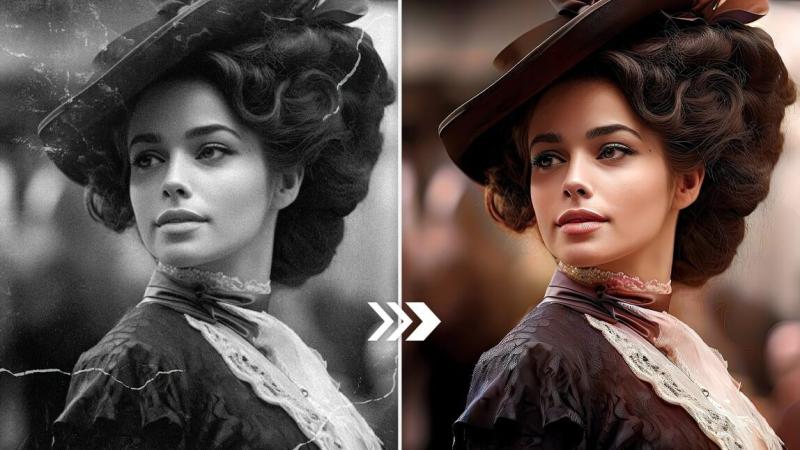
Unveiling the rich tapestries of our past through treasured photographs elicits a profound connection to those who walked before us. These images serve not only as a visual remembrance but also as a crucial bridge to the world our ancestors lived in. However, as resilient as the stories they tell may be, old photographs are physically vulnerable, often succumbing to the ravages of time. This is where the magic of AI old photo restoration breathes new life into these precious artifacts of yesteryear.
Tucked away in attics or cherished in family albums, old photos may have faded, become stained, creased, or scratched. Advanced AI imaging technology now offers a groundbreaking solution, allowing us to restore these images to their original glory, ensuring they continue to inform and inspire future generations. This innovative technology harnesses the potential of artificial intelligence to meticulously fix physical damages to photos—scratches, fading, and even severe discoloration can be addressed with precision, often with just one click.
AI old photo restoration goes beyond mere repair. It infuses new vitality into old photographs by enhancing unclear elements, reconstructing lost parts, and adding color to black-and-white images, transforming them into vibrant, dynamic representations of historical moments. What previously required hours of painstaking labor by skilled restorers can now be achieved more efficiently and with stunning accuracy. The ease of use also democratizes this process; no special editing skills are needed, making this technology accessible to anyone interested in preserving their historical legacy.
Moreover, beyond personal sentiment, the restoration of historical imagery holds substantial cultural and educational value. Schools and colleges can utilize restored images for teaching purposes, providing students a clearer window into the past. Cultural historians and authors find these restored images invaluable, offering richer detail and context for research and storytelling.
Skeptics might concern themselves with the authenticity of restorations, worrying that enhancements may stray from historical accuracies. However, AI integrated into photo restoration works within set parameters to ensure enhancements respect the image's original era and content. The goal is to prevent decay and loss, not to alter historical documents but to salvage and protect them.
Furthermore, embracing AI for restoring old photos is a step toward a larger movement of digital preservation, which plays a crucial role in historical documentation. Digital copies of restored photographs are immune to physical degradation, ensuring that these memories continue to be passed down through generations without losing clarity or quality.
For those intrigued by the interplay of technology and history, exploring the broader implications of AI in contemporary society might be worthwhile. More can be learned about artificial intelligence and its myriad applications here: https://en.wikipedia.org/wiki/Artificial_intelligence.
Rediscovering history through advanced AI imaging does not just revive past visuals; it reaffirms the continuity of our collective human experience. As we look into the faces of our ancestors, restored in stunning detail, we are reminded of our roots, the resilience of human memory, and the transformative power of technology to bridge the past with the present and future. As we forge ahead, this synergy of heritage and high tech will doubtlessly be a cornerstone in the preservation and appreciation of our shared histories.


Comments