The Future of Healthcare Powered by Smart Bed Technology
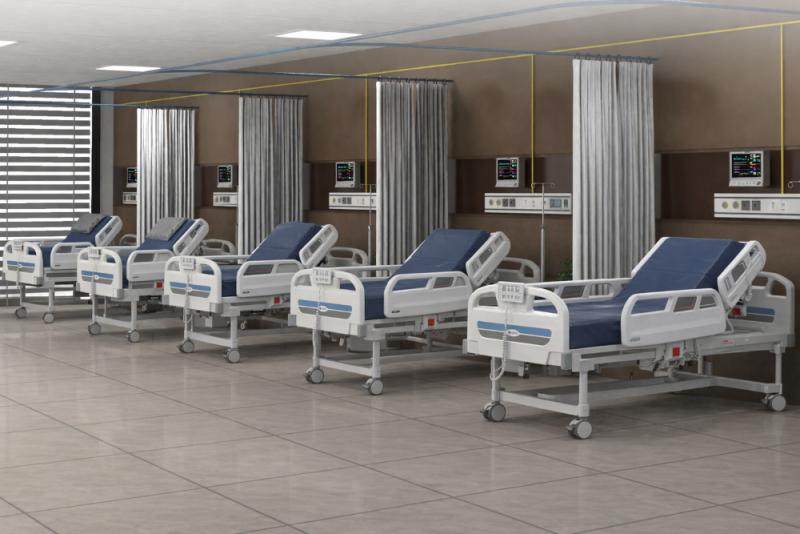
The healthcare systems have evolved with advanced technology. In recent times, hospitals and other healthcare settings are delivering faster, safer and more personalized care. Therefore, in this transformation, one of the most promising innovations is smart bed technology. Transcending being a place for patients to rest, smart hospital beds have become the cornerstone of a healthcare facility. It's more than equipment or a bed for patients.
The smart hospital beds are designed with monitors and sensors that enable real-time monitoring of a patient's vital signs, such as blood pressure, heart rate, body temperature, etc. Hence, a motorized ICU bed is proving to be crucial equipment not only for patients but also for healthcare professionals. Let's explore in detail the smart beds.
Smart Beds vs Traditional Hospital Beds
Feature | Smart Hospital Beds | Traditional Hospital Beds | |
| Basic Purpose | A smart bed is designed with advanced features and functionalities that provide significant comfort and safety for patients. | Traditional beds are static beds designed for patients to rest during their hospital stays, and they come with limited or no adjustments available. | |
| Adjustability | Equipped with multiple adjustable modes for resting, sleeping, reading or watching TV. | Generally static with no or limited positioning. | |
| Technology Integration | Integrated with IoT devices, computer vision, sensors, AI and deep learning technologies. | Minimal or no integration of technology. | |
| Monitoring Capabilities | Provides precise and real-time monitoring via connected systems and sensors. | No real-time monitoring of the patient's condition | |
| Alerts and Safety | Automatic updates electronic medical records with data like bed existence or respiration frequency. | No automated alerts for abnormal events. |
How is Smart Bed Technology Improving Patient Care?
Apparently, the smart bed technology offers real-time monitoring of a patient's vital signs, including heart rate, respiratory rate, and blood pressure, which helps prevent adverse outcomes.
To detect the patient's presence on the bed by monitoring their cardiorespiratory rate, there's a low-cost magnetic induction system to be placed underneath the bed mattress.
Mapping pressure points helps to track whether the patient is in bed or not, as this information proves to be very helpful to detect if a patient has fallen off the bed or tried to get out of it without assistance.
The patients with limited ability to change positions are prone to getting bedsores. The electric ICU bed reduces the incidence of pressure or bedding ulcers.
The Future of Healthcare with Smart Bed Technology
The future of healthcare with smart bed technology is to focus on enhanced safety features, provide seamless data flow, and reduce hospital-acquired conditions. The key future trends and technologies in the smart bed for healthcare settings include:
Enhanced connectivity and integration
Automated comfort and safety
Predictive analysis and AI for proactive intervention
Comprehensive patient monitoring with contactless sensors
Early mobility and rehabilitation with speedy recovery.
Smart technology has sneaked into the most basic elements of healthcare, making it a robust tool for safety and comfort for patients and caregivers. So, it is a thoughtful and most required investment in a healthcare facility to have high-quality smart beds from the electric ICU bed manufacturer. Ultimately, by prioritizing safety, comfort, and data-driven functionality, electric bed manufacturers are helping build a future where care is more proactive, connected, and focused on the well-being and recovery of every patient.
Post Your Ad Here
Comments