How a Delay in Treatment Can Cause Mold to Spread
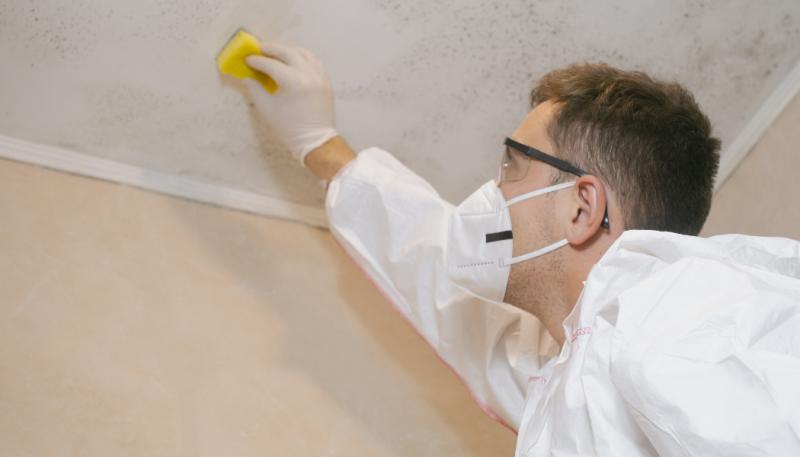
It usually starts with a smell. You walk into the basement or the laundry room and catch a whiff of something earthy, musty, like damp socks left in a gym bag. Or maybe it starts with a visual: a tiny discoloration on the ceiling that looks like a coffee stain, or a bit of black fuzz in the corner of the bathroom vanity.
The natural instinct for most homeowners is denial. We tell ourselves it’s just a little surface mildew. We wipe it with a rag, spray some air freshener, and promise to keep an eye on it. This hesitation is a critical mistake.
Mold is not just a cosmetic nuisance; it is a biological invasion. It is a living organism that feeds on your home, and it operates on a timeline much faster than most people realize. While you are "keeping an eye on it," the colony is likely spreading behind the drywall, eating away at the framing, and releasing spores into the air your family breathes.
Calling a professional mold remediation service the moment you suspect an issue isn't paranoia; it is asset protection. The difference between a minor cleanup and a catastrophic renovation is often measured in days, not weeks.
Here is why hitting the pause button on mold treatment is dangerous for both your property and your health.
1. The 48-Hour Colonization Rule
We often think of rot and decay as slow processes that take years. Mold is different. It is an opportunist.
Mold spores are everywhere—floating in the air outside, tracking in on your shoes, sitting on your furniture. They are harmless until they meet moisture. Once a pipe leaks, a roof fails, or humidity levels spike above 60%, those dormant spores wake up. According to the EPA, mold can begin to grow on damp surfaces within 24 to 48 hours.
If you decide to wait until the weekend to deal with a leak you found on Tuesday, the mold has already established a foothold. It moves from germination to colonization rapidly. By the time you see a colony on the outside of a wall, there is a very high probability that the inside of the wall cavity is already covered. Every hour you wait allows the colony to expand its territory, turning a localized spot into a systemic infestation.
2. Structural Damage
To understand the danger of mold, you have to understand what it eats. Mold digests organic matter. In nature, its job is to break down fallen trees and dead leaves. In your home, "organic matter" translates to drywall paper, wood studs and framing, floorboards, carpet padding, and insulation backing.
Mold literally eats your house. It releases enzymes that decompose the cellulose in these materials. If left unchecked, this doesn't just look ugly; it compromises the structural integrity of the building.
We have seen cases where "a little moisture problem" was ignored for months, resulting in floor joists that were so rotted they could no longer support the weight of the furniture, or studs that crumbled to the touch. Treating mold immediately stops this consumption. Waiting allows the organism to turn its sturdy home into a soft, decaying shell.
3. The HVAC Superhighway
One of the biggest risks of ignoring a mold spot in a secluded area—like a guest room or a basement—is that it rarely stays there.
Your home acts like a single pair of lungs, circulating air through the HVAC system. If a mold colony releases spores (which happens when it is disturbed or as it grows), those microscopic particles are sucked into the return vents.
Once mold enters your ductwork, your HVAC system becomes a broadcasting machine, pumping spores into every bedroom, the kitchen, and the living room. You are essentially fumigating your own house with mold.
Remediation experts know how to isolate the affected area using plastic sheeting and negative air pressure to prevent this cross-contamination. Trying to handle it yourself or ignoring it often leads to a scenario where you have to pay to have your entire ventilation system professionally cleaned and sanitized.
4. The "Mold Flu" and Long-Term Health
The physical structure of the house can be repaired. The health of the people living inside is a more serious matter.
Not everyone reacts to mold the same way. Some people are relatively unaffected. However, for children, the elderly, or anyone with asthma or allergies, mold exposure can be debilitating.
Symptoms often mimic the flu or seasonal allergies, leading people to misdiagnose the problem.
The Physical Toll: Chronic coughing, sneezing, red eyes, skin rashes, and fatigue are common.
The Cognitive Toll: There is growing research on the effects of mycotoxins (toxins produced by certain molds like black mold) on the brain, leading to brain fog, headaches, and difficulty concentrating.
If you have a persistent cough that only seems to happen when you are at home, mold might be the culprit. Ignoring the source of the problem means subjecting your immune system to a constant, low-level assault.
5. The Financial Penalty of Procrastination
Finally, let’s talk about your wallet. Ignoring mold is expensive. There is a linear relationship between time and cost.
Day 1-3: You might be able to dry out the area and apply an antimicrobial treatment. Cost: Low.
Day 7: The drywall needs to be cut out and replaced. The carpet padding is ruined. Cost: Moderate.
Day 30+: The mold has spread to the framing. The HVAC ducts are contaminated. The subfloor is rotting. You now need a full-scale demolition and reconstruction. Cost: Severe.
Furthermore, insurance companies are savvy. Most homeowner policies cover sudden and accidental damage (like a burst pipe). They typically do not cover damage resulting from negligence or lack of maintenance.
If an adjuster inspects your claim and sees a massive mold colony that has clearly been growing for months, they may deny your claim entirely, arguing that you failed to mitigate the damage. You could be left paying a five-figure restoration bill out of pocket because you waited too long to make the call.
The Cost of Waiting
Mold is not something that resolves itself. It does not go dormant if you just ignore it; it waits for the next drop of moisture to continue its feast.
When you spot the signs—the smell, the discoloration, the peeling wallpaper—you have to act fast. Treating mold as an emergency rather than a chore is the only way to safeguard the structural integrity of your home and the respiratory health of your family. Don't let the silent tenant take over.
Post Your Ad Here
Comments