What A Dinosaur Footprint Fossil Reveals About Movement
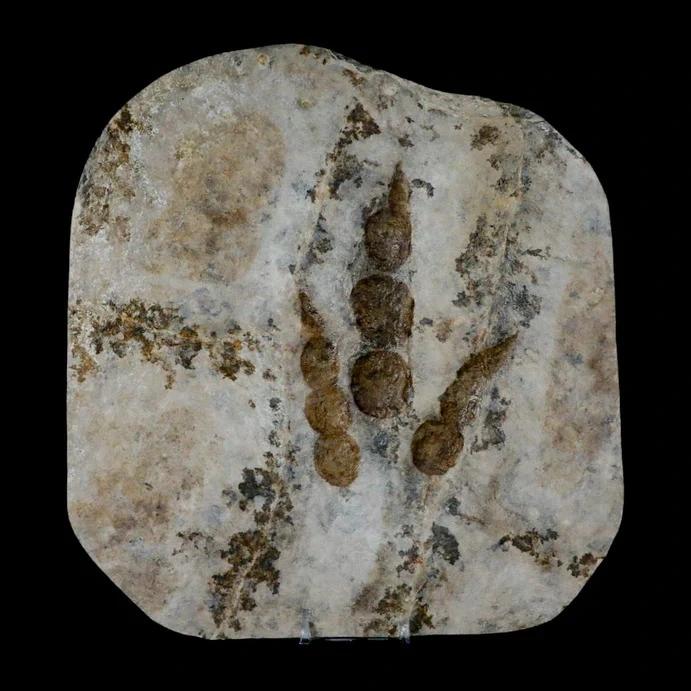
The sculpture of a fossilized dinosaur footprint is not just a simple imprint, but a symbolic reproduction of the physical kinetics in motion. In contrast to bones, which reconstruct a dinosaur’s morphology, tracks, such as footprints, reconstruct a dinosaur in movement – showing the way they walked, where and how they shifted their weight.
It is worth noting that every print tells its own story, as it captures the living dynamics of its authors, who left imprints on pliable soil that petrified over the ages. Therefore, one of the most heartfelt and informative pieces of evidence of life within the past is footprints.
How Can A Single Footstep Tell A Story?
When a dinosaur placed its foot in moist sediment, the surface sought that equilibrium which could bear pressure, weight, and movement. The heel with an arc that goes deeper usually indicates a slower, duller step, whereas the length of the toes convinces people that the animal is moving forward.
With this, fossil remains do not merely help the person elucidate the posture and movements, but also go so far as to indicate how the animal was moving, whether walking, turning, or hyperactive while crossing the landscape.
What Does Track Shape Reveal About Speed?
Tracks of different sizes and shapes, and the distances between them, provide an idea of the dinosaur's speed. At the same time, footprints at short distances from each other indicate cautious movement or slow shooting. There is even fossil evidence of changes in the spacing between tracks caused by changes in the animals' speed. In this way, fossil traces of dinosaurs’ leg use are analogous to modern motion sensors for infrastructure: they can record process rather than pose, more specifically, the dance rather than the composition of a dancer.
Why Do Footprints Show Behavior Bones Cannot?
Every footprint can tell a story, making it a conundrum. In contrast, bone arrangement does not provide insights, such as behavioral patterns found in footprints. Some bone analyses offer possibilities for entire herds of creatures. However, the positioning of footprints gives behavioral analysis of individuals or a herd of some creatures. This is so because every footprint indicates a particular action at that given space and time – stepping forward, rotating, and, in this instance, negotiating one specific surface.
Some of the behavioral aspects that footprints can address include:
• The Walking Patterns Changes
• Presence of reversing or halting behavior
• The importance of Variations in Movement between calm and herd levels and during panics
• Suggestions that the land or area was not level or even and did not contain any blockages
How Does Ground Texture Affect Movement Clues?
The texture of the ground on which the dinosaur walked was an important factor. Traces of movement in mud, sand, or silty clay are distinctive. Claw drag marks may be evident on soft ground, while firm grounds may have elegant and distinct toe marks. These differences aid scientists in their understanding of environmental changes and how the dinosaurs modified their mode of movement in response to such changes. In this sense, the creation of a dinosaur footprint fossil involves not only the organism itself but also the environment it occupied.
Why Are Footprint Fossils So Valued Today?
Real dinosaur footprints are not simple, as they record activity, motion, and the environment in a single record. They are real imprints of the past, unlike most fossils that are reconstructions. Therefore, the most fascinating fossils to collectors, let alone scientists, tend to be the most genuine and “realistic” of such.
Fossil Age Minerals is a well-established brand specializing in genuine prehistoric fossils, upholding the culture of authenticating fossil moments.

Post Your Ad Here
Comments