What Is TIS in Income Tax and How Does It Help Taxpayers?
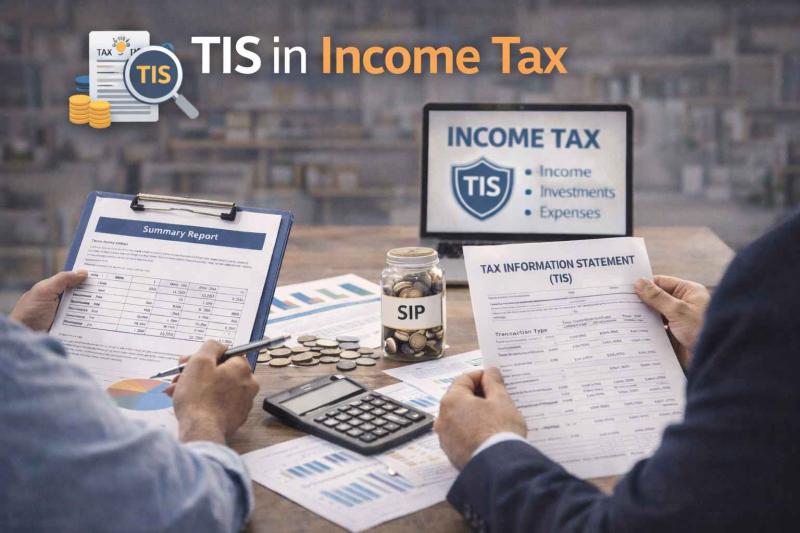
The Taxpayer Information Summary (TIS) is a comprehensive document introduced by the Income Tax Department of India. It provides taxpayers with a simplified snapshot of their financial information as collected from multiple reporting entities. The purpose of TIS is to offer clarity, minimize discrepancies, and assist taxpayers in filing accurate returns. Understanding TIS in income tax is essential for individuals aiming to stay compliant with tax laws and avoid notices from the department.
TIS consolidates income-related data across various sources.
It complements the AIS (Annual Information Statement).
Offers an easy-to-understand format for tax data.
Helps taxpayers detect mismatches early.
Supports more accurate tax return filing.
Aids transparency and compliance in tax procedures.
The Meaning and Purpose of TIS
The TIS meaning is straightforward: it's a user-friendly summary of income, financial transactions, and tax-related information gathered by the government. The purpose of TIS is to ease the tax filing process and ensure accuracy. It empowers taxpayers with essential data well before the filing deadline.
Purpose of TIS is to eliminate errors in ITR filing.
Enables easy cross-verification of income data.
Reduces chances of underreporting or overreporting.
Provides confidence to taxpayers on reported figures.
TIS meaning emphasizes simplicity and clarity.
Helps resolve tax mismatches with supporting insights.
How TIS Differs from AIS
While TIS and AIS may seem similar, they serve different roles. AIS offers a detailed, raw format of all the financial transactions. TIS, on the other hand, simplifies that data, categorizes it, and presents a condensed view for taxpayers to understand.
TIS in income tax highlights actionable summaries.
AIS includes granular details, while TIS is refined.
AIS data is raw; TIS interprets it for taxpayers.
AIS is comprehensive; TIS is concise.
TIS provides insights into the taxpayer's actual liability.
The purpose of TIS is to make tax filing less daunting.
How to Access TIS in Income Tax Portal
Accessing TIS is a seamless process through the Income Tax Department's e-filing portal. It's available to every registered PAN holder.
Log in to the Income Tax Portal using PAN credentials.
Navigate to the "Services" tab.
Select "Annual Information Statement (AIS)."
Choose the relevant financial year.
Click on the TIS tab within AIS.
Download and review the document.
TIS and Its Role in Tax Filing Accuracy
TIS significantly improves the accuracy of income tax filing. It identifies variances in reported and actual income, guiding the taxpayer to adjust entries accordingly.
TIS in income tax aligns taxpayer data with official records.
Ensures precision in ITR calculations.
Helps in reconciling Form 26AS data with AIS.
Minimizes errors and omissions.
Facilitates quicker processing of returns.
Prevents unnecessary scrutiny or notices.
Impact of TIS on Self-Assessment and Advance Tax
Self-assessment and advance tax calculations become more reliable with the help of TIS. Taxpayers get clarity on the actual tax payable based on reported income.
The purpose of TIS includes accurate tax planning.
Ensures no income source is overlooked.
Supports correct tax deductions and credits.
Aids in computing advance tax liability.
Enhances overall tax compliance.
Encourages timely tax payments.
Common Mismatches Detected by TIS
One of the vital features of TIS is its ability to highlight mismatches in reported transactions, such as TDS credits, interest income, or high-value purchases.
TIS meaning extends to identifying red flags.
Detects mismatched TDS entries.
Highlights unreported dividend or interest income.
Reveals errors in rent or capital gain disclosures.
Cross-checks GST turnover (if applicable).
Flags discrepancies in foreign remittances.
Using TIS to Avoid Tax Notices
Filing returns based on TIS can significantly reduce the chances of receiving tax notices. It acts as a pre-emptive check before final submission.
The purpose of TIS is to avoid post-filing surprises.
Ensures consistency in declared income.
Validates the information submitted by third parties.
Encourages proactive compliance.
Allows time to correct pre-filled ITR data.
Reduces the burden of post-assessment proceedings.
Conclusion
Understanding the purpose of TIS and its role in income tax compliance is crucial for every taxpayer. TIS meaning extends far beyond a mere summary; it serves as a critical tool in transparent and accurate tax filing. With increasing digitization in India’s tax ecosystem, the TIS in income tax is a game-changer that empowers individuals and businesses to remain compliant, confident, and free from penalties. As the system evolves, embracing the benefits of TIS will only lead to more streamlined, informed, and efficient tax filing experiences for all.
Post Your Ad Here
Comments