Mastering ISP Tuning: How to Achieve Perfect Image Quality in Embedded Cameras
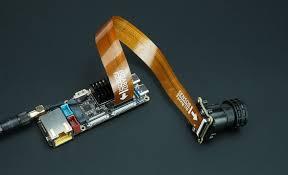
In embedded vision product development, a common misconception often derails project timelines: the belief that selecting a high-end image sensor guarantees high-end image quality. Product Managers frequently allocate significant budget to Sony or Onsemi sensors, expecting DSLR-like clarity out of the box. However, a raw sensor is simply a photon counter. Without a finely tuned Image Signal Processor (ISP) to interpret that data, even the most expensive sensor will produce images plagued by color casts, noise, and poor dynamic range.
For camera engineers, the reality is stark: a mediocre sensor with excellent ISP tuning will almost always outperform a premium sensor with poor tuning.
The Core Challenge: Raw Data vs. Human Vision
The journey from a raw Bayer pattern to a viewable image is complex. The ISP pipeline is responsible for debayering, color correction, and artifact removal. When this pipeline isn't calibrated to the specific lens, sensor, and lighting environment of your device, the results are inconsistent.
Standard "default" ISP settings are rarely sufficient for specialized embedded applications. A security camera in a parking garage faces vastly different challenges than a medical endoscope, yet both might use similar underlying hardware. The "secret sauce" is in the tuning—optimizing the ISP algorithms to prioritize specific image attributes relevant to the use case.
Critical Tuning Parameters: Where Image Quality is Made
To achieve professional-grade image fidelity, three specific ISP modules require rigorous attention:
1. Auto White Balance (AWB) Algorithms
AWB is notorious for being the most difficult parameter to perfect. It involves ensuring that white objects appear white under any light source, from cool fluorescent office lighting to warm sunset hues. Inaccurate AWB leads to unnatural color casts that can ruin user experience or, in AI applications, cause object detection failures. Advanced tuning involves creating custom color temperature curves that align with the specific spectral response of your sensor.
2. High Dynamic Range (HDR) Handling
Embedded cameras often operate in uncontrolled lighting, such as a video doorbell facing a bright street while the porch is in shadow. Without proper HDR tuning, the ISP will either blow out the highlights or crush the shadows. Effective tuning merges multiple exposures or utilizes local tone mapping to ensure visibility in both bright and dark regions simultaneously, preserving critical details that off-the-shelf drivers often miss.
3. Noise Reduction and Low-Light Enhancement
As sensor pixels get smaller, noise becomes a physical inevitability. A well-tuned ISP distinguishes between image detail and random sensor noise. Aggressive noise reduction can result in "waxy" skin tones or lost textures, while insufficient reduction leaves the image grainy. The goal is a balanced spatial and temporal noise reduction strategy that maintains edge sharpness while cleaning up the signal, particularly in low-light conditions.
The Silicon Signals Advantage: Agnostic Tuning for Any Sensor
Many engineering firms limit their support to specific sensor manufacturers or standard drivers. Silicon Signals takes a different approach. We specialize in tuning ISPs for both proprietary custom sensors and standard Commercial Off-The-Shelf (COTS) modules.
Our engineering team delves deep into the V4L2-compliant driver layer and camera HALs (Hardware Abstraction Layers), ensuring that the software stack is perfectly optimized for the hardware reality. Whether you are integrating a niche sensor for an industrial IoT device or a cost-effective module for consumer electronics, our tuning process bridges the gap between raw silicon potential and market-ready image quality.
Conclusion
Don't let poor tuning bottleneck your product's potential. A sensor provides the canvas, but the ISP provides the art. By investing in professional ISP tuning, you ensure your embedded camera delivers consistent, high-fidelity images that meet the rigorous demands of modern users and AI algorithms.
Ready to optimize your camera pipeline?
Contact Silicon Signals today to discuss your specific sensor and ISP tuning needs.
Post Your Ad Here
Comments