How Much Does Wind Blade Recycling Cost for Commercial Wind Farms?
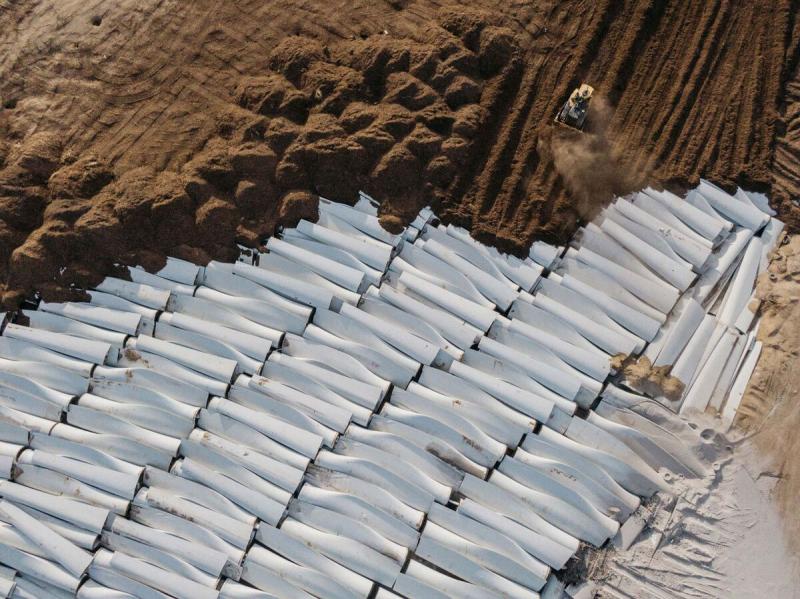
As wind farms across the world mature, many operators now face an important question: how much does wind blade recycling cost for commercial wind farms? Wind turbines are built to last 20–25 years, and thousands of blades are reaching end-of-life each year. Recycling them responsibly is no longer optional—it is becoming a regulatory, environmental, and reputational necessity.
This article explains the real costs involved, what affects pricing, how wind blade materials influence recycling methods, and what commercial wind farm owners should expect when planning for wind blade recycling.
Understanding Wind Blade Recycling
Wind turbine blades are large, complex structures typically made from composite materials. Unlike steel towers or copper wiring, blades are harder to recycle, which directly impacts cost.
Wind blade recycling includes:
Blade removal and cutting
Transportation from site to processing facility
Mechanical, thermal, or chemical recycling
Disposal of non-recyclable residues
Each step adds cost, especially for large commercial wind farms.
Typical Cost of Wind Blade Recycling
For commercial wind farms, wind blade recycling costs usually range from USD 200 to USD 1,000 per ton. On a per-blade basis, costs commonly fall between USD 5,000 and USD 25,000, depending on size and recycling method.
Average cost breakdown:
Blade dismantling & cutting: USD 1,000–5,000 per blade
Transportation: USD 2,000–8,000 per blade
Recycling or processing: USD 2,000–10,000 per blade
Larger offshore blades can exceed these figures due to logistics and handling complexity.
Why Wind Blade Materials Drive Recycling Costs
The biggest cost factor is the composition of wind blade materials. Most blades are made from:
Fiberglass-reinforced polymers (GFRP)
Carbon fiber composites
Epoxy or polyester resins
These materials are strong, lightweight, and durable—but difficult to separate and reuse.
Impact of materials on cost:
Fiberglass blades are cheaper to recycle but have limited reuse value
Carbon fiber blades cost more to process but offer higher material recovery value
Resin systems often cannot be reused and must be disposed of safely
The more complex the material mix, the higher the recycling cost.
Recycling Methods and Their Cost Differences
Mechanical Recycling (Lowest Cost)
Blades are shredded and ground into raw material for cement, construction fillers, or asphalt.
Cost-effective
Limited material value recovery
Most common method today
Thermal Recycling (Medium Cost)
Uses heat to break down resins and recover fibers.
Higher energy use
Better fiber recovery
Moderate environmental footprint
Chemical Recycling (Highest Cost)
Solvents break down resin to recover fibers in near-original quality.
Expensive and still emerging
High recovery potential
Best long-term sustainability option
Commercial wind farms often choose mechanical recycling due to cost constraints.
Case Study 1: Onshore Wind Farm in Northern Europe
A 60 MW onshore wind farm decommissioned 30 turbines after 22 years of operation. Each blade weighed approximately 12 tons.
Recycling approach:
Mechanical recycling through cement co-processing
Local processing facility within 200 km
Cost outcome:
Average cost per blade: USD 7,500
Total recycling cost: ~USD 675,000
Key takeaway: Proximity to recycling facilities significantly reduced transportation costs and overall spend.
Case Study 2: Offshore Wind Farm Repowering Project
An offshore wind farm replaced older 3 MW turbines with modern 8 MW units. The removed blades were larger and contained carbon fiber.
Recycling approach:
Combination of thermal and mechanical recycling
Offshore transport to specialized processing site
Cost outcome:
Average cost per blade: USD 22,000
Total project recycling cost exceeded USD 2 million
Key takeaway: Advanced wind blade materials increase recycling complexity but support higher-quality material recovery.
Additional Factors That Influence Cost
Several external factors affect wind blade recycling expenses:
Distance to recycling facilities
Local landfill restrictions
Environmental compliance requirements
Labor and crane availability
Blade size and weight
Countries with landfill bans on composite materials typically see higher recycling demand—but also better infrastructure over time.
Why Wind Blade Recycling Is Still Worth the Cost
While recycling blades is not cheap, the long-term benefits outweigh the expense:
Reduced landfill dependency
Improved sustainability reporting
Better compliance with environmental regulations
Enhanced brand and investor confidence
As recycling technologies mature, costs are expected to decline.
FAQs
1. Is wind blade recycling mandatory for commercial wind farms?
In many regions, landfill bans and environmental policies are making recycling mandatory or strongly encouraged.
2. Can wind blade materials be fully recycled?
Not entirely. Fibers can be reused, but resins are often downcycled or disposed of.
3. Is recycling cheaper than landfilling?
In some regions landfilling is cheaper short term, but regulatory penalties and future bans increase long-term risk.
4. Do offshore wind farms pay more for recycling?
Yes. Offshore logistics, transport, and blade size significantly increase recycling costs.
5. Will wind blade recycling become cheaper in the future?
Yes. Advances in chemical recycling and improved processing scale are expected to lower costs over time.
Conclusion
For commercial wind farms, wind blade recycling costs typically range from USD 5,000 to USD 25,000 per blade, driven largely by wind blade materials, blade size, and logistics. While costs remain high, recycling is rapidly becoming the responsible and future-ready choice. Planning early, choosing the right recycling method, and working with nearby facilities can significantly reduce financial impact while supporting long-term sustainability goals.
Post Your Ad Here
Comments