Key Features That Define a Successful HyperCasual Game
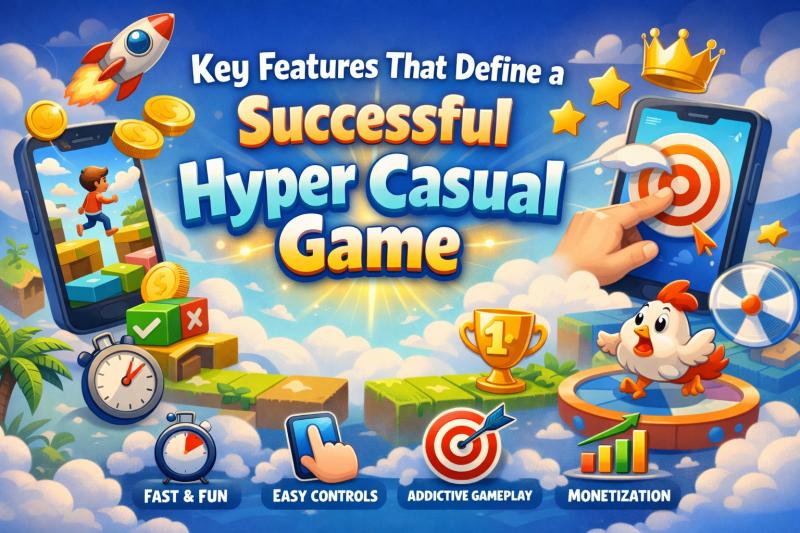
Hypercasual games have changed the way people used to play games on their mobile phones. These games are simple, fast, and easy to understand. Also, they attract millions of players every day.
From tapping balls to dodging obstacles, hypercasual games focus on instant fun rather than complex stories or long tutorials. But did you know that not every hypercasual game becomes successful? Only a few manage to reach the top charts and stay there.
So, what makes a hypercasual game truly successful? Let’s break down the key features that define a winning hypercasual game in a clear and simple way.
Simple Gameplay That Anyone Can Understand
Simplicity is the most epic thing about a hypercasual game. A player should understand how to play the game within the first few seconds. Most successful hypercasual games use one-touch or one-swipe controls. No complications, no long instructions, and no learning curve, just tap to play.
This simplicity attracts players of all age groups. Even someone playing the game for the first time should feel comfortable and confident. Many businesses work with a HyperCasual game development company to ensure the game idea stays simple while still being fun and addictive.
Quick Game Sessions
Hypercasual games are designed for short play sessions. A single round usually lasts between 10 to 60 seconds. This makes the game perfect for people who want quick entertainment during breaks, travel, or free moments.
Because the sessions are short. The players often replay the game multiple times in one go. This increases engagement and keeps players coming back throughout the day. Quick sessions also reduce the chances of boredom.
Easy Controls and Smooth Experience
Controls in hypercasual games must be extremely easy. Most games use tap, hold, swipe, or drag mechanics. The response should be instant, with no lag or delay. A smooth experience is important because even a small delay can frustrate players.
Clean controls combined with smooth performance make the game feel satisfying. Developers who offer professional game development services usually focus heavily on control testing and performance optimization to ensure a seamless user experience.
Minimal Design and Clean Visuals
Successful hypercasual games use minimal design. The visuals are clean, bright, and easy on the eyes. There is no clutter on the screen, and players can clearly see what they need to do.
Simple shapes, soft colors, and smooth animations are commonly used. This style not only looks appealing but also helps the game run smoothly on low-end devices. A clean design also reduces distractions and keeps the player focused on gameplay.
Addictive Core Loop
At the heart of every successful hypercasual game is an addictive core loop. This means the main action of the game is so enjoyable that players want to repeat it again and again.
The loop usually includes:
- Start a round
- Perform a simple action
- Get instant feedback (score, reward, or fail)
- Restart quickly
This loop keeps players engaged without feeling forced. Instant restart after failure is a big reason why hypercasual games are so addictive.
Instant Feedback and Rewards
Hypercasual games provide instant feedback for every action. When a player taps, swipes, or scores, the game responds immediately with sounds, animations, or visual effects.
Small rewards like coins, points, or unlockable skins also motivate players. Even though the rewards are simple, they give players a reason to keep playing and improving their performance.
Short Learning Curve, High Skill Ceiling
While hypercasual games are easy to learn, the best ones are hard to master. This balance is important. New players can start easily, but experienced players stay engaged because the game becomes more challenging over time.
Increasing speed, tighter obstacles, or smarter patterns help to maintain the interest without changing the basic rules of the game.
Smart and Non-Intrusive Ads
Most hypercasual games earn money through ads. Successful games place ads in a way that does not annoy players. Rewarded ads are especially popular because players choose to watch them in exchange for extra lives or rewards.
Too many forced ads can lead to uninstalls. A good ad strategy balances revenue with user satisfaction.
Fast Loading and Lightweight App Size
Hypercasual players expect the game to load instantly. Long loading screens can drive players away before they even start playing. A lightweight app size also helps reach more users, especially in regions with limited storage or slower internet.
Fast loading and small file size improve user retention and download rates.
Regular Updates and Testing
Even simple games need updates. Successful hypercasual games are tested continuously to improve gameplay, fix bugs, and adjust difficulty levels. Small changes can make a big difference in player retention.
Frequent testing helps developers understand what players like and what needs improvement.
Conclusion
A successful hypercasual game is built on simplicity, speed, and fun. Easy gameplay, quick sessions, clean visuals, and an addictive loop are the foundation. When combined with smooth controls, fair ads, and regular updates, these features help a hypercasual game stand out in a crowded market.
By focusing on the player’s experience and keeping things simple, developers can create hypercasual games that attract millions and keep them coming back for more.
Post Your Ad Here
Comments