Selecting the Right Pump from Centrifugal Multi Stage Pump Manufacturer
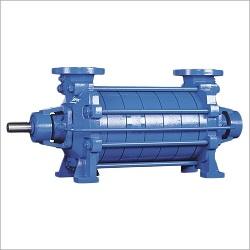
Industrial processes often need relocating liquids from one place to another, sectors ranging from oil and gas to water treatment and production have varied pumping requirements, occasionally over cross countries or versus high pressure. Multistage centrifugal pumps are a versatile option for many applications, efficient in creating adequate head and flow while preserving effectiveness. With various arrangements and personalization options, selecting the optimal multistage pump needs careful factor to consider of your operational demands. In this blog, we will discuss key factors in selecting the right multistage pump for your industry.
Understanding Industrial Pumping Requirements
The primary step is determining the flow price and complete
head needed for your procedure. Circulation price, determined in gallons per
minute (GPM) or cubic meters per hour (m3/hr), is the quantity of fluid you
require to relocate. Head refers to the elevation the pump must increase the fluid
or the pressure it must conquer. Measure the upright range between suction and
discharge points and represent rubbing losses in pipelines and fittings to
calculate complete system head.
Take into consideration existing requirements and
anticipated future ability needs. A pump sized as well little can't deliver
sufficient circulation and head, while an oversized pump runs inefficiently.
Pumps can be presented in parallel for modular ability scaling. Additionally
consider fluid buildings like thickness and viscosity, which impact pump
performance. With flow and head recognized, you can narrow down pumps made for
that running range.
Choosing Between Horizontal and Vertical Orientation
Multistage centrifugal pumps are configured either flat or
vertically oriented. Straight pumps occupy much less flooring space and permit
versatile alignment of inlet and electrical outlet piping connections. Vertical
pumps have a smaller sized footprint and are easier to preserve without
disturbing piping.
Horizontal layouts function much better for low flow, high
head applications. The axial thrust from each impeller phase heaps with each
other parallel. Vertical pumps, from a trusted vertical centrifugal pump manufacturer, are much more suited for
high flow prices and modest heads, since their thrust forces are distributed in
opposite directions. Examine your design, flow, head, and maintenance gain
access to demands when picking in between straight and upright multistage
pumps.
Considering Materials of Construction
Multistage pumps manage a vast array of fluids from water
and chemicals to rough slurries. Select materials that will endure fluid
residential or commercial properties and avoid rust, erosion, or deposits. Cast
iron cases benefit water and non-corrosive neutral pH fluids. Ductile iron has
good abrasion resistance for slurries.
The elastomers used for seals and O-rings likewise require
compatibility with the pumped fluid to stop destruction. EPDM is suitable for
water and chemicals. Viton takes care of petroleum items. Review fluid
information with the multistage pump producer to ensure correct products
choice. SMS Pumps & Engineers is a largest centrifugal multi stage pump manufacturer.
Evaluating Pump Efficiency
Pump efficiency suggests the portion of input power converted
to valuable hydraulic job. Multistage pumps made with optimum clearances,
impeller trimming, and reduced rubbing losses offer the very best
effectiveness. Seek pumps rated over 80% effectiveness at the operating factor.
Higher performance equates to reduce energy consumption and operating price
over the pump's life span.
Think about effectiveness curves throughout the variety of
expected operating flows, not simply at one factor. A sharp dip in performance
at higher or lower circulations shows less efficient off-design operation.
Pumps sized suitably for the application preserve far better performance.
Variable rate drives can likewise match pump outcome to system need and
maintain the pump operating at peak performance.
Reviewing Driver and Coupling Options
Multistage pumps require a motorist to transform the shaft.
Motor chauffeurs are most usual, however heavy steam wind turbines or engines
can likewise be utilized. Evaluate the motorist type, horse power, rate, unit,
and any kind of drive combining demands.
Motors need to match the flow and head features of the pump.
Gear reducers might be necessary to achieve the optimum pump shaft rate from a
quicker electric motor. For drives over 100 HP, consider variable regularity
drives to readjust motor rate and tweak pump outcome.
Flexible couplings compensate for mild imbalances between
the driver and pump. They also wet hydraulic pulsations from the pump phases.
Stiff couplings are less complex yet do not enable those functions. Select couplings
purpose-fit for the shaft dimension and rotational speed.
Considering Design Variations and Customization
While typical multistage pumps cover numerous applications,
engineers can modify pump configurations for certain conditions. Splitting
circulation among several impeller shafts as opposed to one lengthy shaft
enhances suction performance for greater capacity pumps. Two-suction designs
assist equilibrium radial loading for extremely high head applications. Outer
elements like seals, bearings, filtration systems, and instrumentation can also
be personalized.
Manufacturers provide products and finish upgrades for
extreme longevity needs. Motors and drives can be defined for dangerous place
suitability. Deal with the pump supplier to maximize the pump based upon
extensive procedure requirements. Customized multistage pump layouts lead to
the very best performance, reliability, and value for high-demand applications.
Choosing Reliable Centrifugal Multi Stage Pump Manufacturer
Trustworthy pump business buy continual screening, research
and development, and strict quality control. Search for manufacturers that follow
with API, ISO, ANSI, and various other industry criteria. Vendors must be well-informed
about both general pump design and the subtleties of your specific industry.
Request for recommendations from customers with comparable instalments
and contrast study. Evaluation sample service warranties. Select producers that
supply support throughout pump selection, after-sales technical support, and
timely use. The ideal supplier partners with you for the future to optimize
uptime.
Following Proper Installation and Maintenance
Appropriate pump installation according to manufacturers' instructions
makes certain secure, effective procedure. Make certain sufficient NPSH readily
available based on your system's suction conditions to stop cavitation. Mount
gauges to check discharge stress. Use a throttling shutoff on the discharge
line to readjust system head. Mount pumps on stiff foundations and correctly
line up couplings.
Stick to upkeep recommendations for lubrication, mechanical checks, and periodic overhaul restoring. Replace worn parts prior to failures occur. Monitor resonance, temperature, and sound levels. Carry out a problem surveillance routine with technologies like vibration analysis. By adhering to these methods, you can improve the reliability of your thermic fluid pump and prevent unintended downtime.
Conclusion
To conclude, the procedure of picking the appropriate multistage pump for your industry is a diverse choice that calls for mindful factor to consider of numerous factors. Specifying the optimal multistage centrifugal pump calls for holistic evaluation of operational purposes, fluid homes, installation variables, and long-term use needs. Work through technical specifications systematically and contact to reputable centrifugal process pump manufacturer to choose the excellent pump setup. An effectively matched multistage pump improves procedure efficiency, reduces expenses, and gives years of trusted performance. With cautious upfront selection, multistage pumps are a functional and important technology for industrial pumping applications.

Post Your Ad Here