How Is AI Changing the Way Customers Shop on Shopify Stores?
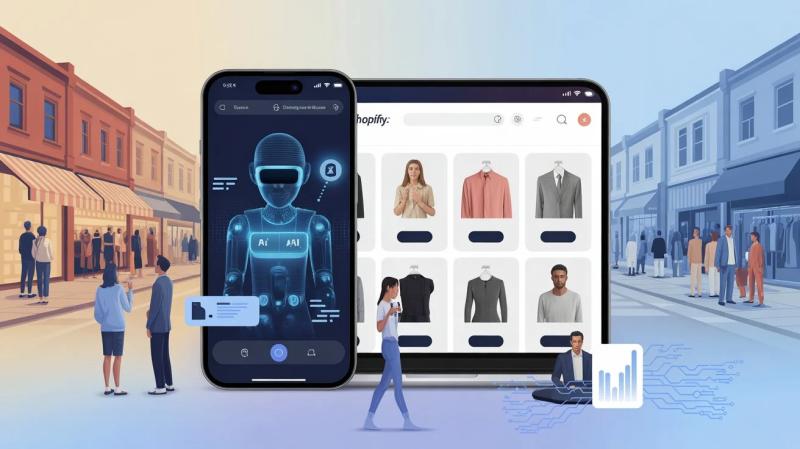
For years, digital commerce has evolved incrementally with better templates, faster hosting, and marginally improved funnels. But that era is over. AI has become the defining layer of competitive advantage for online brands, and the Shopify platform is no exception. Today, AI isn't an add-on; it’s reshaping how customers discover, evaluate, and purchase products in ways that traditional eCommerce simply couldn’t. The AI-enabled eCommerce market has reached a valuation of $8.65 billion in 2025 and is expected to grow to $22.6 billion by 2032.
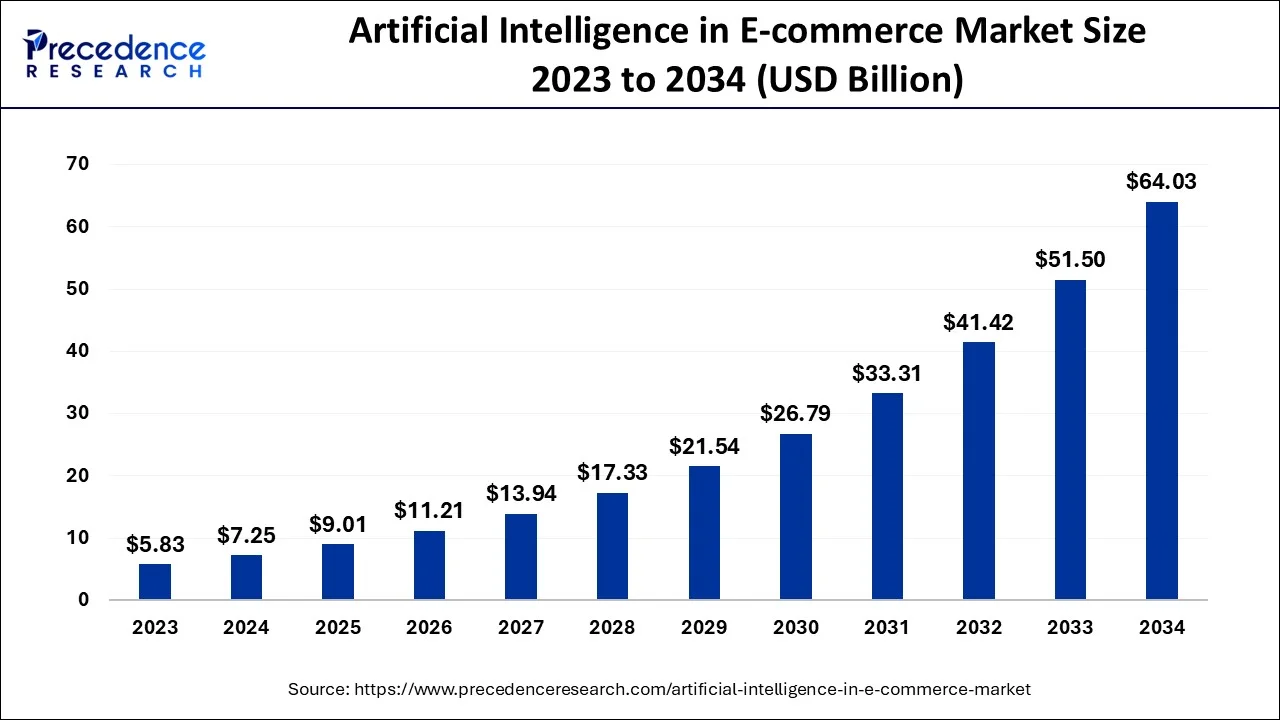
Merchants who recognize the power of AI in eCommerce are seeing significant benefits, including higher conversions, streamlined shopping experiences, and operational efficiencies that compound over time. Shopify has matured from an online store platform into an intelligent commerce tool capable of bringing predictive, personalized, and automated experiences at scale.
AI Is Redefining the Shopify Customer Lifecycle
Traditionally, the eCommerce experience was static, and each visitor would see the same page, the same suggestions, and the same checkout phase. AI changes this narrative. It could be the ability to predict what customers desire before they articulate it, or personalizing the storefront dynamically. AI has become the fundamental gear to transform a transactional Shopify customer experience into an anticipatory one. This change is benefiting brands that are investing in AI customer experience to win over competitors who are still using legacy decision structures.
AI-Driven Search & Discovery to Reimagine First Touchpoint
The traditional keywords-based search model is dying. The AI-powered search in Shopify stores not only comprehends text inputs but also customer context, intent, and semantics. This means:
- Even having vague queries, the customer obtains relevant search results.
- Visual search allows users to post pictures to find similar products.
- Predictive search models forecast users' needs.
AI Brings Personalization for Every Shopify Store Visitor
Consumers want to be valued by the brands- their preferences, purchase history, style, and size. The traditional eCommerce model cannot provide this. Given that AI technology is used for Shopify personalization, product displays, content, and pricing can be altered in real-time based on user behavior.
This approach is no longer personal preference matching; it is intent-aware personalization, micro-signals processing:
- Time spent on a page
- Past purchase frequency
- Browsing abandonment triggers
These AI insights offer multiple benefits to Shopify merchants in delivering intuitive, close, and on-demand shopping features. A brand that understands this dynamic storefront architecture always outperforms peers, has better AOV, and retention.
AI Product Recommendations: Converting Browsers to Buyers
What Netflix was doing in terms of content discovery is now what AI in eCommerce is doing. Today, AI product recommendations in shopping stores help customers make decisions based on pattern analysis, affinities, and contextual behavior.
This functionality not only drives browsing but also nudges customers toward the right purchases they are inclined to make, enhancing the chance of upsell and cross-sell. The intelligent tool learns continuously, answering the query of how AI boosts Shopify sales with measurable ROI.
AI in Merchandising & Content Operations
Maintaining product catalogs is time-intensive, including descriptions, titles, metadata, SEO, and images. AI-based content moderation tools in the present day:
- Auto-create product descriptions.
- Scale enrichment of the catalogs.
- Translate new market listings.
- Evaluate several creatives independently.
Conversational Commerce with AI Chatbots for Shopify
Generic chat widgets are obsolete. Businesses now use AI chatbots for Shopify to help, make suggestions, and transact. These robots understand users, read queries, and direct customers through the buying process.
Where humans solve problems, AI-based chatbots turn window-shopping requests into micro-purchases, empowering brands to extract the most out of low-intent visitors.
It is a real-world case study on how AI can enhance the Shopify customer experience through automated, context-intelligent support.
Understanding Customer Behavior With Predictive Intelligence
Post-purchase customer behaviour is no longer analysed; it is forecasted. Retailers that apply AI for customer behavior will develop insights into:
- What customers will tend to purchase.
- Why do they abandon carts?
- When they may churn
AI transforms patterns into actionable plans, enabling brands to fill gaps before they start leaking revenue. In this case, eCommerce predictive analytics will serve as the intelligence layer that drives lifecycle engagement.
Inventory, Demand & Operational AI
Stocks and overstocking kill margin. Shopify sellers are increasingly adopting aggressive AI-based inventory optimization to simplify the planning, acquisition, and replenishment processes with predictability.
Smarter inventory leads to leaner operations, higher margins, and fewer last-mile failures. This is a clear answer for merchants who are wondering how AI can help Shopify stores better understand their customers before making inventory decisions. It is another strategic application of ambitious eCommerce automation, making AI the key technology of successful online retail operations.
AI Checkout Intelligence & Conversion Acceleration
Shopify stores continue to lose significant revenue due to checkout abandonment. The AI now makes this step a dynamic, optimized experience by predicting customer preferences and minimizing friction. It automatically selects the best payment methods, eliminates unnecessary fields to reduce abandonment, and activates a discount only when users hesitate. AI also adds real-time fraud checks and trust signals without slowing down the process.
With these features provided by Shopify development services, merchants can dramatically increase conversions without redesigning the entire store, proving that a smart checkout flow has become a competitive strength.
AI-Driven Post-Purchase Experience
The actual revenue impact occurs once customers have purchased; however, most merchants do not consider this stage. AI in eCommerce also improves the after-sales experience by projecting delivery times, automating returns, and generating smart reminders depending on usage patterns. It also initiates user-generated content processes at optimal times, improving social footprint and loyalty.
These automated processes drive repeat orders without any manual follow-ups and lessen the support workload. That is why more brands are investing in eCommerce automation services to make post-sale interactions more predictable, driving revenue, customer satisfaction, and retention. While AI elevates personalization and conversions, sustained growth still depends on qualified traffic. To strengthen the top of your funnel, explore these proven SEO techniques to boost traffic to your Shopify store.
AI eCommerce Tools to Increase Shopify conversions
Below we have described AI eCommerce tools that Shopify merchants commonly use to increase conversions, along with what they do at each stage from buying to checkout.
Boost Commerce Tool
Key features - AI-powered search, improved filters, automated product & cart page recommendations
LimeSpot Personalizer Tool
Key features - Real-time product recommendations and dynamic personalization based on browsing and purchase history
Rebuy Tool
Key features - AI-powered cross-sell/upsell engine across site, cart, post-purchase, and email
Tidio Tool
Key features - 24/7 chatbot support, handles FAQs, product suggestions, and order queries
Octane AI / Quiz & Personalization Tool
Key features - Builds interactive quizzes and uses visitor inputs to recommend products & personalize experience
Shopify Magic Tool
Key features - Auto-generates product descriptions, email copy, and content using AI
Wrapping Up
Discovery, personalization, checkout, and retention on Shopify are now all driven by AI, no longer a complementary layer in the eCommerce industry. Brands that utilize AI-driven experiences receive quantifiable benefits: improved conversion, smarter operations, and experiences that get better every time a customer interacts with them.
Increased competition means that Shopify merchants who fail to adopt AI early enough will be at a disadvantage compared to more nimble data-driven commerce competitors. To open this second stage of growth, companies need to turn their stores into smart systems, not just stores with products. That is why more companies are hiring Shopify developers to build AI capabilities that provide a sustainable competitive advantage and revenue multiplier.

Post Your Ad Here
Comments