The Science Behind Air Cooled Water Chillers: Design, Performance, and Reliability
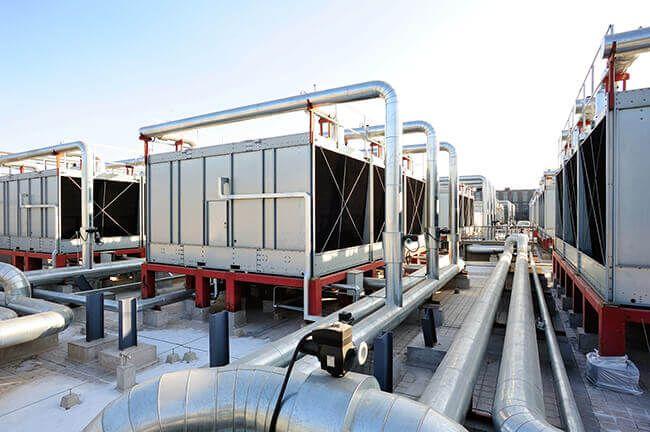
As industries continue to expand and demand reliable cooling solutions, one question often arises: how do modern cooling systems manage performance without relying heavily on water resources? The answer frequently points toward the air cooled water chiller, a technology that has gained widespread adoption across commercial and industrial sectors. With increasing emphasis on energy efficiency, sustainability, and operational reliability, companies such as Earth Cooling System have played a role in advancing the engineering and application of these systems. But what exactly defines their design, and why are they considered dependable in varied operating conditions?
In today’s rapidly changing industrial environment, organizations are in search of cooling solutions which can be installed easily, are cost-effective, and ensure consistent performance. In this context, air-cooled water chillers meet all these requirements by doing away with the cooling towers and complicated water handling networks. This, in turn, raises other queries, which include: How is airflow able to substitute water in heat dissipation, and what does it do to system performance and longevity? Earth Cooling System has been linked to innovating chillers, which address these requirements.
With the increasing strictness of environment protection laws and the transition of industries towards smarter and more technological equipment, it is imperative to grasp the underlying science of air cooled water chiller units. These are a combination of mechanical accuracy and technological advancement. Not only are they highly technical in nature, but they also consist of a blend of technological innovation and mechanical accuracy.
Commercial Water Chiller Manufacturer
An integral role played by a commercial water chiller manufacturer directly impacts air cooled water chiller units. Water chiller producers not only assemble units but also develop technologies that focus on efficiency, reliability, and flexibility. For cooled water chiller units, it is imperative to develop solutions that optimize condensers, air currents, and refrigerants.
That is a great example of how companies like it incorporate robust system designs in order to offer a stable system no matter the temperature. As a company that deals with the manufacturing of commercial water chillers, there is emphasis on the efficiency of the compressor and the condenser coils as well as the fans, all of which play a huge role in the cooling of the system.
The next duty of the commercial water chiller maker is SES compliance for security and efficiency. Contemporary air-cooled chillers are intended for energy compliance and serve the purpose of HVACR applications, process cooling, and industrial machinery cooling. Various makers ensure that these units are reliable and perform effectively despite the variations in the load they handle.
Oil Chillers Manufacturers
Though air-cooled water chillers have applications in a wide range of fields, cooperation with and based on the common technological know-how with oil chiller manufacturers results in higher reliability. Oil chillers have been widely applied in machine tools and hydraulic systems. The technology overlap helps optimize heat exchange efficiency and fluid management.
Oil chiller manufacturers stress the importance of stable cooling when working continuously, an aspect that is relevant to the design of an air-cooled water chiller. The use of the same compressor technology and cooling systems allows manufacturers to create similar products no matter the cooling fluid. Earth Cooling System, among other manufacturers, benefits greatly from this as they learn from oil chiller technology to improve their air-cooled chillers.
Such knowledge enhances robustness and reliability, particularly in an industrial setup where machinery operates for several hours. The effect of oil chillers manufacturers can be noted in terms of enhanced sealing, reduction in vibration, and increased life of components of an air-cooled chiller.
Principles of Design for Air-Cooled Water Chillers
The air-cooled version of the water chiller focuses on efficient heat removal without consuming any water. As opposed to a water-cooled chiller, in the case of an air-cooled chiller, the surrounding environment’s air cools the refrigerated system by passing the air through the condenser coils. This process requires powerful axial/centrifugal fans to blow air and facilitate the process of releasing and condensing the refrigeration material’s heat.
Today, there is a focus on compact configuration designs, corrosion-resistance materials, and optimal airflow paths. Engineers also try to minimize pressure differences and maximize the efficiency of thermal exchanges. Intelligent control of fan performance further optimizes energy conservation, as the amount of air flows changes dynamically according to the demand for cooling.
Another point of consideration for the installation of chillers is sound reduction. Modern advancements in fan technology and sound insulation enable these chillers to run at low sound levels. Such an aesthetic helps to assure their use in an urban environment.
Performance and Energy Efficiency
In the air cooled water chiller, the performance criterion involves the optimal provision of a constant output temperature by the chiller using a lower amount of electrical energy. The latest technology used in these chillers includes variable speed compressors that can adjust according to the cooling load.
The energy efficiency is further improved by optimizing the flow of refrigerant and advancing the heat exchanger surfaces. This makes it possible for the system to attain higher values of Coefficient of Performance, including in peak operations. This directly results in reduced energy consumption, contributing to lowered environmental effects for industries.
The reliability of performance is also impacted by the presence of real-time monitoring systems. The sensors will monitor the temperature, pressure, and loading, and predictive maintenance will be facilitated, reducing the risk of unexpected downtime.
This will eliminate the problem of the processes not being repeatable, as the involved technologies will combine to enable consistent
Reliability and Extended Operation
The air-cooled water chiller's reliability is a major factor in its adoption, as it demands less auxiliary parts like cooling towers, and water pumps.
Manufacturers such as Earth Cooling System highlight the quality of the components and the testing of the whole system as very important. The employment of top-quality compressors, enclosures that are resistant to weather and coatings for protection goes a long way in making sure that the system can endure the harsh operating conditions. They are able to provide warnings to the user as well.
There will be fewer issues associated with scaling, rust, or biological growth for this air-cooled system since it relies less on water. These factors mean that air-cooled chillers operate more efficiently while requiring fewer maintenance issues.
Conclusion
The air cooled water chiller has embodied a balance between effective design and reliable performance. Taking into consideration effective design principles, engineers have managed to create a water chiller that consumes fewer resources in meeting the current cooling requirements. Organizations like them have managed to demonstrate effective design concepts for a water chiller.
In addition to the knowledge that water chiller manufacturers have and the combined knowledge from manufacturers of oil chiller units, advancements are still being noted in air-cooled chillers. This is because they are able to perform reliably and efficiently with minimal maintenance efforts on the part of the user.
From the above explanations and examples on water chilling units and the different kinds of chillers that are available on the market today, the significance of water chillers. An understanding of the scientific aspects of these systems helps industries make informed decisions regarding how their cooling systems can always be efficient and future-proof.
Post Your Ad Here
Comments