Acoustic Camera Market Size, Share, and Growth Forecast 2025-2033
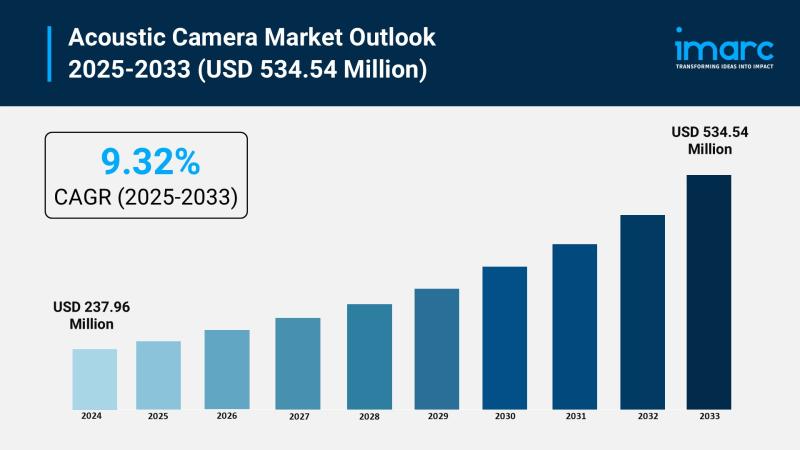
Market Overview:
According to IMARC Group's latest research publication, "Container Homes Market: Global Industry Trends, Share, Size, Growth, Opportunity and Forecast 2026-2034", The global container homes market size was valued at USD 63.1 Billion in 2025. Looking forward, IMARC Group estimates the market to reach USD 96.2 Billion by 2034, exhibiting a CAGR of 4.81% from 2026-2034.
This detailed analysis primarily encompasses industry size, business trends, market share, key growth factors, and regional forecasts. The report offers a comprehensive overview and integrates research findings, market assessments, and data from different sources. It also includes pivotal market dynamics like drivers and challenges, while also highlighting growth opportunities, financial insights, technological improvements, emerging trends, and innovations. Besides this, the report provides regional market evaluation, along with a competitive landscape analysis.
How AI is Reshaping the Future of Container Homes Market
- AI-powered smart home automation systems integrate seamlessly into container homes, enabling automated climate control and energy optimization, reducing utility costs by 25-30%.
- Advanced Building Information Modeling (BIM) with AI assists architects in designing modular container configurations, optimizing space utilization by 15% and reducing construction time by 20%.
- Machine learning algorithms help predict maintenance needs for container homes, extending structural lifespan by 10-15 years through predictive maintenance systems.
- AI-driven energy management systems in container homes optimize solar panel efficiency and battery storage, achieving 40% better energy independence for off-grid living.
- Smart security systems powered by AI provide enhanced safety features with facial recognition and motion sensors, offering 24/7 automated monitoring for container home communities.
Download a sample PDF of this report: https://www.imarcgroup.com/container-homes-market/requestsample
Key Trends in the Container Homes Market
- Sustainable Living Movement Acceleration: Growing environmental consciousness drives demand for eco-friendly housing solutions, with container homes offering 90% recycled materials utilization. The circular economy approach appeals to 68% of millennials prioritizing sustainable lifestyles, making container homes a preferred choice for environmentally conscious consumers.
- Urbanization and Housing Affordability Crisis: Rising traditional housing costs, with prices increasing by 57.8% from 2019-2024, fuel interest in affordable alternatives. Container homes provide cost-effective solutions at 60-70% lower costs than conventional construction, addressing urban housing shortages across major metropolitan areas.
- Disaster-Resilient Housing Solutions: Increasing natural disasters create demand for durable, quickly deployable housing. With 395+ billion-dollar weather disasters since 1980 in the US, container homes offer weather-resistant structures that can withstand extreme conditions while providing rapid deployment capabilities for emergency housing.
- Customization and Modular Design Innovation: Advanced architectural designs enable highly customizable living spaces, from tiny houses to multi-story apartment complexes. Modular construction allows 200+ different configuration options, appealing to diverse lifestyle preferences and space requirements.
- Smart Technology Integration: Modern container homes incorporate IoT devices, solar panels, and smart home systems. Energy-efficient features include advanced insulation, automated climate control, and sustainable utilities like rainwater harvesting and composting systems, reducing operational costs by 40%.
Growth Factors in the Container Homes Market
- Cost-Effectiveness and Economic Viability: Container homes offer significant cost savings with construction expenses 50-80% lower than traditional housing. Reduced labor requirements and faster build times of 2-4 months versus 6-12 months for conventional homes make them economically attractive for first-time buyers and investors.
- Regulatory Support and Building Code Evolution: Progressive building codes and zoning law adaptations facilitate container home adoption. Government initiatives supporting alternative housing solutions and streamlined permit processes in various jurisdictions reduce regulatory barriers and encourage market growth.
- Technological Advancements in Construction: Improved insulation materials, advanced welding techniques, and modular construction technologies enhance container home livability and durability. High-tech modifications and energy-efficient systems make these homes comparable to traditional housing in comfort and functionality.
- Growing Minimalist Lifestyle Trend: Increasing preference for simplified living and reduced material possessions drives tiny house and minimalist housing demand. Container homes align with downsizing trends, offering efficient space utilization and lower maintenance requirements appealing to lifestyle-conscious consumers.
- Investment and Development Opportunities: Real estate developers and investors recognize container homes' potential for affordable housing projects, rental properties, and commercial applications. Multi-container developments and container home communities represent emerging investment opportunities with strong ROI potential.
Leading Companies Operating in the Global Container Homes Industry:
- Anderco Pte Ltd.
- Container Homes Usa LLC
- Giant Containers
- Honomobo
- IQ Container Homes
- SG Blocks Inc.
- Shanghai Haicheng Special Steel Container Co. Ltd.
- Speed House Group of Companies
- Supertech Industries
- Tempo Housing Limited
- United Rentals Australia Pty. Ltd. (United Rentals Inc.)
Container Homes Market Report Segmentation:
Breakup By Solution:
- New/Idle Container
- Old/Scrap Container
Old/scrap containers account for the majority of shares due to their cost-effectiveness, abundant availability, and environmental benefits through recycling initiatives.
Breakup By Offering:
- Factory Built
- On-Site Built
On-site built dominates the market due to greater customization flexibility, adaptability to local conditions, and cost savings in transportation.
Breakup By Architecture Type:
- Tiny House
- Duplex/Bungalow
- Multistory Building/Apartments
Tiny house represents the largest segment owing to affordability, space efficiency, and growing minimalist lifestyle preferences among consumers.
Breakup By Construction Type:
- Fixed
- Movable
Fixed construction type leads the market due to stability requirements, compliance with building codes, and preference for permanent housing solutions.
Breakup By End User:
- Residential Homes
- Recreational Homes
- Emergency Homes
- Nursing Home
Residential homes account for the majority of market share due to increasing demand for affordable, sustainable, and customizable housing alternatives.
Breakup By Region:
- North America (United States, Canada)
- Asia Pacific (China, Japan, India, South Korea, Australia, Indonesia, Others)
- Europe (Germany, France, United Kingdom, Italy, Spain, Russia, Others)
- Latin America (Brazil, Mexico, Others)
- Middle East and Africa
North America enjoys the leading position owing to high traditional housing costs, strong regulatory support, and growing environmental consciousness driving sustainable housing adoption.
Recent News and Developments in Container Homes Market
- March 2024: Pune's Studio Alternatives launched innovative shipping container conversion projects, creating environmentally-friendly residential spaces using 90% recycled materials and sustainable construction practices for farmhouses and villas.
- October 2024: Detroit, USA, unveiled a new development featuring single-family container homes on the city's east side, showcasing modern living spaces that transform shipping containers into affordable, eco-friendly housing solutions.
- January 2024: Newark, New Jersey, initiated Hope Village II, a transitional housing project using shipping containers for homeless individuals, providing 20 homes with essential amenities as part of the Mayor's strategy to eliminate homelessness by 2025.
Note: If you require specific details, data, or insights that are not currently included in the scope of this report, we are happy to accommodate your request. As part of our customization service, we will gather and provide the additional information you need, tailored to your specific requirements. Please let us know your exact needs, and we will ensure the report is updated accordingly to meet your expectations.
About Us:
IMARC Group is a global management consulting firm that helps the world's most ambitious changemakers to create a lasting impact. The company provide a comprehensive suite of market entry and expansion services. IMARC offerings include thorough market assessment, feasibility studies, company incorporation assistance, factory setup support, regulatory approvals and licensing navigation, branding, marketing and sales strategies, competitive landscape and benchmarking analyses, pricing and cost research, and procurement research.
Contact US
IMARC Group
134 N 4th St. Brooklyn, NY 11249, USA
Email: sales@imarcgroup.com
Tel No:(D) +91 120 433 0800
United States: +1-201971-6302


Post Your Ad Here
Comments