5 Essential Steps to Ace Your First Financial Audit- By Ankush Mukundan
The email lands in your inbox—your company's scheduled for its first financial audit. Your stomach drops. Questions race through your mind: Are we ready? What if we missed something critical? Will this expose problems we didn't know existed?
Take a breath. Thousands of businesses navigate their first audit successfully every year, and you can too. The difference between a smooth audit and a nightmare scenario comes down to preparation. Ankush Mukundan has guided countless organizations through this process, and the formula for success remains remarkably consistent.
Start With Your Documentation Foundation
Your audit begins and ends with documentation. Auditors need to verify that your financial statements accurately reflect reality, which means they'll request substantial supporting materials.
Gather your core financial statements first—balance sheet, income statement, cash flow statement, and equity statements. These should be complete, reconciled, and accurate. Don't present preliminary versions; they only create confusion.
Next, compile supporting documents for material transactions: bank statements, invoices, receipts, contracts, payroll records, and tax filings. Organization matters tremendously here. Create a logical filing structure that allows auditors to locate specific documents quickly without constantly interrupting your workflow.
Reconcile Everything Before Auditors Arrive
Unreconciled accounts represent red flags that extend audit timelines significantly. Every single account—bank accounts, credit cards, receivables, payables, inventory—should be reconciled before the audit starts.
Review your general ledger carefully. Look for unusual patterns, duplicate transactions, or entries lacking proper documentation. Journal entries, particularly manual ones made outside your standard process, need clear explanations and proper authorization. Auditors scrutinize these closely because they're where errors most commonly hide.
Document Your Internal Controls
Auditors don't just examine numbers; they evaluate the systems generating those numbers. Document your approval processes, spending limits, and invoice authorization procedures. Written policies demonstrate you take financial governance seriously.
Pay special attention to segregation of duties. The person writing checks shouldn't reconcile bank statements. The employee receiving inventory shouldn't approve purchase orders. These separations prevent both accidental errors and intentional fraud. In smaller organizations where perfect separation proves impossible, implement compensating controls like owner review or enhanced documentation requirements.
Prepare Your Accounts Receivable and Payable
These areas often present the biggest audit challenges because they involve external parties and require substantial documentation. Generate complete aging reports for both receivables and payables. Compare these reports to your general ledger to ensure perfect agreement.
Examine your allowance for doubtful accounts. This estimate should be reasonable, consistently applied, and supported by historical data. Review outstanding payables for unusual items or old unresolved balances that need explanation. Search for unrecorded liabilities—goods or services you've received but haven't yet recorded. These represent one of the most common audit adjustments.
Assemble Your Response Team
Identify your primary audit liaison—typically your controller, CFO, or external bookkeeper. This person should thoroughly understand your accounting system, be familiar with all significant transactions, and remain available throughout the audit.
Brief everyone who might interact with auditors. Establish clear communication protocols for information requests and set expectations for response times. According to Ankush Mukundan, creating a tracking system for auditor requests ensures nothing falls through the cracks and demonstrates professionalism.
Moving Forward With Confidence
Your first audit doesn't need to be overwhelming. With systematic preparation, organized documentation, and a responsive team, you'll navigate the process smoothly. Remember that auditors aren't adversaries—they're professionals helping verify your financial accuracy.
The insights gained from your audit often strengthen your entire operation. Use auditor recommendations to improve internal controls and refine your accounting processes. The effort you invest now reduces stress for future audits and enhances your financial management year-round.
Start your preparation early, stay organized, and maintain open communication with your audit team. These fundamentals, consistently applied, transform what seems like an intimidating examination into a valuable opportunity for business improvement.
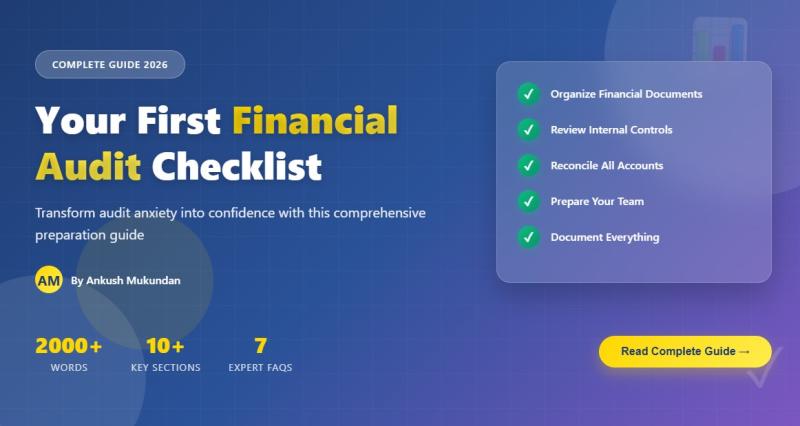
Quick Takeaway: Success in your first financial audit depends on thorough documentation, complete reconciliations, documented internal controls, organized receivables and payables, and a prepared response team. Start early and stay systematic for the best results.
Expert guidance from Ankush Mukundan on navigating your first financial audit with confidence and professionalism.


Post Your Ad Here
Comments