ASL Interpreting Services That Actually Deliver Access
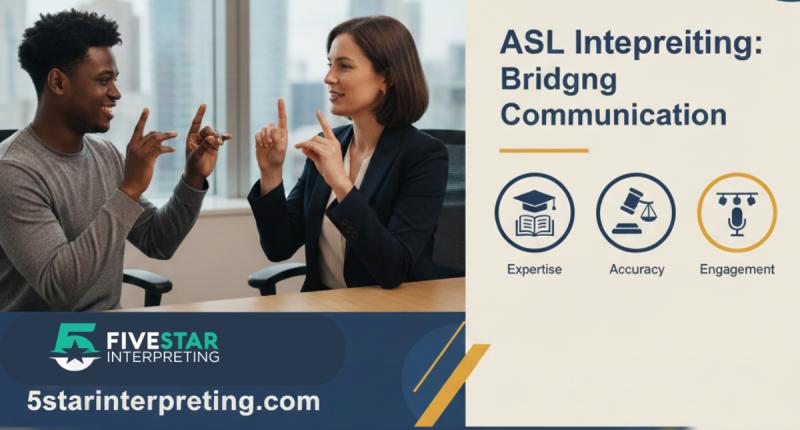
Often, the role of ASL interpreting services is oversimplified by the public. Due to this misunderstanding of the role of an ASL interpreter, people believe an ASL interpreter signs just spoken language. This thought process fails to recognize what interpreting is about. Interpreting is about using cultural competence, neutrality, emotional awareness, and professionalism to communicate ASL interpreting. Interpreting is not just about interpreting spoken language; it is about connecting with those who may not understand spoken language.
A registered ASL interpreter is a bridge between those who utilize sign language translator and those who speak orally. In any setting (classroom, courtroom, hospital, workplace, or live event,) an ASL interpreter must become the bridge between spoken language and Deaf communication. If the bridge between each form of communication is poorly built, incomplete, or unqualified, then the whole purpose is lost.
Thus, selecting an appropriate ASL interpreting service is critical.
Actual Purpose of ASL Interpreting Services
There is more to an ASL interpreting service than just repeating words. An ASL interpreting service provides the ability to convey intent, tone, and meaning in a clear and precise manner. Various environments will require very specific styles of interpreting:
Many educational settings require patience, clarity, and subject-matter expertise from an ASL interpreter.
Many corporate settings will require ASL interpreters who show a level of professionalism, who know how to pace themselves, and who provide confidential services.
Many medical environments will require ASL interpreters to provide accurate terminology and uphold ethical standards.
Legal interpreters must provide a high degree of accuracy, neutrality, and the ability to comply with the requirements established by the jurisdiction in which the court is located.
Events, conferences, and performances will require ASL interpreters to provide an understanding of timing and rhythm as well as engage their audience.
Hence, an ASL interpreting service is not a one-size-fits-all role. Instead, the ASL interpreting service must have flexibility to adapt to the context of the environment.”
The Concern: Many Use Fast Search Methods Instead of Smart Search Methods
Searching for ASL interpreters near me might seem like a practical approach; however, if you do not know how to determine what qualifications to look for when searching for an interpreter near you, this type of search will be ineffective. Just because an interpreter is located close to you does not mean they are the best option available. An interpreter needs to have been professionally trained, not just someone who picked up a few signs from watching YouTube videos or attended a basic sign language course.
Real interpreters differ from amateur interpreters in the following ways:
Certified and/or Licensed
Knowledge about Deaf Culture
Knowledge of Confidentiality Rules
Experience in Areas Where Interpreting Takes Place
Ability to Remain Neutral While Interpreting
Professional Ethics and Accuracy
Good Interpreting is Invisible; that is, it seems to be an extension of the communication, rather than an interruption.
Rise in the Need of On-Demand and Remote ASL Interpreting Services
ASL interpreting services continue to expand due to the difficulties that can still occur around scheduling and availability. Many businesses are now using a combination of the methods to receive the benefit of ASL interpreting services for those scenarios:
On-site Interpreters for Face-to-Face Communication Situations
Video Remote Interpreting Services when logistical or timing difficulties exist and the interpreter cannot be physically present
Hybrid Support Service for Ongoing ASL Interpreting Needs (e.g., Recurring Doctor Appointments, Monthly Staff Meetings, School-Related Issues)
Flexible Scheduling for ASL Interpreting Services is no longer a luxury. Flexibility has become the standard.
Who Will Need ASL Interpreting Services?
The short answer is: More Than You'd Expect. ASL Interpreting is not limited to hospitals and education. It is for a variety of services:
Job interviews
Legal consultations
Therapy sessions
Workshops
Social services
Government appointments
Live performances
Religious services
Public events
If spoken information is being shared, access must exist. Period.
Selecting an Interpreting Service Provider
When getting ready to hire an interpreter, there are important questions to ask that people often overlook.
Does the interpreter have experience in the environment where they will perform their interpreting work?
Can the provider adequately accommodate late or emergency requests for interpreters?
Are all of the interpreter's actions in alignment with national standards, codes of ethics, and certification requirements?
If the interpreter has to change the time of service, does the service provider guarantee continued availability of a qualified interpreter?
If a service provider cannot give you a confident answer to each of these questions, look for another provider.
Conclusion:
While ASL interpreting services provide accessibility, they are also required for communication equity. You can not rely on guesses, informal signing, or convenience to facilitate communication equity. If a person is searching for asl interpreters close to them, they want to find a qualified interpreter who delivers accurate, respectful, and participatory communication.
When someone requests access to a service, they are asserting their right to access. When a qualified interpreter works with the person providing access, that person's rights will be upheld.


Comments