A nitrocellulose production plant setup offers a valuable industrial opportunity, as nitrocellulose is widely utilized in coatings, printing inks, automotive paints, wood finishes, leather treatments, and various specialty chemical applications. Produced by nitrating purified cellulose under strictly controlled conditions, it delivers fast-drying, film-forming, and strong adhesion properties essential for modern manufacturing. This overview highlights key considerations for a nitrocellulose production plant setup, including process requirements, infrastructure needs, economic factors, and overall project feasibility—while emphasizing safe, compliant operations.
Nitrocellulose Production Plant Setup: Cost, Machinery, Process
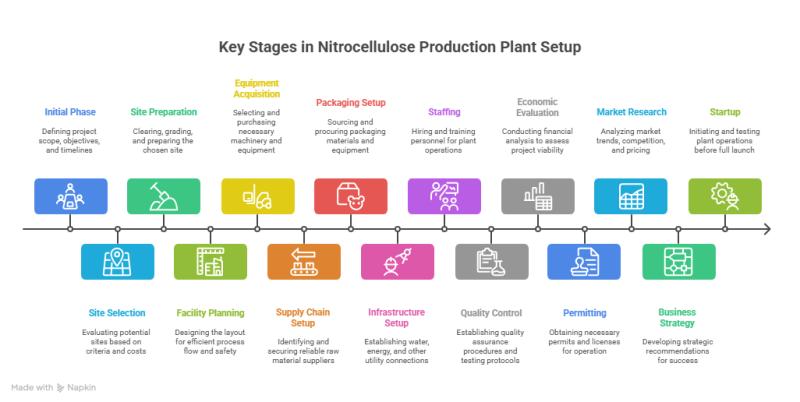
Introduction – Overview of a Nitrocellulose Production Plant:
Market Overview & Trends – Growing Demand in Coatings and Printing Industries:
The nitrocellulose market is expanding due to strong demand from wood coatings, leather finishes, automotive refinishes, and flexographic and gravure printing ink industries. Manufacturers prefer nitrocellulose because of its superior drying speed, gloss, film strength, and compatibility with resins and plasticizers. Trends include the rise in low-viscosity grades, environmentally compliant formulations, water-based nitrocellulose dispersions, and demand from emerging economies with growing printing and packaging sectors. Challenges include raw material volatility and stringent safety regulations due to nitrocellulose’s flammable nature.
Technical Aspects / Manufacturing Process – How Nitrocellulose Is Produced:
The production of nitrocellulose involves nitrating cellulose with a mixture of nitric and sulfuric acids. The process typically follows these steps:
• Cellulose Preparation: High-purity cotton linters or wood pulp are cleaned and dried.
• Nitration Reaction: Cellulose is immersed in a nitrating acid mixture under controlled temperature.
• Separation & Washing: Excess acid is removed, and the nitrated cellulose is washed repeatedly to reduce acidity.
• Stabilization: Stabilizers are added to neutralize residual acids.
• Dehydration & Drying: Water is removed using centrifuges or dryers.
• Cutting & Grading: Material is cut and classified based on viscosity, nitrogen content, and intended application.
Quality control includes nitrogen percentage testing, viscosity checks, moisture content analysis, flammability checks, purity analysis, and stability tests.
Plant Setup Requirements – Machinery, Layout & Infrastructure:
A nitrocellulose production plant requires well-organized infrastructure and strict safety systems due to the chemical and flammable nature of the product.
Essential areas include: acid storage & preparation units, reaction vessels, centrifuges, washing tanks, stabilization section, dehydration/drying lines, cutting machines, packaging units, and a QC laboratory.
Key machinery includes nitration reactors, acid circulation pumps, centrifuges, hydraulic washers, stabilization tanks, dryers, cutting/granulating machines, screening equipment, and explosion-proof storage units.
Infrastructure needs include chemical-resistant flooring, advanced ventilation, fire-suppression systems, blast-proof production zones, wastewater treatment units, temperature control systems, and proper drainage.
Project Economics – Capital Cost, Operating Cost & Profitability:
Setting up a nitrocellulose production plant involves significant capital investment due to specialized reactors, acid-handling systems, safety equipment, and explosion-proof infrastructure. CapEx includes land, building construction, machinery procurement, safety systems, utilities, and working capital.
Operating expenses include raw cellulose, nitric and sulfuric acids, stabilizers, utilities, water treatment, labor, safety monitoring, maintenance, and packaging.
Revenue is generated from selling nitrocellulose chips, wet nitrocellulose, and low-viscosity or high-viscosity grades used in coatings, inks, leather finishes, and adhesives. Profitability depends on nitrogen grade, production efficiency, raw material quality, and industry demand. Break-even, ROI, and payback periods are highly favorable for plants supplying printing ink and automotive sectors.
Risk Factors & Success Strategies – Ensuring Safety & Product Stability:
Key risks include chemical handling hazards, fire and explosion risks, acid burns, machinery failure, and regulatory compliance. Nitrocellulose must be stored in controlled moisture conditions to prevent ignition.
Success strategies include implementing advanced safety systems, using explosion-proof machinery, ensuring controlled nitration, investing in wastewater treatment, optimizing nitrogen content accuracy, and securing long-term supply contracts with ink and coating manufacturers. Offering industry-specific grades can further increase market competitiveness.
Ask An Analyts: https://www.imarcgroup.com/request?type=report&id=18210&flag=C
Conclusion – Feasibility and Industrial Potential of Nitrocellulose Manufacturing:
A nitrocellulose production plant is a highly profitable industrial project with strong demand across coatings, printing inks, automotive refinishing, and chemical industries. With strict safety compliance, efficient production technology, reliable quality control, and structured market outreach, investors can establish a successful and scalable nitrocellulose manufacturing unit.
FAQs — Nitrocellulose Production Plant Setup:
1. What raw materials are needed for nitrocellulose manufacturing?
High-purity cellulose (cotton linters), nitric acid, sulfuric acid, stabilizers, and water.
2. What machinery is essential for a nitrocellulose plant?
Nitration reactors, centrifuges, washing tanks, stabilizers, dryers, cutting/granulating machines, and explosion-proof storage systems.
3. What factors influence nitrocellulose production cost?
Cellulose quality, acid consumption, nitrogen content range, energy usage, safety systems, and wastewater treatment costs.
4. How can manufacturers ensure safe handling of nitrocellulose?
By maintaining proper moisture levels, using explosion-proof equipment, ensuring controlled nitration, and implementing strict fire-safety protocols.
How IMARC Can Help?
IMARC Group is a global management consulting firm that helps the world’s most ambitious changemakers to create a lasting impact. The company provide a comprehensive suite of market entry and expansion services. IMARC offerings include thorough market assessment, feasibility studies, company incorporation assistance, factory setup support, regulatory approvals and licensing navigation, branding, marketing and sales strategies, competitive landscape and benchmarking analyses, pricing and cost research, and procurement research.
Contact Us:
IMARC Group
134 N 4th St., Brooklyn, NY 11249, USA
Email: sales[@]imarcgroup.com
Tel No:(D) +91 120 433 0800
United States: (+1-201971-6302)
1 people like it

Advertise on APSense
This advertising space is available.
Post Your Ad Here
Post Your Ad Here
Comments