7 Essential Tips for Financial Planning and Wealth Management
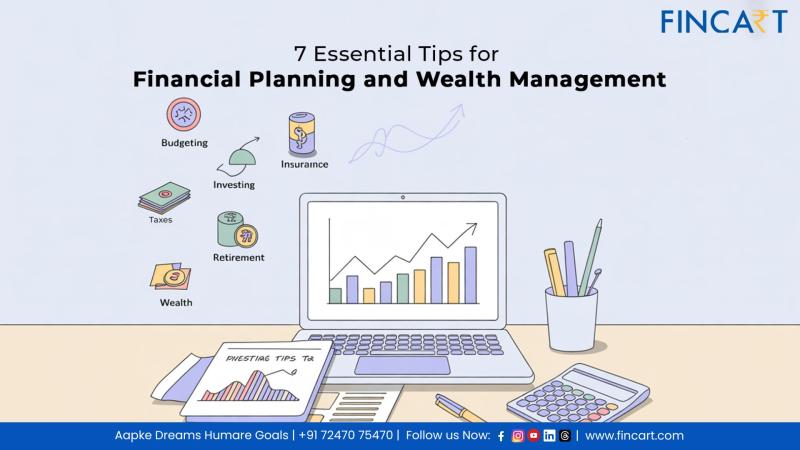
As financial literacy rises, more people are realising how important it is to plan for a secure future. Finances touch almost every aspect of our lives, so it only makes sense to plan them well. Check out these 7 tips to make your financial journey more fruitful.
1. Check Your Emergency Savings and Insurance
One of the main pillars of financial planning is risk protection. Any decent investment planning company in india will tell you: Have safety nets in place before jumping into the world of investing. This is because life’s unpredictability leaves us vulnerable to financial risks. If you’re not prepared, unexpected events can hit your finances hard. There are two main ways to protect yourself from such shocks.
Build a solid emergency fund that covers at least six months of essential expenses.
Get the right health and term insurance.
Emergency funds are useful for dealing with shorter-term situations like urgent home repairs or a temporary loss of income. An adequate emergency fund will prevent you from breaking your investments or taking high-interest loans. Insurance, on the other hand, will protect you from big, long-term financial challenges. With these risk-protection measures in place, you’ll be able to invest more confidently.
2. Follow a Realistic Budget
One of the biggest reasons people face financial problems is mismanaging income and expenses. So many live beyond their means without realising it. And of course, when that happens, financial stress is guaranteed. Budgeting helps you fix this. It is one of the core steps of financial planning.
A budget gives you a spending structure. It helps you track where your income goes on a monthly basis. When you know your numbers, saving a percentage each month becomes much easier. It also helps you spot areas where you overspend. Most of us don’t really notice how much we spend on luxuries until we actually calculate it. Once you identify such areas, the cutbacks can go towards investments or clearing debt.
A popular budgeting structure is the 50/30/20 rule. According to this principle, 50% of your income should go to needs, i.e., essential expenses. 30% should go to wants, and 20% to savings. The 30% for wants gives you space to have fun, which is important. One of the hardest parts of budgeting is sticking to it, so it must be realistic. Your budget should allow some enjoyment so you don’t burn out and abandon it.
Of course, everyone’s situation is different. The 50/30/20 rule won’t work for all. What matters is saving a percentage every month while meeting your essential expenses and leaving some room for fun. And if you haven’t started budgeting yet, don’t worry. You can always reach out to Fincart’s financial advisory services in delhi. Our experts can guide you on budgeting based on your lifestyle, income, and goals.
3. Choose Suitable Investment Options
This one sounds obvious, but many retail investors still get it wrong. A lot of people invest in products that don’t suit them at all. You see this most often with stocks, but it also happens with mutual funds, gold, and other assets. They buy when prices are high and sell when they fall. This tends to happen due to misinformation, FOMO, and half-knowledge.
If you don’t understand what you’re investing in - how it works, its pros and cons, its risks, its taxation - you’re bound to make mistakes sooner or later. Another blunder is ignoring personal factors like goals, investment horizon, and risk tolerance. An investment that works for your friend may not necessarily work for you.
And that brings us back to suitability. Your investments must match your needs. They must also be fundamentally strong. A wealth management consultant can guide you on both fronts. They help you pick quality products that align with your goals and risk appetite. They also ensure your portfolio is optimally diversified to handle risks and help you lower taxes.
If you haven’t begun investing yet, it’s best to start as soon as possible. Time is your biggest advantage for wealth creation. And remember to also give importance to far off goals such as retirement. It’s often the urgent goals that catch our attention, but long-term goals also require steady contributions.
4. Stay on Top of Tax Planning
Tax planning allows you to legally minimise your tax burden. Investing in a random 80C instrument near the end of the year won’t do much for your financial plan. In fact, these last-minute decisions can lead to investments that don’t match your goals. Proper tax planning means choosing investments that not only save tax but also help you achieve goals.
The best certified financial planner will always remind you that tax savings will accelerate wealth creation. The more you save here, the more you can invest later. So start tax planning early with efficient tax-saving strategies, such as:
Investing in Section 80C instruments like ULIPs and ELSS.
Using home loan tax benefits.
Claiming education loan interest deductions.
Making use of health insurance deductions.
Using NPS for retirement planning.
Also, make sure to file your returns on time. The government changes tax laws regularly, so staying updated helps you avoid penalties and take advantage of new benefits.
5. Update Your Estate Plan
Estate planning is one of the most important parts of wealth management, and yet, many people ignore it. This process deals with deciding how one’s wealth will be handled after they pass away. Without it, families can face disputes and long court battles. If you are near retirement or already retired, estate planning becomes even more important.
A good estate plan distributes your assets exactly as you want. The most common ways to do so are updating nominees and creating wills. More advanced options, namely trusts, are often used by many. They offer more benefits than just smooth wealth transfer. You can use them as asset protection tools in your lifetime. You can decide how, when, and to whom the assets should go. They also help you maintain privacy.
It’s always wise to take professional help for this step. An advisor can guide you on how to draft a will or set up trusts. Make sure to keep all documents up to date as your life changes.
6. Review Your Financial Plan Regularly
It’s essential to review and adjust your plans regularly so they match your current situation. For example, let’s say your wealth management consultant suggested a 70:30 equity to debt allocation a year ago. Due to market movements, that ratio shifted to 75:25, meaning you’re now taking more risk than you intended. If your risk tolerance stayed the same, you’d need to rebalance and bring back the allocation to its original. Regular reviews help you catch allocation changes early and rebalance before your plan strays too far.
And it’s not just the market changes. Your income may be different now. Maybe you received a promotion or switched jobs. Such changes affect how much you can save, spend, or invest. This should naturally prompt changes to your financial plan as well to match your current reality. Ideally, you should review your plan every six months or year to ensure it still aligns with your life.
H2: 7. Work With a Financial Planner
Working with a qualified planner is one of the wisest decisions you can make. The best certified financial planner will always put your interests first. They will:
Thoroughly study your financial goals, risk tolerance, and investment horizon to give personalised advice.
Ensure you have sufficient emergency savings to deal with unforeseen situations.
Suggest realistic budgets so you can save consistently without feeling deprived.
Create debt management strategies to help you reduce high-interest debt.
Help you select the right insurance policies.
Guide you to investments that suit your profile.
Diversify your portfolio efficiently so it’s neither too concentrated nor thinly spread.
Legally minimise your tax burden to help you keep more of your hard-earned money.
Estimate your retirement corpus and suggest ways to grow it while factoring in inflation.
Monitor your plan to make sure you’re on track to achieve your goals.
Answer any questions and provide clarity whenever you need.
Keep your emotions in check when making financial decisions.
Conclusion
Finances are such a huge part of our lives. It’s only fair that we treat our financial health with the same care as our physical health. With a clear plan, you can set yourself up for long-term security and peace of mind.
FAQs on Financial Planning and Wealth Management Tips
Q: What are the main elements of financial planning?
A: The main elements of financial planning include:
Budgeting
Goal Setting
Investment Planning
Insurance Planning
Tax Planning
Retirement Planning
Estate Planning
Debt Management
Q: Do I need to be wealthy to hire a wealth management consultant?
A: No, anyone looking to grow and protect their wealth can benefit from working with a wealth management consultant.
Q: What are some tips to improve my financial planning and wealth management?
A:
Create a realistic budget.
Build an emergency fund.
Invest according to your goals, risk tolerance, and horizon.
Diversify your portfolio.
Plan for taxes.
Review and update your financial plan regularly.
Work with a qualified financial planner.
Q: How do I build an emergency fund?
A: An emergency fund should generally contain enough to cover 6 months of your essential expenses. These include rent, mortgage, utility bills, groceries, EMIs, etc. Start by calculating this total. Then, select an appropriate vehicle to store these savings. Liquid funds are a popular option as they offer higher returns than savings accounts. One can also make quick withdrawals in case an emergency strikes. You can start an SIP into a liquid fund to build this corpus slowly.
Q: What does a financial planner do?
A: The best certified financial planner offers personalised guidance on investments, retirement planning, tax planning, and risk management. They put your interests first and help you realise your long-term dreams.
Q: Where can I find the best financial advisory services in delhi?
A: Fincart Financial Planners offer some of the best services not just in Delhi, but across India. You can easily connect with their experts online from the comfort of your home. Get personalised guidance and start managing your finances effectively!
Post Your Ad Here
Comments