The Patna Wardrobe Solution: Where Tradition Dresses Every Generation
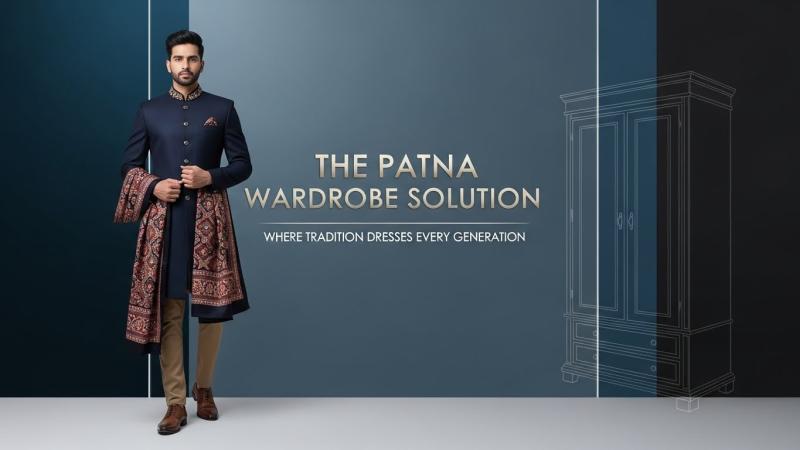
In the bustling lanes of Patna, where the aroma of street food mingles with the sounds of daily commerce, a more silent, sartorial quest unfolds in countless households. It is a quest that often fragments the family unit, sending them in different directions across the city. The grandfather seeks a classic, breathable cotton kurta for his evening walks and temple visits—garments that speak of comfort and timeless dignity. The father, a modern professional, requires a sharp Bandhgala or an Indo-Western ensemble for a corporate Diwali party or a wedding reception, balancing tradition with contemporary polish. The young groom-to-be dreams of a regal sherwani, an outfit that must hold its own in a grand ballroom under cinematic lighting, embodying both heritage and his personal style. Meanwhile, the teenager needs something for his first major family function, something that feels authentic yet aligns with his generation's aesthetic.
This multi-generational divide represents the central challenge of ethnic wear shopping in the city. One can find lavish, celebrity-endorsored boutiques catering exclusively to the extravagant groom, or sprawling local markets offering vast variety but inconsistent quality and fit. However, for the family seeking a unified standard of craftsmanship, value, and style that respects each member's age and occasion, the options have historically been limited. This fragmented pursuit ends at a singular address on Boring Road, where a forty-year legacy has perfected the art of dressing Patna's men, from boyhood to grandfatherhood. The solution is not found in a trend-chasing boutique, but in an institution: Nawab Parker.
The establishment’s very name evokes a specific sensibility. "Nawab" suggests an inherited, understated elegance, while "Parker" implies preparedness and practicality. This duality—the regal and the reliable—is woven into the fabric of its identity. Founded in 1984 as part of Surya Collection Private Limited, Nawab Parker began not merely as a retailer but as a manufacturing concern of significant repute, producing high-quality ethnic garments for large national brands. This origin story is crucial; it is a brand built from the inside out, from the stitching table to the showroom floor. For decades, it operated as Patna’s "best-kept fashion secret," its expertise anonymized within garments sold under other labels. Today, that same expertise, honed over two generations, is directed under its own banner, offering families a direct conduit to premium craftsmanship rooted in the city itself.
The contemporary male wardrobe, particularly for festivities and weddings, has undergone a profound transformation. Men are no longer passive wearers of ceremonial uniform; they are active participants in curating their look, seeking attire that reflects personal identity and the specific theme of an event. The demand has shifted from the generic to the specific, from mere utility to expressive comfort. Nawab Parker’s philosophy was shaped in anticipation of this shift. Every piece is designed with the "today’s man" in mind, focusing on identity, confidence, and comfort. This foundational principle manifests in collections that serve not a single demographic, but the entire spectrum of male life in Patna. It is this deliberate, inclusive design ethic that positions their Boring Road showroom not just as a kurta pajama shop in Patna, but as a comprehensive destination for the city's sherwani for groom in Patna needs and every occasion in between.
What follows is an exploration of how this pioneer brand solves the familial wardrobe dilemma. We will examine its approach to different life stages, deconstruct the quality inherent in its garments, and analyze why it has become the trusted choice for over ten thousand customers in the region.
A Garment for Every Chapter – Deconstructing the All-Ages Arsenal
The true measure of an ethnic wear destination is not found in its most extravagant piece, but in its most considered one. Nawab Parker’s dominance in Patna’s sartorial landscape is predicated on a meticulously curated arsenal that addresses the distinct sartorial requirements of each life stage. This is not a mere collection of garments; it is a structured response to the anthropological shifts in male dressing, from the first ceremony of childhood to the pinnacle of the wedding day.
For the Young and the Youthful: Foundations in Fabric
The initial foray into traditional attire for boys and young men is a critical moment. Ill-fitting, coarse, or overly ornate garments can create a lasting aversion. Nawab Parker approaches this demographic with a focus on foundational comfort and subtle style. Their collections for younger patrons prioritize lightweight, breathable fabrics like premium cottons and easy-care viscose. The designs are clean—think straight-cut kurtas and simple pajamas—often featuring youthful colors and minimal, contemporary embroidery.
This philosophy extends to special occasions. A young boy’s first major family wedding requires an outfit that grants him both comfort and a sense of participation. Here, options like smart Bandi sets or smaller-scale Kurta-Churidar combinations are available. The cuts are designed for activity, and the fabrics are chosen for their durability against the rigors of celebration. This early positive association with ethnic wear, fostered by garments that feel good to wear, establishes a lifelong appreciation for quality, making the shop a foundational kurta shop in Patna for families.
For the Discerning Professional: The Architecture of Elegance
The modern gentleman of Patna exists in a sartorial intersection. His attire must communicate respect for tradition while projecting a persona of contemporary competence and global awareness. For this individual, the standard kurta-pajama may feel too informal for a corporate Diwali party, while a full sherwani is excessive. Nawab Parker’s genius lies in mastering this intermediary space with what can only be termed as architectural elegance.
The Indo-Western collection is the cornerstone of this offering. Garments such as the Bandhgala jacket, the Jodhpuri suit, and contemporary long jackets worn over kurtas are engineered for sharp silhouettes. These pieces often employ structured fabrics, minimalist embellishment in the form of tasteful buttons or subtle piping, and a precision of fit that rivals formal Western tailoring. They are garments of intention, designed for the man who must move from a high-stakes business meeting to a festive soirée with seamless grace. This segment solidifies the store’s reputation not merely as a kurta store in Patna, but as a curator of professional Indian identity.
For the Patriarch and the Connoisseur: Legacy in Thread
As a gentleman matures, his clothing often sheds transient trends in favor of timeless substance. The patriarch, the scholar, the connoisseur—these individuals seek garments that speak through material integrity and masterful construction rather than overt decoration. Nawab Parker’s offerings for this demographic are studies in refined austerity and comfort. Here, one finds kurtas and jackets crafted from the noble fabrics of the Indian subcontinent: hand-woven Khadi cotton, lush Mulberry silks, and intricate but subdued brocades.
The value proposition shifts from style to heritage. A finely woven silk kurta, with its gentle sheen and impeccable fall, becomes an heirloom. The cut is generous, prioritizing ease of movement and dignified drape over a fashion-forward fit. Embroidery, if present, is classical—think gota patti or chikan work—executed with an artisanal subtlety that reveals itself upon closer inspection. For the mature gentleman, visiting Nawab Parker is less about shopping and more about investing in pieces that embody permanence, making it a destination for those seeking the most dignified kurta in Patna.
For the Groom in Waiting: The Sovereignty of the Sherwani
The apex of Nawab Parker’s craft, and the category that has cemented its status as the best sherwani shop in Patna, is its groom wear. A wedding sherwani in Patna is not merely an outfit; it is a ceremonial armor, a symbol of sovereignty on the most significant day of a man’s life. The brand approaches this responsibility with a profound understanding of both spectacle and wearability. Their sherwanis are conceived with a regal silhouette, often featuring tailored shoulders and a flaring skirt, creating an imposing yet elegant frame.
The distinction lies in the meticulous balance. While opulence is a given, achieved through rich velvets, silk jacquards, and intricate zari and thread embroidery, it is never at the expense of comfort. Linings are selected for breathability, the weight of embellishment is strategically distributed, and the cut allows for the full range of ceremonial gestures—from the jaimala to the saptapadi. This thoughtful engineering ensures the groom appears every bit the nawab without feeling encumbered, transforming the sherwani for groom in Patna from a costume into a second skin of confidence. This holistic approach to groom wear, which considers the physiological demands of a long celebration alongside the aesthetic ones, is what separates a mere retailer from a pioneer.
The Anatomy of Excellence – Manufacturing, Material, and the Curated Experience
The preceding analysis of Nawab Parker’s demographic mastery reveals a compelling product matrix. However, to comprehend its foundational superiority, one must deconstruct the principles operating beneath the surface. The brand’s preeminence is not a consequence of marketing alone but is engineered through a vertically integrated manufacturing philosophy, a scholarly approach to materials, and a deliberately curated client journey that transcends transactional commerce.
The Foundational Advantage: Vertical Integration from Loom to Room
The predominant retail model, even for luxury goods, is one of outsourcing. Brands design, and independent workshops produce. Nawab Parker defies this paradigm through its origin as a manufacturing entity for Surya Collection Private Limited. This vertical integration—controlling the process from fabric procurement and garment construction to final retail presentation—confers an insurmountable competitive edge. It is the difference between an architect who also masters bricklaying and one who merely supplies blueprints.
This control manifests in tangible quality benchmarks. Stitching consistency, seam strength, alignment of patterns, and the precision of embroidery placement are subject to internal, unyielding standards. There exists no opaque chain of subcontractors to obscure accountability. For the consumer, this translates to a garment with notable structural integrity. A kurta’s side seams will not twist after laundering; a sherwani’s heavy embroidery will be secured with a robustness that prevents unsightly puckering of the base fabric. This manufacturing ethos addresses the chronic anxiety of quality inconsistency that plagues ethnic wear shopping, positioning the brand as a reliable best kurta shop in Patna for those who value longevity alongside aesthetics.
A Taxonomy of Textiles: Selecting the Right Substrate
Beyond construction lies the primacy of material. Nawab Parker’s collections demonstrate a nuanced understanding of textiles, curating fabrics based on their functional and semiotic properties. This selection process is a critical differentiator in the crowded sherwani in Patna marketplace.
The following taxonomy illustrates their material strategy for core occasions:
This deliberate curation ensures that a grandfather’s linen kurta prioritizes breathability, while a groom’s silk sherwani delivers on expected magnificence. The choice is never arbitrary; it is a calculated decision aligning fiber properties with human need and social context.
The Curated Journey: Service as a Silent Standard
The final pillar of the Nawab Parker edifice is the experiential dimension of acquisition. In an era of automated retail and impersonal transactions, the brand cultivates a consultative pilgrimage. The spatial design of their Boring Road showroom facilitates a progression from casual browsing to serious contemplation. Knowledgeable attendants, often with years of tenure, operate not as sales personnel but as style interlocutors. They engage in a diagnostic dialogue: inquiring about the event, the time of day, the thematic color palette of the wedding, and the wearer’s personal comfort preferences.
This service model is particularly invaluable for high-stakes purchases like a wedding sherwani in Patna. The attendant can elucidate the practical implications of choosing a heavily embroidered velvet piece for a daytime summer ceremony versus a lighter, woven silk alternative. They manage the critical path of measurements, fittings, and final alterations with systematic precision, alleviating a significant source of pre-wedding anxiety. This end-to-end custodianship of the client’s need—from initial ideation to the final fitting—transforms a purchase into a partnership. It is an embodiment of traditional retail virtues recalibrated for modern expectations, ensuring the search for a sherwani for the groom in Patna concludes with confidence, not merely a garment.
This synthesis of controlled manufacturing, intelligent material science, and elevated service creates a holistic value proposition. It answers not only the question of what to wear but why one garment outperforms another, and how the entire process can be seamlessly managed.
The Definitive Verdict – Nawab Parker and the Patna Paradigm
The landscape of men’s ethnic fashion in Patna is a study in contrasts. On one axis lie the glittering, nationally-branded boutiques, temples to contemporary aspiration where celebrity imagery and seasonal trends command premium valuations. On the opposite axis exist the vibrant, sprawling local markets, offering democratic access and negotiable prices amidst a cacophony of choice. For decades, the Patna shopper has navigated this binary, making compromises based on occasion, budget, and tolerance for uncertainty. The emergence of Nawab Parker as a dominant force represents the maturation of this market—the rise of a third paradigm that synthesizes the strengths of both while eliminating their core deficiencies.
To understand its pioneering position, one must examine the brand not as a mere retailer, but as a vertically integrated institution responding directly to the unmet needs of the Patna family. The following comparative analysis delineates this strategic positioning:
The Pioneer's Rationale: Why Synthesis Triumphs
Nawab Parker’s model succeeds because it resolves the fundamental tensions inherent in ethnic wear procurement. The national boutique offers reassurance through branding but often at a relational and financial distance. The local market offers intimacy and price but requires the consumer to become an expert procurer, quality controller, and project manager. Nawab Parker interposes itself as the informed, trusted intermediary.
Its forty-year lineage is not merely a sentimental narrative; it is a continuous feedback loop. This tenure has allowed the brand to accumulate a profound, granular understanding of the Patna man’s physiological proportions, climate-specific needs, and evolving ceremonial rituals. When they create a sherwani for groom in Patna, it is informed by knowing how Patna’s wedding venues are lit, the duration of its summer pheras

Post Your Ad Here
Comments