Top 10 First Foods for Baby to Ensure Healthy Growth and Development
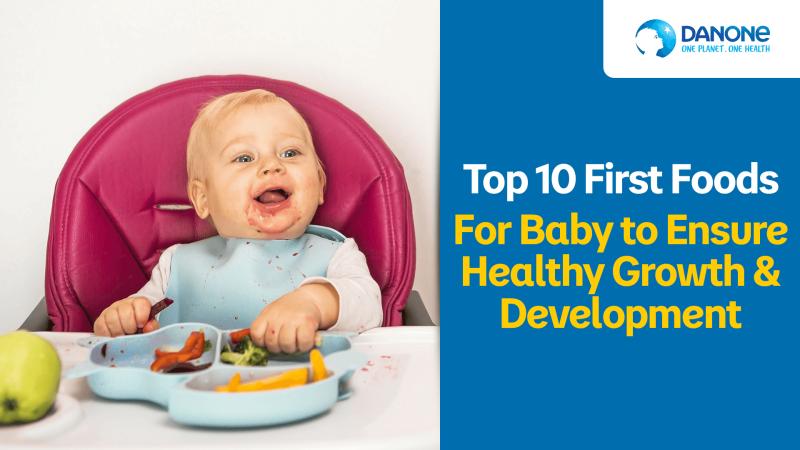
Your child's first transition into solids is a pivotal moment in your child's life and development. Your child will experience tremendous physical and mental growth during his or her first years of life, therefore, the specific types of solid foods you introduce will help determine the direction of your baby’s growth and development.
For example, providing your child with iron-enriched cereals and vitamin-rich fruits will provide the foundation for a lifetime of successful health.
This guide provides information on the best foods for infants, when to introduce them, and clinical evidence-based baby nutrition tips.
Importance of First Foods
By approximately six months of age, babies are in need of additional nutrients that are not supplied in adequate amounts by breast milk or formula, specifically iron or zinc. By offering a variety of solid foods at this age, you provide your baby with all of the healthy baby foods, but also the following benefits:
Quickens both mental and physical maturity
Improves your baby's immunity
Develops healthy food preferences
Helps to reduce the chances of developing nutrient deficiencies (anemia)
Top Ten First Foods for Baby
These first foods for babies are nutritious and supported by the healthcare and research community (Pediatricians) as recommended food sources.
1. Iron Fortified Baby Cereal
Importance of Iron: Newborns are born with iron in their bodies, however, the iron reserves are almost depleted by 6 months. Iron is needed for cognitive growth, helps supply fresh oxygen to the blood.
Tips for Serving Iron-Fortified Baby Cereal
Mix with breastmilk or formula until a smooth consistency is formed.
Use only single-grain baby cereal such as rice, oatmeal, or Ragi.
Do not add sugar or salt.
2. Mashed Banana
Importance: High in potassium, bananas are easily digested, provide quick energy, and also act as a natural laxative.
How can it be served:
Simply mash a ripe banana as needed. No cooking required.
3. Sweet Potato Puree
Why it matters- Because it is a good source of Beta-Carotene (Vitamin A), which helps support immune function and vision.
How can it be served- You will need to peel the sweet potato, steam it, and mash it up into a pureed form. If desired, you may add a little breast milk or water to make it smoother.
4. Khichdi of Moong Dal
Why it matters- Because it is very high in plant protein as well as iron. It is also easy on your baby's digestive system.
How can it be served- You will want to pressure cook some moong dal along with a small amount of rice and then mash or blend until you achieve a smooth consistency.
5. Pureed Avocado
Why is it Important- Avocados are high in fat, which is necessary for developing a baby's brain.
How Can We Serve Avocados: Mash a ripe avocado into a smooth texture. You may serve the mashed avocado by itself, or you can mix the mashed avocado with mashed bananas or breastmilk.
6. Carrot Puree
Why is it Important- Carrots contain both beta-carotene and fiber in their pureed form. The baby will enjoy the sweetness and smoothness of carrots as pureed carrots.
7. Ragi Powder Porridge
Why is it Important- Ragi powder contains both iron and calcium, making it an excellent choice for building strong bones and increasing your baby's hemoglobin levels.
How Do We Prepare Ragi Powder Porridge:
You would use uncooked Ragi Powder, which you have added water or milk (only if your baby is over the age of one) to, to cook until the consistency of Ragi Powder porridge is smooth.
8. Stewed Apples or Pears
Importance: Apples and pears have high levels of vitamin C and fiber, which help with digestion as well as enhance iron absorption in conjunction with iron-rich foods.
How can it be served: Remove peel, steam until soft, and mash or blend until combined to serve warm.
9. Mashed Egg Yolk (after 8 months)
Why is it important:
Egg yolks are a very nutritious food. They contain iron, choline, and fat-soluble vitamins (A and D).
How to provide:
Egg boiler. Egg yolk is mashed with water or formula.
10. Mashed Pumpkins
Why is it important:
Pumpkin is a good source of Vitamin A and potassium. It has a naturally sweet flavor which makes it appealing for babies to eat.
How to provide:
Steam pumpkin until soft and puree until smooth.
Baby Nutrition Tips on Introducing Solid Foods
When introducing solid foods to your baby, there are a few things that you'll want to keep in mind:
Take it Slow: The first few times you give your baby a solid food, do so one food item every few days so that you can observe any allergic responses your infant might have.
Confirm Your Baby's Readiness for Solids: Before beginning solid food with your baby, it is essential that he/she can sit with minimal support, express an interest in eating, and keep his or her head up independently.
Initially, Provide Only 1-2 teaspoons of Solid Food Per Feeding- Initially, provide your baby with solid foods once daily and gradually build on that to include more than one meal daily and greater amounts of food per feeding.
Do not feed your baby salt, sugar, or honey – Babies kidneys are not mature enough to process excess salt, and honey should not be given until after age 1 due to the risk of botulism.
Hydration: Following the introduction of solid foods to your baby, it is also important to begin to provide your baby with small amounts of boiled water that has been cooled to room temperature during feeding times.
Symptoms of Allergy You Should Look Out For
You should regularly check your child for signs of an allergic reaction, including:
Hives or rashes
Vomit, diarrhea, or both
Swollen areas around the mouth or eyes
Breathing problems (get medical help right away)
Foods Not Recommended Within the First Year
Cow's milk (as a beverage)
Honey
Whole nuts and grapes (potential choking hazard)
Eggs (raw or undercooked)
Salt or processed foods in large quantities
Babies growing up will go through many stages of growth and will develop differently, and will be able to eat different foods at different times. As such, babies may initially love the new flavour of the food you present or vice-versa, and vice-versa with their developing taste buds.
As you introduce your baby to different types of food, your most important job is to provide them with an array of healthy baby foods over a consistent time frame, and also to provide them the love, time, and encouragement, as well as your patience and persistence in enabling the excitement and fun of exploring different foods and flavours.
Giving your baby the best foods for infants they need and using the baby nutrition tips will also establish a foundation for healthy eating in the future of your baby.
FAQs
1. At Which Age Should I Begin Introducing Solid Foods to My Child?
Infants 4 to 6 months old will typically be able to sit alone and also display an interest in solid foods.
2. Is Homemade Baby Food Better than Store-bought Baby Food?
Both types of foods are nutritionally adequate, but the main benefit of homemade foods is that you, as the parent, can choose ingredients, while the packaged food is typically supplemented with added nutrition.
3. Can I Combine Bananas with Rice Cereal or Other Foods?
The combination of rice cereal and banana has a lot of nutritional value. After confirming that your child is not allergic to either ingredient, the combination adds flavor and improves nutritional quality.
4. How Do I Know When My Child Has Had Enough to Eat?
Signs of fullness in babies include turning away from the spoon, pushing away from the food, or stopping the attempt at eating.
5. What If My Infant Refuses to Eat?
Many infants will refuse foods at some point, it is best to wait 2-3 days between attempts before offering again. Typically, it may take 7-10 exposures before they will accept a new food.


Post Your Ad Here
Comments