Your Car Is Overheating for This SIMPLE Coolant Mistake!
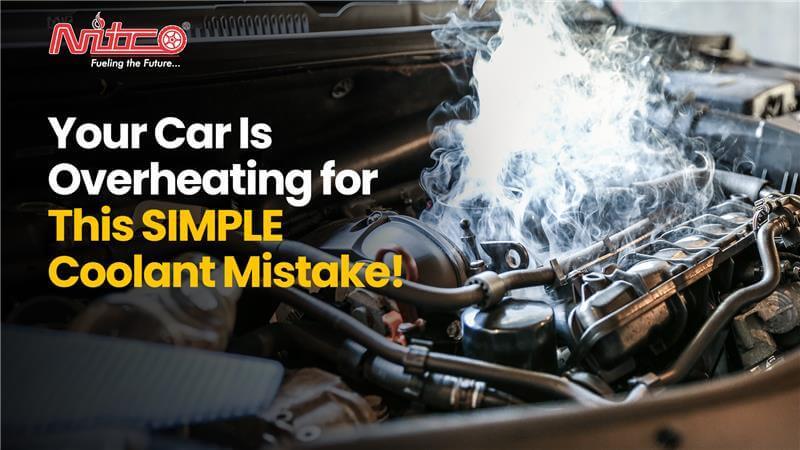
The main reason most drivers are hit with a sudden case of overheating when sitting in a traffic jam or on a long drive is due to a mistake related to radiator coolant. In the first 100 words of this article, we will make one thing very clear, the engine depends on proper maintenance and the level of radiator coolant. A huge mistake is made just by using plain water, not checking your levels, and not replacing radiator coolant altogether.
This article will discuss the error in plain and simple words, will give you signs that your radiator coolant is low, and will tell you how to help prevent your car from being damaged. This article was written for users living in Tier 2 and 3 cities in India to help them save money by ruining their vehicle with costly repairs.
Why Your Car Overheats: The Simple Radiator Coolant Mistake
The majority of overheating cars occur due to improper coolant mixture or by neglecting to check their coolant reservoir for an extended period. Water alone cannot withstand the extreme road heat experienced in India, whether from summer heat or long hauls on highways.
Coolant was designed specifically to:
Control the amount of heat produced by an engine
Prevent rust build-up inside your radiator
Maintain a consistent temperature during stop and go traffic/long-distance driving.
If a person uses only water or old coolant, their engine will overheat as it tries to perform at normal temperatures.
What is Radiator Coolant? (and Why Does It Matter)
Radiator Coolant is designed to control the temperature of a vehicle’s engine and to absorb excess heat from the engine so it can operate effectively. Quality Coolants that have been developed by reputable manufacturers such as NITCO Lubricants will help keep your engine running smoothly and prolong its lifespan.
Here are some important things to keep in mind:
Modern engines require the proper balance between water and coolant to function properly
The right coolant helps to protect the engine from corrosion
The right coolant can help extend the life of an engine
The right coolant can help improve fuel economy.
Using a low-quality coolant or mixing it randomly with tap water is one of the biggest sources of overheating in vehicles. According to the latest survey from the Auto Care Industry Association (2023), more than 40% of the cases of overheating are a result of the use of the wrong type of coolant.
Common Signs of Low Coolant
There are many ways your car may warn you when the coolant is low, and ignoring these symptoms could cost you a great deal down the road if your engine seizes due to negligence. The most obvious indicators of low coolant are:
Temperature Gauge Movement - When the needle on your temperature gauge moves into the red zone, this is one of the first signs of low coolant.
Heater Malfunction - When the coolant level is low, the heater will only blow cold air. Experts consider this one of the main signs of low coolant.
Sweet Smelling Fluid Near the Hood - The sweet smell in the air is indicative of a coolant leak.
Reservoir Level Appears Low - If you check your reservoir and the level is below the minimum mark, then the coolant level is low.
Take all the above signs of low coolant seriously!
The Importance of Changing Your Radiator's Coolant
Changing the radiator's coolant on a regular basis, as recommended by the mechanic, will prolong the life of your vehicle. Radiator coolant in your vehicle should be changed every 30,000 to 50,000 Kilometers, depending on what type of vehicle you have and in what type of environment you live. If you live in India, you should take extra precautions regarding radiator coolant changes, because failing to do so could prove very damaging to your engine.
Radiator coolant changes provide several benefits to your engine, such as:
• Removal of rust buildup
• Restoration of cooling capability
• Reduced pressure within the radiator
• Maintenance of temperature during the high summer months
Many people living in India think that once they've put coolant in, they'll never have to change it again. This is an expensive misconception.
What Mistakes Do Most Indian Drivers Make?
The biggest driver error in India has to be just using water and not a proper coolant.
What happens when you just use plain water:
1. It has a lower boiling point.
2. It causes corrosion in the radiator.
3. It reduces the ability to cool.
4. It wears out the water pump.
Even when using purified/distilled water, nothing can replace a true coolant as good as that of a brand such as Nippon Coolest Liquid (NCL), which has many additives that handle extreme heat, protect against rust/corrosion, and protect the engine.
Advantages of Utilizing High-Performance Coolants from NITCO Lubricants
For over 25 years, NITCO Lubricants has been a prominent manufacturer of lubricants and supplies to the Automotive Industry in India, offering the highest quality coolant, engine oil, and grease products.
The NITCO Coolant Advantage is the following:
Extended engine life
Improved temperature regulation (cooling and heating)
Protection against mineral deposits and rust
Increased dependability during hot weather
With three companies in Bahadurgarh, Delhi, and Guwahati, and sales to countries outside of India, NITCO has been supported by over 60 Distributors in India.
The Scientific Explanation for Why Coolant Overheats
Coolant works because of a characteristic known as the heat transfer coefficient. According to multiple studies, water mixed with coolant dissipates heat more efficiently than water by itself (Source: The Journal of Thermal Science and Engineering, 2022). A high-quality coolant will also have a higher boiling point, which is important because temperatures in India can exceed 45 °C.
Using this scientific basis, we can understand why insufficient amounts of, or incorrect mixtures of, coolant lead to overheating issues.
Tips to Avoid Overheating
Check coolant level every 15 days.
Choose high-quality radiator coolant instead of locally diluted liquids.
Get a timely radiator coolant change from a trusted workshop.
Keep your radiator cap clean and properly sealed.
Inspect for coolant leakage under the car.
Failing to apply the proper procedure for maintaining the proper level of your engine coolant can cause your automobile to operate at an excessively high temperature. Not only will not replacing your engine coolant on time cause overheating, but also neglecting to monitor coolant levels, which may lead to coolant loss through leaks or evaporation.
To increase the life of your vehicle's engine, reduce the number of vehicle failures, and achieve a comfortable driving experience, utilize high-quality engine coolants manufactured by reputable manufacturers such as NITCO Lubricants, one of India’s largest producers of lubricants and coolants.
FAQs
1. I need to change my car radiator coolant regularly. How much should I change it?
The general rule is to change it every 30000 to 50000 kilometers or based on the specific make and model of the vehicle, as well as environmental conditions.
2. Can I add water to my car's radiator coolant?
You can only add distilled water, and the amount you add should be within limits. Do not add tap water at all.
3. My engine's operating temperature is within limits; however, my vehicle overheats. Why?
Many reasons can contribute to vehicle overheating. A blocked radiator, a failed fan, or a defective thermostat can all cause overheating problems.
4. Which coolant brand can I trust in my country?
The best reliable brand of coolant manufactured in India is produced by NITCO Lubricants; their high-quality coolants are well-trusted by both consumers and distributors.
Post Your Ad Here
Comments