Why Companies Use Psychometric Tests: A Strategic Approach to Modern Hiring
The
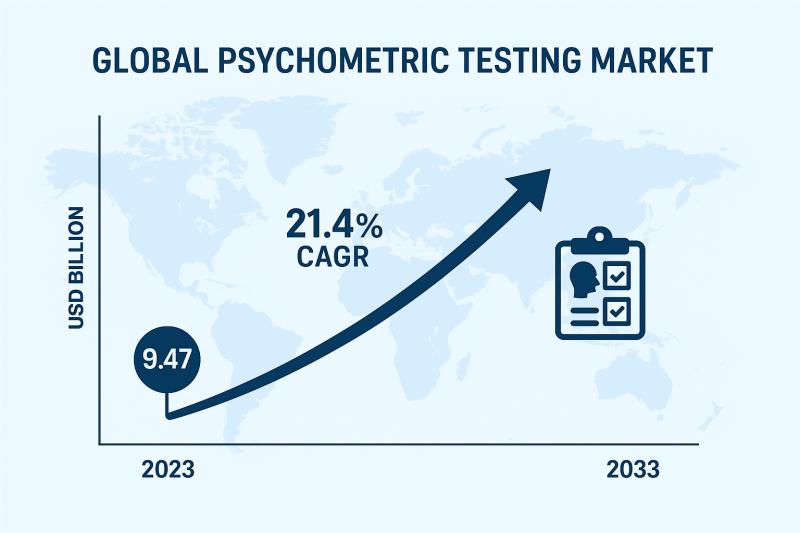
corporate world is rapidly embracing psychometric testing, with the global
market projected to grow from USD 9.47 billion in 2023 to USD 30.12 billion by
2033.
This remarkable
expansion reflects a fundamental shift in how organizations approach talent
acquisition and employee development. Companies across industries are
discovering that traditional interview methods alone cannot predict job
performance or cultural fit with the accuracy needed in today’s competitive
landscape.
Modern
businesses face mounting pressure to make smarter hiring decisions while
reducing costs and improving employee retention. Psychometric assessments have
emerged as a powerful solution, offering data-driven insights that transform
recruitment from guesswork into strategic decision-making.
Enhanced Hiring Accuracy and Reduced Turnover
The most
compelling reason companies adopt psychometric testing is the dramatic
improvement in hiring accuracy. JP Morgan Chase reported a 50% increase in
hiring precision after implementing structured psychometric assessments. These
tools evaluate candidates beyond surface-level qualifications, examining personality traits, cognitive abilities, and behavioral
patterns that predict job success.
Companies
using psychometric tests typically experience a 30% reduction in employee
turnover within the first year. This improvement stems from better
candidate-role matching, where assessments identify individuals whose natural
strengths align with specific job requirements. When employees feel suited to
their roles, they demonstrate higher job satisfaction and commitment to the
organization.
Measurable Productivity and Performance Gains
Organizations
implementing psychometric assessments report significant productivity
improvements. Research indicates that companies can achieve up to 20%
productivity increases within six months of implementation. These gains result
from placing the right people in appropriate positions based on their
psychological profiles and cognitive capabilities.
Toppsychologists in India emphasize that psychometric evaluations reveal how
individuals process information, handle stress, and interact with colleagues.
This insight enables managers to create optimal team compositions and assign
tasks that match each employee’s natural abilities, leading to enhanced overall
performance.
Improved Cultural Fit and Employee Retention
Psychometric
assessments excel at identifying candidates who align with organizational
culture and values. Unilever experienced a 16% increase in first-year employee
retention after incorporating personality assessments into their hiring
process. These tools evaluate whether candidates’ work styles, communication
preferences, and motivational drivers match the company environment.
Future-Proofing Talent Strategy
As remote
work and digital transformation reshape the workplace, psychometric testing
provides crucial insights for building resilient teams. These assessments
identify candidates who thrive in virtual environments, adapt quickly to
change, and maintain productivity under varying conditions.
Companies investing in psychometric assessment today position themselves advantageously for future talent challenges, creating data-driven hiring processes that consistently deliver superior results.
Frequently Asked Questions
- What
types of psychometric tests do companies use?
Companies typically employ personality assessments, cognitive ability tests, and situational judgment evaluations to measure different aspects of candidate suitability. - How
accurate are psychometric assessments in predicting job performance?
Studies show properly implemented psychometric tests can predict job performance with 65-85% accuracy, significantly higher than traditional interview methods alone.They need to be also corroborated by competency based interviews, situational tests and past experience review. - Do
psychometric tests replace traditional interviews?
No, they complement existing hiring processes by providing objective data that enhances interview-based decisions and reduces unconscious bias.
Post Your Ad Here
Comments