Understanding AI Tech Stacks

The AI tech stack is vital to proper development of AI agents. The tech stack is composed of several layers, each with its own purpose in the creation and fine-tuning of AI agents. Understanding the components of the tech stack, as well as how to utilize the stack appropriately, will go a long way in AI mastery.
Examples of tech stack layers are data collection and integration, observability and memory. Data collection and integration provides AI agents with a foundational base of data that shapes the agent’s understanding of its world. This is vital for proper functioning, as the agent needs to have data to draw from. Observability involves real-time monitoring and debugging of AI agents. Memory, on the other hand, is made up of libraries that help build and maneuver AI agents.
Other layers also exist, such as agent hosting services, agent frameworks and tool libraries. Several services exist for each layer, helping developers efficiently manage and build AI agents. For instance, many developers use programs such as LangChain and Exa at the tool library layer. LangChain helps chain LLMs with tools, memory and workflows, whereas Exa allows for real-time web searches.
Understanding each component of the tech stack is an important skill to have when working with AI. These layers can be complicated, but many services are out there to help.
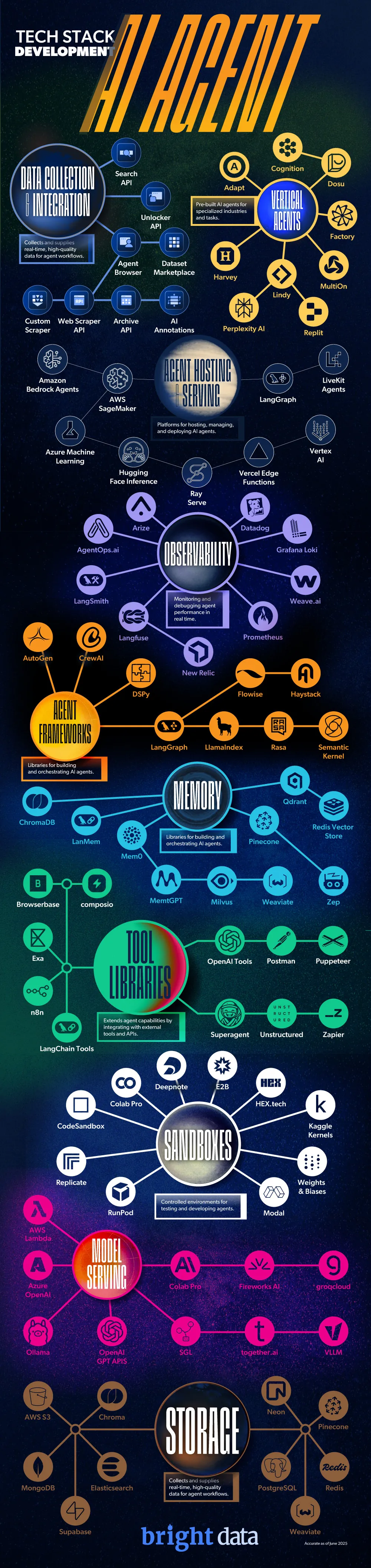
Source: Bright Data

Comments