Protecting Seniors at Home: Bathroom Safety Guide
We all value our independence. As we get older, or as we care for aging parents, the ability to manage our own daily routines in our own home is a cornerstone of dignity and comfort. But there’s a paradox: the one room most associated with personal independence—the bathroom—is statistically the most dangerous room in the house.
The combination of hard tile, slick water, steam, and the mobility required for bending, stepping, and balancing creates a perfect storm for a fall. For a senior, a single fall can be a life-altering event, often leading to a loss of that very independence everyone is trying to protect.
This is why a proactive approach to bathroom safety is not just a minor home improvement. It’s an essential, non-negotiable part of any plan to age in place safely and successfully. But where do you start? It’s not about one single gadget, but about creating a layered system of safety.
1. Start from the Ground Up: Grip and Lighting
The first, and most obvious, hazard is the floor.
Non-Slip Surfaces: That slick tile floor becomes a skid pad the second it gets wet. High-quality rubber-backed bath mats are a must-have, both on the floor outside the tub and inside the shower itself. Loose, decorative bath rugs that can slide around are a major tripping hazard and should be removed.
Improve the Lighting: A dimly lit bathroom is a dangerous one, especially for middle-of-the-night trips. Bright, even, overhead lighting reduces shadows. Just as important are nightlights. A simple, motion-activated nightlight that illuminates the path from the bedroom to the bathroom can prevent a disorienting and dangerous fall in the dark.
2. Secure the Main Hazard: The Tub and Shower
Climbing over a high tub wall is the single most high-risk action in the bathroom. This motion requires balance, strength, and flexibility that can become challenging. Your focus here should be on creating stability and support.
Install Grab Bars (The Right Way): This is the most critical upgrade you can make. But please, skip the plastic suction-cup bars you see at the pharmacy. They are notorious for failing under real-world weight. You need wall-mounted, professionally-installed grab bars that are anchored directly into the wall studs. You should have one inside the shower and another one to assist with stepping in and out.
Add a Seat: Standing on a wet, slippery surface for 10-15 minutes can be exhausting and risky. A sturdy, medical-grade shower chair or a built-in shower bench provides a secure place to sit, making bathing both safer and more comfortable.
Use a Handheld Showerhead: This is a simple, inexpensive change that makes a huge difference. A handheld, flexible showerhead allows a person to bathe thoroughly while seated, eliminating the need to stand, twist, or turn under a fixed faucet.
3. The Overlooked Dangers: The Toilet and Vanity
We focus so much on the shower that we forget the other key areas. Getting up from a low, seated position is a major strain on the knees, back, and hips.
A standard toilet is often too low. The easiest fix is a raised toilet seat, which can add several inches of height. For a more permanent and stable solution, you can install a "comfort height" or "chair height" toilet, which is designed to be taller.
Pair this with a toilet safety frame or another strategically placed grab bar, and you’ve just made one of the most frequent bathroom activities infinitely safer. While you're at it, organize the vanity and medicine cabinet so that essential, everyday items (like soap, toothpaste, and medications) are on an easily reachable shelf. This prevents unnecessary stretching or bending over, which can cause a head-rush or loss of balance.
4. The Ultimate Upgrade: Removing the Barrier Entirely
While the steps above are effective, they are often just patches on a core design flaw. The best way to prevent a fall from stepping over the tub is to get rid of the tub wall completely.
This is the gold standard for "aging in place" design:
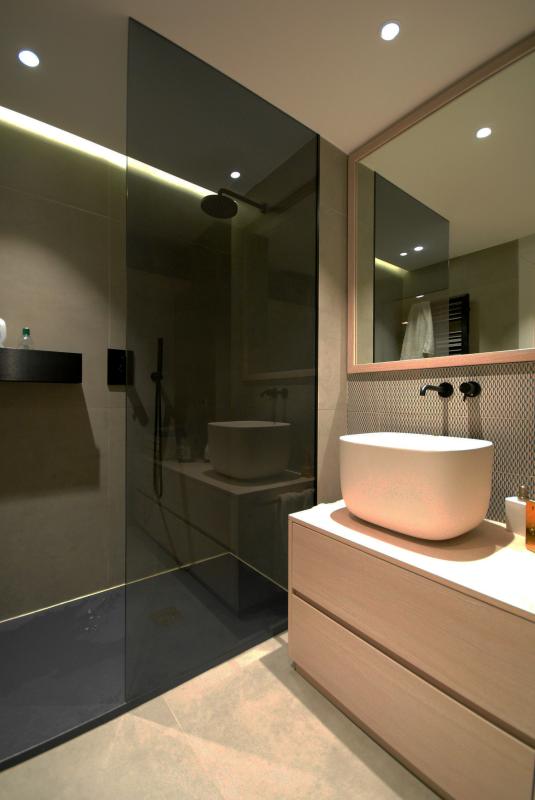
Walk-In Showers: These feature a "zero-threshold" or "low-threshold" entry. There is no curb to step over, allowing a person to walk—or even roll a walker or wheelchair—directly into the shower.
Walk-In Tubs: If a soaking bath is non-negotiable, a walk-in tub is the answer. It features a side door that swings open and a built-in, chair-height seat. You walk in, sit down, close the door, and let the tub fill around you. You never have to lift your legs over a high wall.
According to the National Institute on Aging, making these home modifications is a key strategy for preventing falls. The Centers for Disease Control and Prevention (CDC) also identifies home modification as a critical component of fall prevention.
Creating a safe bathroom isn't about giving up independence; it's about preserving it. These proactive changes—from a simple non-slip mat to a fully accessible walk-in shower—are the key to ensuring a home remains a place of comfort and security, not a place of risk.
Post Your Ad Here