Building Dreams, Simplifying Construction: The Modern Rise of Design and Build Companies in the USA
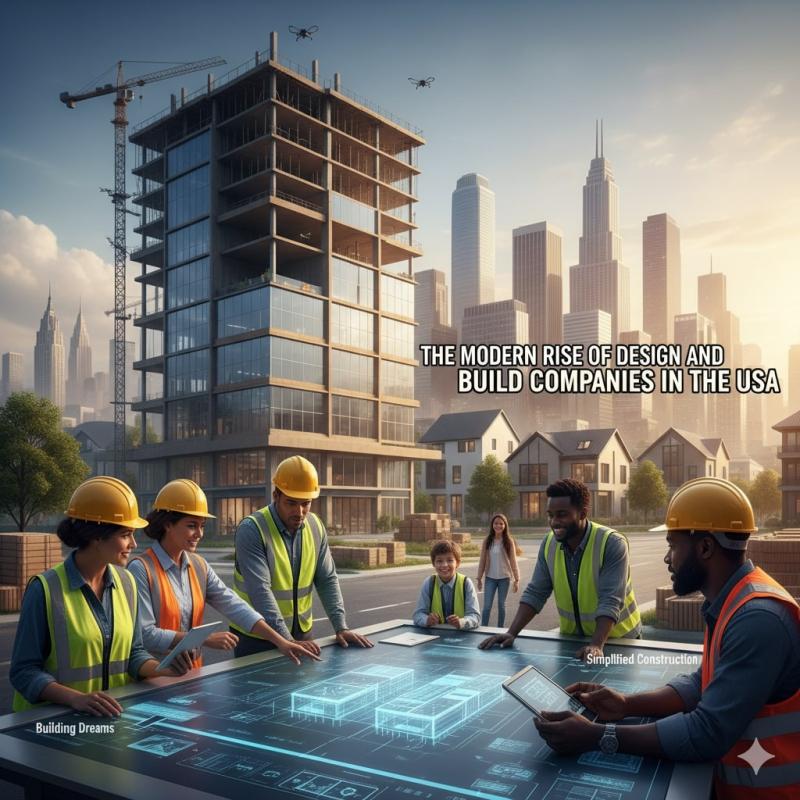
The skyline of America has always been a story in progress, a story written by architects, builders, and visionaries who imagine beyond blueprints. Yet, behind every beautifully finished building lies a complex journey of coordination, creativity, and commitment.
In recent years, a quiet revolution has been reshaping how construction happens in the United States, the rise of the design and build company. This model simplifies the process, brings designers and builders under one roof, and ensures that every project tells a unified story from concept to completion.
A New Chapter in the U.S. Construction Industry
Traditional construction once followed a predictable route: an architect designed, a contractor built, and clients often found themselves managing the gap between the two. While that approach worked for decades, it wasn’t without friction, miscommunication, delays, and rising costs often made the process stressful.
Then came the design-build model, an approach that blends creativity and execution into a single, seamless flow. It’s not just about building faster; it’s about building smarter. For many clients across the U.S., this integrated approach represents trust, teamwork, and tangible value.
Today, design-build firms are leading some of America’s most ambitious residential, commercial, and infrastructure projects, setting new standards for collaboration, efficiency, and sustainability.
What Makes a Design and Build Company Different?
A design and build company brings together two worlds that once operated separately: design and construction.
In the traditional system, an architect prepares the design and hands it over to a contractor for execution. Each party has its own goals, workflows, and sometimes conflicting interests. But in a design-build setup, one unified team manages the project from start to finish.
This approach ensures:
- Single-point accountability, one firm takes full responsibility for design, planning, and construction.
- Streamlined communication - fewer layers mean faster decisions and fewer errors.
- Collaborative innovation – designers and builders work side by side to find smarter solutions.
- Predictable timelines and budgets – because coordination happens internally, surprises are minimized.
- The outcome? A more efficient, transparent, and client-friendly experience.
Why Homeowners and Developers Are Switching to Design-Build
The construction process can be emotionally and financially demanding. Every client wants a partner who listens, adapts, and delivers with precision. That’s where the design-build model stands out.
1. Time Efficiency
Instead of waiting for designs to be finalized before seeking construction bids, both stages progress in parallel. This overlap shortens the overall project duration significantly.
2. Cost Clarity
With a single contract, clients get a clear understanding of the cost early on. Design-build teams optimize material use, reduce redundancies, and identify cost-saving opportunities during the design phase itself.
3. Better Collaboration
When the same team handles design and execution, they share the same goals. This unity translates into smoother collaboration and a shared sense of ownership over the final result.
4. Reduced Stress for Clients
Instead of juggling multiple vendors, clients have one trusted partner managing everything — from the first sketch to the final inspection.
5. Enhanced Quality
Design-build teams take pride in craftsmanship because they are accountable from start to finish. Quality assurance becomes a built-in part of the process, not an afterthought.
Inside the Process: From Idea to Reality
Every great building starts with a dream — a vision that needs structure and support to come alive. Here’s how most design-build firms in the U.S., such as Ariel Construction, turn that dream into something tangible.
1. Initial Consultation and Discovery – Understanding the client’s goals, style, and budget.
2. Concept and Design Development – Architects, designers, and engineers collaborate early, ensuring practicality meets creativity.
3. Budget Planning and Feasibility – Costs are discussed transparently before construction begins, reducing financial surprises.
4. Construction and Execution – The same team transitions smoothly into building mode, keeping design intent intact.
5. Final Review and Delivery – A detailed handover ensures every element aligns with client expectations.
This fluid process minimizes downtime and maximizes accountability, giving clients a sense of confidence and control.
Innovation and Technology: The New Tools of Construction
Modern U.S. construction isn’t just about concrete and steel — it’s about data, sustainability, and smart systems.
Firms like Ariel Construction are integrating advanced tools such as:
- Building Information Modeling (BIM) for digital planning and real-time project tracking.
- Energy-efficient designs that align with sustainable building standards.
- Prefabrication and modular systems that save both time and materials.
- Green materials that reduce environmental impact and support long-term performance.
These innovations aren’t luxuries anymore; they’re necessities in a future-focused construction world. The design-build approach makes it easier to adopt them because collaboration begins at the design stage — not after.
The Human Side of Construction
Behind every structure lies a story of collaboration. When teams communicate well, creativity thrives.
In a design-build setup, communication doesn’t move through layers of intermediaries. Architects, engineers, and builders share ideas in real time adjusting, improving, and optimizing as the project evolves. Clients often describe this experience as more “personal.” They’re involved in every decision, not left waiting for updates. This transparency fosters trust and trust builds lasting relationships.
Ariel Construction, for example, believes that a successful project isn’t just measured in square feet but in the satisfaction and peace of mind of every client they serve.
Sustainability and Responsibility in Modern Building
- The American construction landscape is shifting toward sustainability, not just as a trend but as a responsibility.
- Design-build companies are leading this shift by integrating eco-friendly materials, energy-efficient layouts, and waste-reduction strategies into their projects.
- Because designers and builders work hand in hand, sustainable choices become easier to implement, whether it’s optimizing natural light, choosing low-carbon materials, or integrating smart energy systems.
- It’s a movement toward construction that not only meets today’s needs but also protects tomorrow’s environment.
How the Design-Build Model Shapes the Future
Across the U.S., design-build delivery is becoming the standard for public and private projects alike. According to industry research, design-build is expected to capture nearly half of all U.S. construction spending in the coming years.
Why? Because it works.
When design, cost, and schedule align under one collaborative umbrella, projects move faster, communication improves, and results speak for themselves.
Whether it’s a residential renovation, commercial complex, or community infrastructure, design-build is proving that teamwork truly does make the dream work.
Ariel Construction: A Case of Integration Done Right
Among many companies embracing this approach, Ariel Construction stands out as an example of how integration, innovation, and empathy can redefine construction. Rather than treating design and construction as separate services, Ariel Construction approaches every project as a shared journey. The firm’s philosophy centers on understanding client vision, maintaining transparency, and delivering with precision. By combining technology with human insight, Ariel Construction ensures that every project, from custom homes to large-scale developments, reflects both structural integrity and creative spirit. Their approach represents what the modern American design-build movement is truly about: collaboration, clarity, and commitment to excellence.
The Future of Building in the USA
Looking ahead, design-build is more than a method, it’s a mindset. As urban spaces evolve and sustainability becomes central to design thinking, the demand for integrated project delivery will only grow. Clients want results that are fast, functional, and future-ready, and the design-build model delivers exactly that.
In the coming decade, the success of a construction firm won’t just depend on its tools or talent, but on its ability to connect, to bridge design and execution, creativity and practicality, people and purpose.
Building Beyond Blueprints
Every building tells a story, not just of walls and windows, but of ideas that took shape through teamwork. The rise of design-build companies in the U.S. is reshaping that story. It’s replacing fragmentation with unity, confusion with clarity, and complexity with simplicity. In this evolving landscape, firms like Ariel Construction remind us that great construction isn’t just about building structures, it’s about building trust, relationships, and the confidence that dreams can take solid form.
Post Your Ad Here
Comments