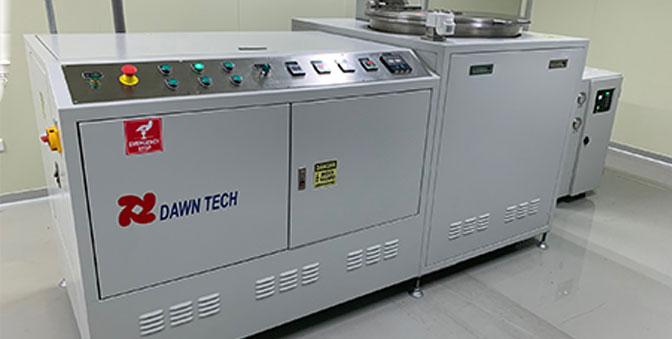
Parylene is a material having exceptional electrical insulation properties, which are typically applied as a conformal thin film. This unique combination makes it useful as a precision dielectric layer in a wide range of applications. The breakdown voltage of parylene is determined by the thickness of the coating. It also has a low dissipation factor and high surface and volume resistivity that remain virtually constant with changes in temperature. Each kind of Parylene coating offers different benefits and meets specific engineering requirements. Some prominent types of Parylene available on the market:
How Parylene Differs From Other Conformal Coatings?
Parylene is different from other conformal coating materials in manifold ways
1. Application Method: Parylene coating is applied in a vacuum chamber as a vapour. This ensures comprehensive and even coverage of the coating without pooling, meniscus effects, or edge build-up.
2. Coverage: Parylene coating can be applied inside of tight gaps, under components, and into complex geometries where liquid coating find hard to reach
3. Film Properties: Parylene film is usually ultra-thin (typically 1–50 µm), transparent, flexible, and biocompatible.
4. Performance: This coating provides superior resistance to moisture, chemicals, and extreme temperatures.
5. Cleanliness: It is a dry vapour-deposited coating, which means no residue or solvent is left behind after the coating. This makes it perfect for sensitive applications such as medical implants and aerospace electronics.
In this way, Parlyne coating provides more comprehensive coverage for substrates. It also provides the thinnest yet effective coating compared to other conformal coatings. With its vapour deposition process that deeply permeates the substrate surface, it ensures the highest levels of protection for various products. Parylene is also known for its exceptional resilience. It is able to withstand extreme temperatures and physical stresses. It also maintains remarkable uniformity, providing incredible pinhole coverage to avoid any leakage. With its outstanding dielectric properties, Parylene coating has emerged as a popular choice for a wide range of electrical components. However, keep in mind as parylene coating relies on the vacuum application method, this usually increases its manufacturing cost compared to other coatings. Additionally, Parylene may also be prone to contamination.
Parylene N
Parylene N is a highly crystalline material known for its properties like low dissipation factor, high dielectric strength, and low variation of dielectric constant over frequency. Its excellent gap penetration makes it ideal for applications with complex geometries.
Parylene C
Parylene C is a versatile that combines excellent electrical and physical properties with low permeability to moisture and corrosive gases, ideal for a wide range of applications
Parylene D
Parylene D is a unique class of polymer coatings with exceptional protective properties, such as chemical resistance, biocompatibility, and uniform thickness. It is similar to Parylene C to some extent, but it has higher thermal stability.
Parylene AF4 Polymer
Parylene AF4 polymer is considered better than most liquid-based coatings, such as silicone or acrylic. It works perfectly for safeguarding aerospace PCBs and many other electronic components and assemblies. Aerospace PCBs and numerous other electronic assemblies and components are well-protected by parylene coating. The encapsulation adapts to a wide range of device surfaces, including flat or round surfaces, intricately carved surfaces, and edged surfaces. The polymer also has the advantage of not adding weight to the coated device.
Leverage Dawntech’s Parylene Expertise
Experience unmatched
protection and performance with Darntech’s advanced Parylene Coating solutions.
We specialize in Parylene AF4 Polymer, Parylene C, and Parylene N coatings—each
engineered to provide exceptional moisture, chemical, and dielectric protection
for critical components. Our cutting-edge coating technology ensures a uniform,
ultra-thin, and durable layer that meets the toughest industry demands.
Post Your Ad Here
Comments