Efficient Solutions for Digital Investigations
With over fifteen years of digging into digital data and investigations in the tech trenches, I’ve seen how critical it is to have reliable tools when your work depends on uncovering hidden files, restoring damaged drives, or parsing complex artifacts. In today’s environment, both data recovery software and computer forensics data recovery aren’t just buzzwords—they’re mission-critical components of tight investigations, corporate compliance, or forensic casework.
In the world of digital forensics, you’re often facing drives that have been formatted, overwritten, damaged, or locked behind odd file systems. That’s where top-tier data recovery software comes into play—not just for the standard “undelete” scenario, but to excavate evidence hidden by time, corruption, or clever bad actors. Meanwhile, computer forensics data recovery takes it a step further: it’s not just about retrieving lost bits, but preserving chain of custody, parsing artifacts (chats, emails, browser data, registry entries), and presenting the recovered items in a forensically sound way.
Why this distinction matters: a casual user might run a recovery tool and pull back photos or documents. But in a forensics scenario—employment investigations, cybersecurity breach response, eDiscovery—what you recover must stand up in court, support metadata timelines, and show who did what when. That’s where fully featured tools make all the difference.
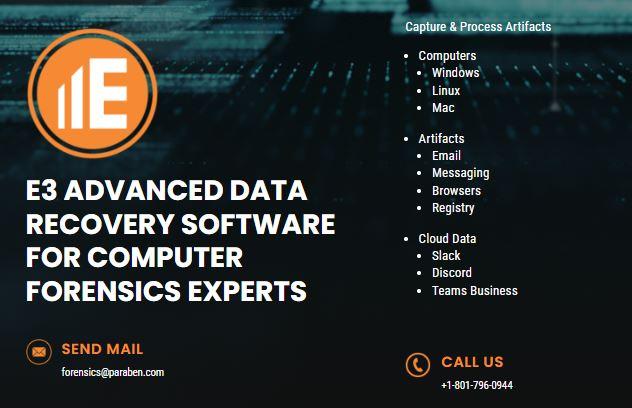
The team at Paraben Corporation underscores this difference by offering an advanced platform built for forensic professionals. Their software supports multiple file systems—FAT, NTFS, EXT (Linux), HPFS, APFS for Mac—and imports disk-images like EnCase, DD, AD1. That means whether you’re working on Windows, Mac or Linux, you’ve got a single solution covering your case-load.
Key features include full-text indexing, Boolean search, embedded data detection, viewers for over 100 file types, malware scanning and batching exports to forensic containers. For someone working on computer forensics data recovery, tools like these matter because they accelerate finding “the needle in the haystack.” Being able to filter by file header, carve data from slack space, sift through chat logs, or trace linkages between browser sessions and cloud backups—it all speeds your investigation.
Let’s break down what good practice looks like in real-life:
· You arrive on a breach response scene: a laptop is seized, it’s been wiped, the attacker disabled logs and used anti-forensic tools. You’ll use data recovery software to image the drive, carve deleted files, restore registry entries and extract metadata like access times. Then you elevate that into computer forensics data recovery mode: parsing chat apps, reconstructing browser sessions, establishing when certain files were created, modified or exfiltrated.
· In a corporate eDiscovery matter: someone claimed data was lost in a crash, but you suspect intentional wiping. With the right recovery and forensic software you can look for traces of wiping, timestamps, slack space artifacts and restore files that reveal intent. That’s computer forensics data recovery in play.
· In everyday IT support: a user wiped a shared folder, but you want to salvage business-critical documents. You still need quality data recovery software —though you may not need full forensic export capabilities—but you benefit if you also can show who deleted what and when.
Bottom line: In an era of hybrid work, cloud syncs, BYOD devices and sophisticated attacks, having robust data recovery software is baseline. But when you’re working investigations, audits, or litigation-ready workflows—computer forensics data recovery is what sets the pros apart. You’re not just restoring files; you’re reconstructing events, validating evidence and delivering it in a format that holds up.
If you’re in the USA and on the hunt for tools that deliver both power and usability, the emphasis should be on platforms that support multi-OS, multiple data sources (including cloud and apps like Slack, Discord and Teams), full artifact parsing, fast indexing and forensic-grade export functions. It’s not just about “getting your data back”—it’s about making sense of it, validating it, and doing so in a defensible way.
Stay sharp and keep those tools ready—because when the pressure hits, you’ll be glad you did.

Comments