Your Guide to Finding a Quality Lost Foam Casting Foundry and Unlocking its Design Potential
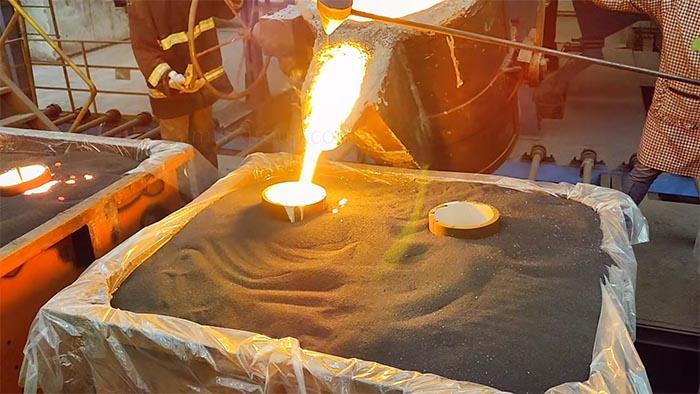
In the world of metal casting, where the transformation of molten metal into complex components is both an art and a science, selecting the right manufacturing process—and the right partner—is critical to the success of your project. Among the myriad of techniques available, Lost Foam Casting has emerged as a powerful method for producing high-integrity, complex castings with exceptional surface finish and dimensional accuracy.
This article serves as a detailed guide to help you navigate the process of finding a premium lost foam casting foundry. We will delve into what lost foam casting is, how it compares to other mainstream processes, its key advantages, and the essential criteria for selecting a supplier. Finally, we will introduce you to Simis Casting Company, a specialist in providing custom lost foam casting solutions.
Part 1: Understanding Lost Foam Casting - The Process
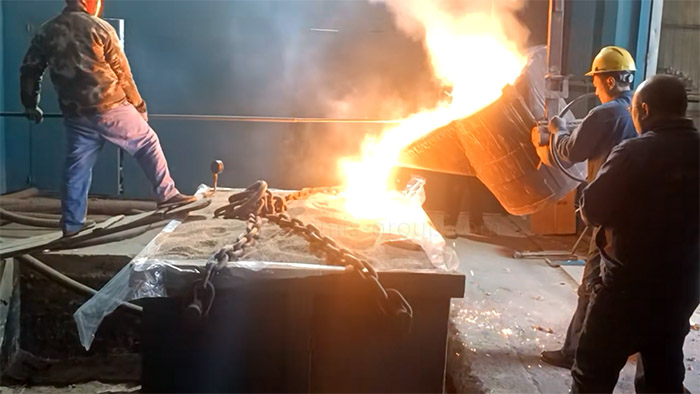
Lost Foam Casting (LFC), also known as Expanded Polystyrene (EPS) Casting or the full-mold process, is an evaporative-pattern casting method. Unlike traditional methods that use reusable patterns, LFC uses a pattern that is sacrificed or “lost” during the process.
The core steps are as follows:
-
Pattern Creation:
A pattern is molded from expandable polystyrene (EPS) foam, identical to the final part, including all its complex geometries. For assemblies, multiple foam patterns can be glued together. -
Cluster Assembly:
The foam pattern (or patterns) is attached to a central foam gating system, creating a “cluster” or “tree.” -
Coating:
The entire foam cluster is dipped into a refractory ceramic slurry, forming a thin, permeable coating. This coating creates a barrier against the sand and allows gases from the vaporizing foam to escape. -
Molding:
The coated cluster is placed in a flask, and unbonded, dry sand is vibrated around it, supporting the fragile pattern without traditional cores. The flask is then ready for pouring. -
Pouring:
Molten metal is poured directly into the foam gating system. The intense heat vaporizes the foam pattern, precisely replacing the foam cavity with molten metal. -
Cooling and Shakeout:
After solidification, the flask is inverted, and the sand flows away, revealing the casting cluster. The castings are then cut from the gating system. -
Finishing:
Due to the absence of parting lines and fine surface finish, minimal finishing is required compared to other methods.
Part 2: Lost Foam vs. Other Casting Processes – A Comparative Analysis
A. Lost Foam vs. Sand Casting
-
Pattern: Sand casting uses reusable wooden or metal patterns split into two halves (cope and drag). LFC uses a disposable foam pattern.
-
Complexity: Sand casting needs draft angles and separate cores, while LFC requires no cores and no draft angles—allowing unprecedented design freedom.
-
Finish & Accuracy: Sand casting produces a rougher surface and parting lines. LFC achieves a smoother surface (125–250 µin) and excellent dimensional accuracy.
-
Best For: Sand casting suits large, simple parts in low-medium volumes; LFC excels for complex, intricate parts in medium-high volumes.
B. Lost Foam vs. Investment Casting
-
Pattern: Investment casting uses wax; LFC uses foam.
-
Mold: Investment casting builds multiple ceramic layers—time-consuming. LFC uses a single ceramic dip and dry sand.
-
Size & Cost: Investment casting fits small parts (under 10 kg) but costs more. LFC is ideal for larger parts (a few kg to hundreds) and faster production.
-
Best For: Investment casting is best for small, ultra-precise parts. LFC fits larger, complex components like engine blocks or pump housings.
C. Lost Foam vs. Die Casting
-
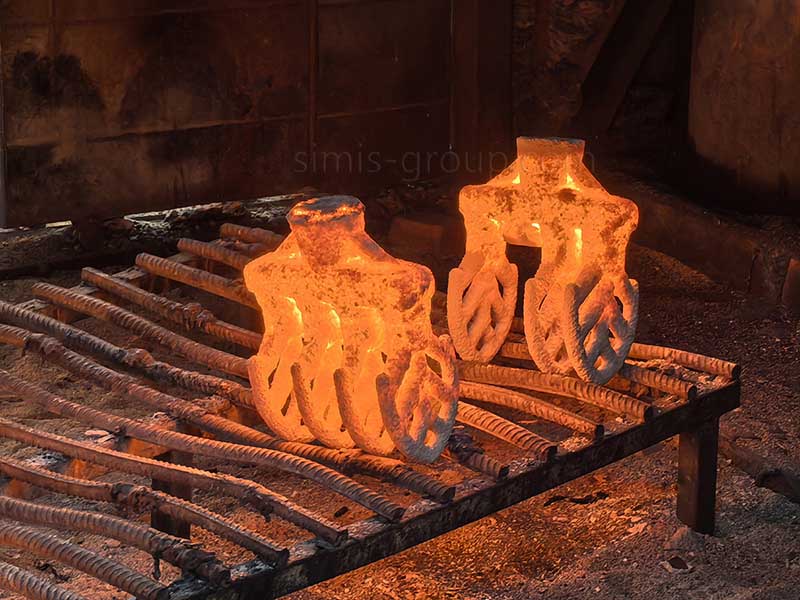
Material: Die casting suits non-ferrous metals (aluminum, zinc, magnesium). LFC handles both ferrous and non-ferrous materials.
-
Geometry: Die casting has ejection limits; LFC allows extreme complexity and internal features.
-
Tooling Cost: Die casting needs expensive steel molds; LFC uses cheaper aluminum tooling.
-
Best For: Die casting leads in high-volume, thin-walled parts. LFC suits complex geometries in all metals.
Part 3: The Key Advantages of Lost Foam Casting
-
Unparalleled Design Freedom:
Create complex internal passages, undercuts, and integrated features without cores or draft angles. Combine multiple parts into one to reduce assembly and cost.This allows autonomous mobile robot manufacturers to consolidate what would be multiple fabricated parts into a single, robust, and lightweight chassis, streamlining assembly and enhancing structural integrity. -
Excellent Surface Finish and Dimensional Accuracy:
The ceramic coating and lack of parting lines result in a smooth as-cast surface and tight tolerances. -
Reduced Machining and Finishing:
Minimal grinding and machining are required, lowering labor costs and lead time. -
Material Versatility:
Works with gray and ductile iron, carbon steel, stainless steel, aluminum, and copper alloys. -
Improved Metallurgical Properties:
The slow cooling in sand molds promotes a uniform grain structure and enhanced mechanical strength.
Part 4: How to Find a Quality Lost Foam Casting Foundry
Selecting the right partner is as crucial as selecting the process. Evaluate foundries based on these criteria:
-
Technical Expertise and Experience:
-
Choose a foundry with a strong track record in LFC.
-
Seek engineering support for Design for Manufacturability (DFM)—to optimize your design and reduce costs.
-
-
In-House Pattern-Making Capability:
-
The casting’s quality depends on the foam pattern.
-
Top foundries have in-house foam molding, controlling density, bead fusion, and precision.
-
-
Robust Process Control:
-
Ensure they manage every stage: foam pre-expansion, pattern molding, ceramic slurry control, sand compaction, and pouring.
-
Look for ISO 9001 or equivalent certification.
-
-
Facilities and Technology:
-
Check their capacity and equipment.
-
Modern foundries use simulation software to predict and prevent casting defects.
-
-
Material Specialization:
-
Confirm experience with your alloy—ductile iron, stainless steel, or aluminum.
-
-
Reputation and References:
-
Request case studies or testimonials from your industry.
-
Part 5: Simis Casting Company – Your Partner for Premium Lost Foam Castings
In your search for a foundry that embodies all these qualities, allow us to introduce Simis Casting Company.
At Simis Casting, we’ve built our reputation on mastering advanced casting technologies, focusing on custom lost foam casting services. We understand that our clients aren’t just buying castings—they’re investing in performance, efficiency, and reliability.

Why Partner with Simis for Your Lost Foam Needs?
-
End-to-End Expertise:
We manage everything—from CAD design and in-house foam pattern production to coating, pouring, and finishing—ensuring full control of quality, cost, and schedule. -
Collaborative Engineering:
Our technical team provides DFM support, helping optimize designs for weight reduction, component integration, and cost efficiency. -
Commitment to Quality:
We employ advanced process controls and solidification simulation to ensure high integrity and dimensional precision.
Backed by ISO 9001 certification, quality is embedded in every step. -
Material Versatility:
We cast a wide range of alloys, including:-
Aluminum Alloys – lightweight and corrosion-resistant
-
Ductile and Gray Iron – durable, strong, and cost-effective
-
Copper Alloys – excellent wear and conductivity
-
-
Proven Industry Experience:
Our castings serve demanding sectors such as agriculture, automotive, pumps & valves, and heavy machinery, where complexity and performance are essential.A reputable foundry should be able to provide case studies or examples of complex castings they have produced for demanding applications, such as structural components for delivery robots operating in urban environments.
Conclusion
Finding the right lost foam casting partner is a strategic decision—one that determines the quality, performance, and cost-effectiveness of your final product.
At Simis Casting Company, we combine deep technical expertise, rigorous quality control, and a spirit of collaboration to deliver results that exceed expectations.
Contact us today to discuss your project and discover how our lost foam casting expertise can bring your vision to life.
Post Your Ad Here
Comments