Mridangam The Heartbeat of Devotional Music | Sacred Rhythm of Bhakti
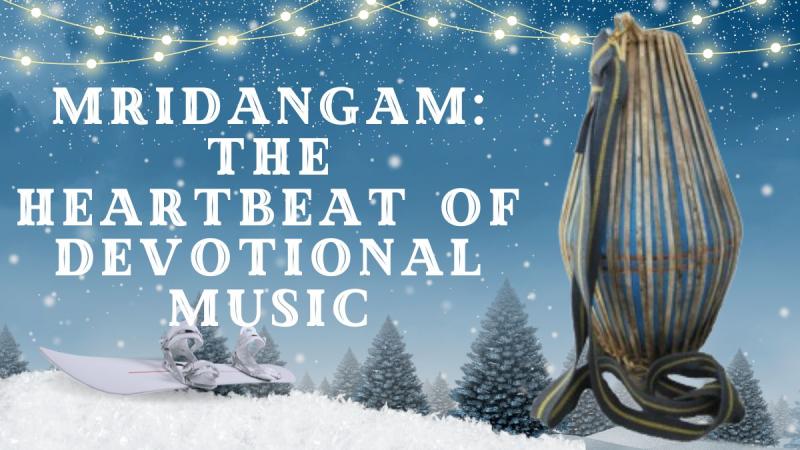
Mridangam: The Heartbeat of Devotional Music
The rhythmic heartbeat of Indian devotional and
classical music finds its purest expression in the Mridangam — an ancient double-sided drum that carries centuries
of spiritual and cultural heritage. From the divine temples of South India to
global kirtan stages, the Mridangam continues to inspire devotion, rhythm, and
joy. It is not just an instrument; it is an offering — a sacred sound that
connects the soul to the Supreme.
The Origin and Meaning of Mridangam
The word Mridangam
is derived from two Sanskrit roots: “Mrid”
meaning clay or earth, and “Anga” meaning body. Thus, Mridangam literally means ‘body made of clay’. In ancient times, it was indeed crafted
from sun-baked clay, symbolizing purity and simplicity. Over time, craftsmen
began using jackfruit or neem wood
for better resonance and durability.
References to the Mridangam appear in ancient
Hindu scriptures such as the Vedas,
Puranas, and Natya Shastra, written by Bharata Muni, who described it as a
divine instrument used in sacred rituals, classical dance, and spiritual
gatherings.
In mythology, it is said that Lord Ganesha was the first to play the
Mridangam to accompany Lord Shiva’s
Tandava dance — the cosmic dance of creation and destruction. This
story gives the instrument a sacred status, linking it directly to divine sound
(Nada Brahma).
The Role of Mridangam in Devotional
Music
In the spiritual traditions of India, music is
not merely entertainment — it is Bhakti,
a form of devotion. The Mridangam embodies this devotion through rhythm. Its
pulsating beats guide bhajans, kirtans, and temple songs, infusing energy and
synchrony into every performance.
During ISKCON
kirtans, for instance, the Mridangam leads the rhythm as devotees
chant the Hare Krishna Mahamantra.
The combination of harmonium, kartals, and Mridangam creates a transcendental
soundscape that draws hearts closer to the Divine. The rhythm acts as a
spiritual current, lifting consciousness beyond the material plane.
Whether it’s the soft tapping during a
peaceful bhajan or the thunderous beats during a temple procession, the
Mridangam’s sound mirrors the heartbeat
of devotion — strong, steady, and alive.
Structure and Craftsmanship of
Mridangam
The making of a Mridangam is a divine art. It
demands both technical precision and spiritual intention. A traditional
Mridangam is made up of the following parts:
1. The Body (Kudam)
Traditionally carved from a single piece of jackfruit wood, the body provides
durability and excellent sound resonance. The cylindrical shape is slightly
bulged in the middle to balance bass and treble frequencies perfectly.
2. The Drum Heads (Valantalai
& Thoppi)
·
Valantalai
(Right Side): Produces sharp treble sounds.
·
Thoppi
(Left Side): Produces deep bass notes.
Both sides are made using goat or cowhide, meticulously stretched
and layered to achieve the perfect tone.
3. The Black Spot (Syahi)
This is a signature feature that defines the
Mridangam’s unique sound. Made from a special mixture of rice paste, iron
filings, and charcoal, the syahi is
applied to the drum heads to produce rich harmonic overtones and clarity.
4. Tuning System
The two sides are connected with leather straps, tightened using wooden
pegs for fine-tuning. This tuning process requires experience and a sensitive
ear, ensuring that each beat carries both precision and purity.
A well-crafted Mridangam can last for decades
when maintained properly — a testament to traditional craftsmanship and
devotion to the divine art of sound.
The Science of Sound and Rhythm
The Mridangam produces a wide range of tones —
deep bass, crisp treble, and resonant mid-tones. The balance between the two
drum heads represents the duality of life
— male and female energies, sound and silence, body and soul.
In Carnatic
classical music, the Mridangam serves as the principal percussion
instrument, providing intricate rhythmic cycles (tala). Its sound spectrum blends perfectly with melodic
instruments like the veena, violin, and flute.
But beyond musical science, devotees
experience the Mridangam as a spiritual
energy source. Each vibration carries a frequency that uplifts
consciousness. When played during Harinam
Sankirtan, it is said to purify the heart and awaken divine remembrance.
Mridangam in the Bhakti Tradition
The Bhakti movement — which emphasized love
and surrender to God — found in Mridangam an ideal instrument for expressing
joy, humility, and devotion. In temples,
ashrams, and sankirtan gatherings, the Mridangam sets
the rhythm for singing the Lord’s glories.
In ISKCON
Mayapur, the global headquarters of the Hare Krishna movement, the
Mridangam is an inseparable part of every arati and kirtan. When devotees chant
and dance in ecstasy, the Mridangam’s rhythm synchronizes their movements,
making the entire experience divine and transcendental.
The great saint Sri Chaitanya Mahaprabhu encouraged the use of Mridangam
during Nama Sankirtan, proclaiming that
the sound of the drum awakens Krishna’s presence in every heart.
Mridangam in Classical Indian Music
Outside devotional spaces, the Mridangam holds
a prominent place in Carnatic classical
concerts. It accompanies vocalists and instrumentalists, adding
rhythm, texture, and dynamic interaction. Master percussionists like Palghat Mani Iyer, Umayalpuram Sivaraman, and T. K. Murthy elevated the Mridangam to
global recognition.
The rhythmic language of Mridangam, called Solkattu, involves vocalizing rhythmic
syllables (like “tha”, “dhi”, “thom”, “nam”) — a unique system that blends
speech and rhythm seamlessly. This technique, when mastered, turns the
Mridangam into both a musical and spiritual discipline.
Mridangam and Modern Kirtan
In today’s world, devotional music has
transcended boundaries. ISKCON temples, yoga centers, and bhakti communities
across the globe use Mridangams made in Mayapur and South India. The
instrument’s deep bass and sharp treble create the perfect rhythm for modern Harinam Sankirtan and Mantra meditation music.
The Mridangam’s influence is also visible in
contemporary genres — blending with Western instruments in fusion kirtan, world music, and devotional
festivals like Ratha Yatra and Kirtan Mela.
Even outside India, musicians and devotees
learn to play the Mridangam to preserve the authentic sound of Vedic devotion.
Its global reach reflects how deeply this sacred instrument resonates with the
universal heartbeat of love and spirituality.
Playing Mridangam as a Spiritual
Practice
Playing the Mridangam is not just about skill
— it’s about consciousness. A true player approaches it with humility, focus, and devotion. Each
strike becomes a prayer, each rhythm a meditation.
Before performances, many artists bow before
the instrument, acknowledging it as a representation of Lord Nandi, Lord Ganesha, or Lord
Krishna’s flute — all symbols of divine sound.
When used in chanting the Hare Krishna Mahamantra, the Mridangam
transforms ordinary music into transcendental sound vibration (Nama Sankirtan). This practice not only
purifies the heart but also spreads spiritual energy to all who listen.
Mridangam Making in Mayapur – A
Legacy of Devotion
In ISKCON
Mayapur, artisans handcraft Mridangams with devotion and precision.
These instruments are not mass-produced — each piece is individually tuned and
tested for spiritual sound quality.
Using authentic materials like jackfruit wood,
natural leather, and traditional syahi, Mayapur’s Mridangams maintain the
original sound that Sri Chaitanya Mahaprabhu’s followers carried through
generations.
When you purchase a Mridangam from Mayapur Store, you are not just buying
an instrument — you are supporting temple craftsmanship, devotional culture,
and the timeless art of Bhakti rhythm.
Symbolism: The Heartbeat of Devotion
Why is Mridangam called the heartbeat of devotional music? Because like a heart, it
sets the rhythm of life. Each beat represents a breath of love toward the
Divine. In every kirtan, its sound unites voices, synchronizes steps, and
awakens dormant spirituality.
Its left side (bass) represents the earthly body, while the right side
(treble) symbolizes the spiritual soul.
When both sides harmonize, it mirrors the union of matter and spirit — the
essence of Bhakti Yoga.
How to Care for a Mridangam
Proper care enhances both lifespan and sound
quality:
·
Keep it away from moisture and direct sunlight.
·
Use a soft
cloth cover or Mridangam bag (available at mayapur.store).
·
Apply a few drops of oil occasionally to keep
the straps flexible.
·
Tune carefully using wooden pegs; avoid
excessive tension.
·
Rest it horizontally to prevent pressure on drum
heads.
A well-maintained Mridangam can last for
generations — just like the devotion it represents.
Conclusion
The Mridangam
stands as an eternal symbol of divine rhythm and devotion. From ancient temples
to modern kirtan gatherings, it continues to inspire hearts, uplift souls, and
connect humanity through the universal language of sound.
Its beats are not just heard; they are felt — deep within the heart, where
devotion resides. Truly, the Mridangam is the heartbeat of devotional music — timeless, sacred, and
alive with divine vibration.
Post Your Ad Here
Comments