The Role of Metaverse in the Gaming Industry: Redefining the Future of Virtual Entertainment
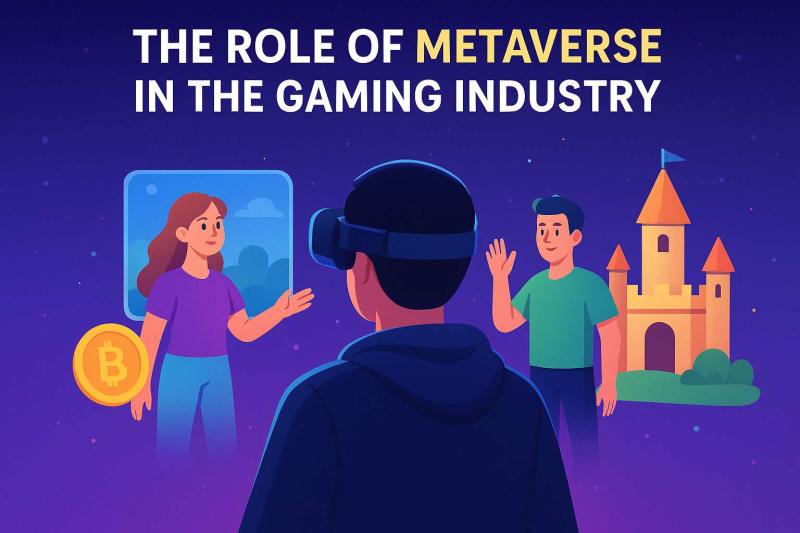
The gaming industry has always been at the forefront of technological evolution — from pixelated screens to immersive virtual worlds. Today, one of the most transformative innovations shaping this space is the Metaverse. This concept, once confined to science fiction, is now becoming a digital reality where gamers can interact, play, trade, and live within interconnected virtual ecosystems.
In this article, we’ll explore how the metaverse is reshaping the gaming industry, its major benefits, technologies driving it, and what the future holds for developers and players alike.
What is the Metaverse in Gaming?
The Metaverse is a collective virtual space that combines augmented reality (AR), virtual reality (VR), blockchain, NFTs, and 3D virtual worlds to create immersive, interconnected environments. Unlike traditional games with limited boundaries, metaverse games offer persistent worlds — where actions, economies, and social interactions continue even when the player is offline.
Simply put, the metaverse in gaming is not just a place to play — it’s a universe where players can live digital lives, own virtual assets, and participate in a growing virtual economy.
How the Metaverse is Transforming the Gaming Industry
1. Creating Immersive Virtual Experiences
The core strength of the metaverse lies in immersion. With advanced VR headsets, 3D environments, and real-time interaction, players can experience games on a whole new level. Instead of just controlling an avatar, they can become one — walking, talking, and exploring as if they were truly inside the game world.
Games like Roblox, Decentraland, and The Sandbox demonstrate how virtual spaces allow users to build, socialize, and participate in dynamic worlds where creativity has no limits.
2. Building a Player-Driven Economy
One of the defining aspects of metaverse gaming is its decentralized economy powered by blockchain technology. Players can own, trade, and monetize digital assets like NFTs — including skins, weapons, land, or characters.
Unlike traditional games where assets are locked within a single platform, metaverse-based games ensure true ownership. Gamers can sell their digital goods across platforms, ensuring their investments have real-world value.
This shift also introduces Play-to-Earn (P2E) models — where players earn cryptocurrency or tokens for participating in the ecosystem, giving rise to Web3 gaming economies.
3. Enhancing Social Connectivity
The metaverse has made gaming more social and community-driven than ever before. Beyond competitive gameplay, it encourages virtual gatherings, live events, and co-creation. Players can attend concerts, meetings, or art exhibitions — all within the same game environment.
This sense of digital community blurs the line between gaming, entertainment, and social networking. It’s not just about playing a game anymore; it’s about building relationships and digital identities.
4. Empowering Developers and Creators
Metaverse platforms are empowering independent developers and creators through user-generated content (UGC). Players can design their own maps, items, or entire worlds, monetizing their creativity.
For example, Roblox Studio and The Sandbox Game Maker allow users to craft unique experiences without extensive coding knowledge. This democratization of content creation is leading to infinite gameplay possibilities and new revenue streams.
5. Integration of Advanced Technologies
The success of the metaverse in gaming relies on several cutting-edge technologies:
-
Blockchain & NFTs: Ensure transparency, ownership, and interoperability of digital assets.
-
AI & Machine Learning: Power intelligent NPCs, dynamic environments, and personalized experiences.
-
AR/VR & 3D Engines: Deliver realistic, immersive interactions within the virtual world.
-
Cloud Computing: Enables scalability and seamless access to metaverse environments from anywhere.
These technologies collectively make the metaverse a tech-powered ecosystem rather than just a gaming trend.
Challenges of Metaverse Gaming
While the opportunities are immense, several challenges remain:
-
High Infrastructure Costs: Developing VR-compatible games and servers demands massive investment.
-
Data Privacy & Security: Protecting user identities and digital assets is a growing concern.
-
Interoperability Issues: Seamless transfer of assets between different games and metaverses remains complex.
-
User Accessibility: Not all players have access to VR devices or stable internet needed for metaverse experiences.
Addressing these issues is essential to achieve mass adoption and make the metaverse accessible to everyone.
The Future of the Metaverse in Gaming
The metaverse is not a distant dream — it’s already taking shape. As Web3, AI, and blockchain technologies mature, the gaming industry will continue to shift toward a creator-driven and player-owned economy.
In the near future, we can expect:
-
Cross-platform metaverse worlds where players can move assets freely.
-
AI-driven avatars capable of autonomous interactions.
-
Realistic digital twins of real-world locations for gaming and exploration.
-
Hyper-personalized gameplay tailored by AI algorithms.
The line between gaming and real life will blur further, leading to a metaverse-powered entertainment ecosystem.
Why the Metaverse Matters for Game Developers
For metaverse game development companies, the metaverse presents enormous opportunities. Developers can create next-gen immersive experiences, build decentralized gaming economies, and integrate blockchain-based features that enhance engagement and monetization.
By adopting metaverse development, studios can stay ahead in the competitive market and appeal to tech-savvy gamers who seek more than traditional gameplay — they seek virtual lives.
Conclusion
The metaverse is redefining the gaming industry, merging imagination with innovation. It’s creating limitless possibilities for players, developers, and businesses to interact in ways never before possible. As technology evolves, the gaming world will continue to shift toward these interconnected virtual universes — making gaming not just a pastime, but a lifestyle within a digital world.
The role of the metaverse in the gaming industry is more than a trend — it’s a revolution that’s transforming how we play, connect, and create. The future of gaming is not just online; it’s in the metaverse.
Post Your Ad Here
Comments