Acne Scar Subcision The Gold Standard for Releasing Depressed Scars
Why Acne Scars Are More Than Skin Deep
For millions of people worldwide, acne scars are not just a cosmetic issue. They can profoundly affect confidence, social interactions, and even career opportunities. While many treatments promise smoother skin—from topical creams to advanced lasers—few methods directly address the structural root cause of depressed acne scars: fibrotic bands beneath the skin.
This is where acne scar subcision stands out. By releasing the fibrous strands tethering scars downward, subcision helps scars rise closer to the skin’s surface while triggering natural collagen remodeling. In this comprehensive guide, we’ll explore everything you need to know about subcision, from techniques and effectiveness to recovery, risks, and whether it’s the right choice for your scar type.
What Are Acne Scars and Why Do They Form?
Acne scars form when inflamed pimples or cystic acne damage the skin’s deeper layers. As the skin attempts to heal, it produces collagen fibers—sometimes too little, sometimes too much, and often in a disorganized way.
There are several types of acne scars:
Rolling scars: Broad depressions with sloping edges, often caused by fibrous tissue pulling the skin downward.
Boxcar scars: Round or oval depressions with sharp, defined edges.
Ice-pick scars: Narrow, deep scars that look like puncture marks.
Hypertrophic and keloid scars: Raised scars from excess collagen.
Subcision is most effective for rolling and boxcar scars, since both are structurally caused by those fibrous bands. Ice-pick scars usually require TCA CROSS or laser resurfacing instead.
What Is Subcision for Acne Scars?
Subcision, short for subcutaneous incision-less surgery, is a minor surgical technique introduced by dermatologists in 1995. It is specifically designed to treat tethered, depressed scars.
How It Works:
A specialized needle or blunt cannula is inserted under the scar.
The tool is moved in a fanning motion to break the fibrotic strands that tether the skin down.
The released scar tissue is physically lifted upward.
The controlled injury stimulates new collagen production, gradually filling in the depression over several months.
This dual action—mechanical release + biological remodeling—makes subcision one of the few treatments that directly address the structural cause of depressed acne scars.
✨ Types of Subcision Techniques
Not all subcision methods are the same. The choice of instrument and approach affects recovery, safety, and results.
| Technique | Tool | Key Pros | Key Cons |
| Traditional Needle | 18G, 21G, or 23G hypodermic needles. | Accessible, inexpensive. | Higher bruising, swelling, limited precision. |
| Nokor Needle | 18G Nokor needle with a sharp blade tip. | Strong cutting power for tough fibrous tissue. | More pain, significant bruising, and higher risk of damage. |
| Blunt Cannula (Gold Standard) | Blunt cannulas (18G–25G). | Safer (reduced risk of vessel damage), less bruising and downtime, allows for filler delivery. | Requires more skill from the physician. |
| Micro-Subcision | Fine-tuned needles/cannulas. | Highly precise for targeted, small scars or sensitive areas. | Only suitable for specific scar types. |
| CO₂ Subcision (Carboxytherapy) | Uses gas injection. | Minimally invasive. | Clinical studies show weaker results compared to cannula or needling. |
Blunt Cannula Subcision: Why It’s Superior
Among all techniques, blunt cannula subcision with a multilayer approach has emerged as the gold standard.
Multilayer precision: It targets fibrotic bands at different skin depths.
Fewer side effects: Significantly less bruising and vascular damage due to the blunt tip.
Combination Ready: It can be safely paired with PRP, Rejuran, dermal fillers, or lasers for dramatically better outcomes.
Durability: Once scars are released and new collagen is rebuilt, the results are long-lasting.
How Many Sessions Are Needed?
The number of subcision sessions depends on the severity of the scars, skin type, and whether combination treatments are used.
Traditional needle subcision: May require 5–8 sessions.
Blunt cannula subcision: Usually 2–4 sessions for visible, significant results.
Combination treatments (e.g., with Microneedling RF or lasers): Fewer sessions are typically needed for greater overall improvement.
Recovery After Subcision
Downtime is relatively short compared to ablative resurfacing treatments:
Mild swelling & bruising: 2–10 days depending on the area treated and technique used.
Tenderness: Common but temporary for a few days.
Gradual improvement: The final results are not immediate. Collagen remodeling continues for 3–6 months post-treatment, meaning results get better over time.
? Subcision vs. Other Acne Scar Treatments
The best results often come from combination therapy. Subcision is the structural specialist, while other treatments address texture, pigmentation, and overall volume.
| Treatment | Best For | Typical Sessions | Downtime | Effectiveness |
| Subcision | Rolling, boxcar scars (depressed) | 2–5 | 2–10 days | High for structural release |
| Microneedling RF (e.g., Infini, Morpheus8) | All scar types, skin tightening | 3–6 | 1–5 days | Moderate–High (Texture) |
| Laser Resurfacing (Pico, CO₂, Er:YAG) | Texture, pigmentation, surface irregularities | 3–5 | 5–14 days | Moderate (Surface) |
| TCA CROSS | Ice-pick scars (narrow, deep) | 3–6 | 3–7 days | High for narrow scars |
| Dermal Fillers | Temporary volume loss post-release | 1 | 0–2 days | Immediate but temporary volume |
✅ Who Is a Good Candidate for Subcision?
Subcision may be the right choice for you if:
You have rolling or boxcar scars that are noticeably tethered or pulled down.
You are healthy with no active acne or current skin infections in the treatment area.
You understand that results are significant but not 100% scar removal.
You’re willing to undergo the necessary number of sessions (usually 2–4) for the best results.
Frequently Asked Questions (FAQ)
1. Does subcision hurt?
Mild discomfort may be felt, but a strong topical cream or local anesthesia injection ensures minimal pain during the actual procedure.
2. How soon will I see results?
Some immediate lifting is visible after the procedure due to swelling and the mechanical release. However, the true, lasting results appear gradually over 3–6 months as the new collagen matures.
3. Can scars come back?
Released scars generally do not re-tether. However, new acne breakouts can cause new scars—so controlling active acne is essential for maintaining results.
4. Can subcision be combined with lasers or fillers?
Yes, absolutely. The most effective treatment protocols involve combination therapy, such as subcision + filler injection + laser resurfacing or RF Microneedling.
5. What is the cost of acne scar subcision?
The price varies significantly depending on the clinic, the doctor's expertise, the tools used (needle vs. blunt cannula), and whether combination treatments are included. Generally, treatments involving advanced blunt cannulas and supplementary materials (like PRP or fillers) will be at a higher price point but offer superior results and safety.
BAC Clinic's Gold Standard: Blunt Cannula Subcision
While traditional subcision uses sharp needles, which carry higher risks of bruising and vascular injury, BAC Clinic prioritizes patient safety and superior results by using the Blunt Cannula Subcision technique—the current industry gold standard.
Why Choose BAC Clinic for Subcision?
At BAC Clinic, our experienced dermatologists customize every subcision treatment to your specific scar profile:
Multilayer Precision: We employ a precise multilayer blunt cannula approach to target fibrotic bands at different skin depths, ensuring comprehensive release.
Customized Tools: We utilize a range of cannula sizes, from 12G up to 30G, allowing physicians to choose the perfect instrument for maximum effectiveness and minimal downtime for each scar type.
Safety & Comfort: The blunt tip of the cannula significantly reduces the risk of bruising, swelling, and vascular damage, making recovery faster and safer than traditional methods.
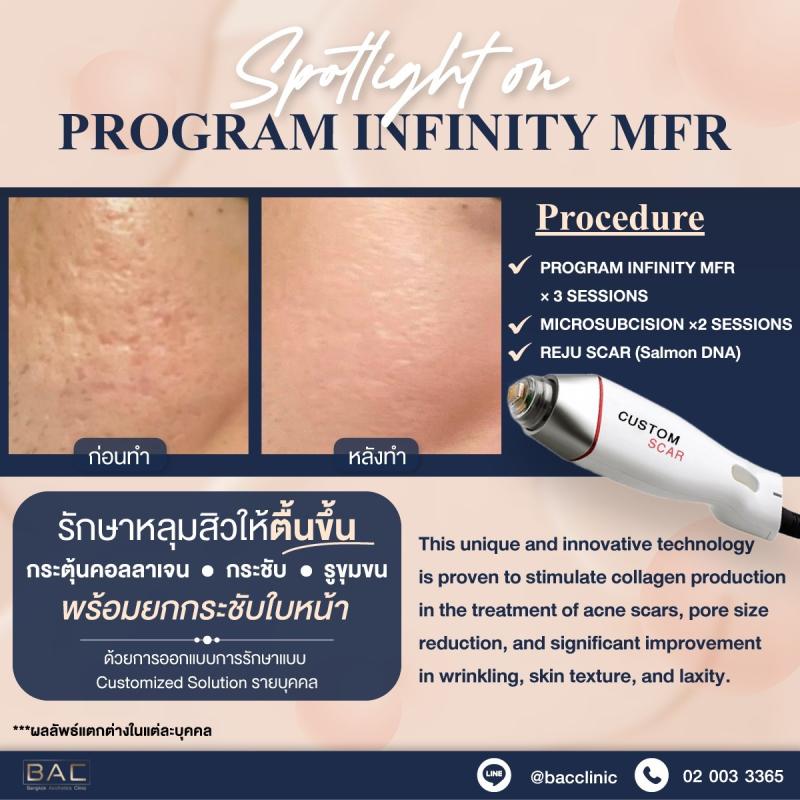
The BAC Clinic Advantage: Advanced Combination Protocols
Subcision is highly effective on its own, but the best results are achieved when it’s combined with complementary treatments. At BAC Clinic, we offer state-of-the-art combination protocols to maximize scar remodeling and aesthetic outcome:
Ready to Begin Your Journey to Smoother Skin?
Acne scars do not have to be permanent. With the advanced techniques and personalized care at BAC Clinic in Bangkok, we are ready to help you achieve the smoother, clearer skin you desire.
Cost & Transparency
The price for acne scar subcision at BAC Clinic is transparent, typically ranging from 500–2,900 THB per session for the basic procedure. Note that combination packages involving fillers or advanced lasers will involve higher costs but offer superior, comprehensive results.
Longevity: Once your scars are released and collagen is rebuilt, the results are permanent, provided you manage any new acne breakouts.
Book Your Consultation Today!
Take the first step toward confident, clear skin. Contact our specialized dermatologists for a personalized scar analysis and treatment plan:
BAC Clinic in Bangkok
Call Us: 020-033-365
Line: @bacclinic
Learn more : https://bangkokacnescarrevision.com/aacne-scar-subcision-complete-guide/
Learn more : https://www.bacclinic.info/acnescar.html
Learn more : https://reviewthai.net/subcision-acne-scar/
Don't wait to change your skin, and your confidence. We look forward to welcoming you.
Post Your Ad Here
Comments