3D vs Traditional Wheel Alignment: 5 Key Differences You Should Know
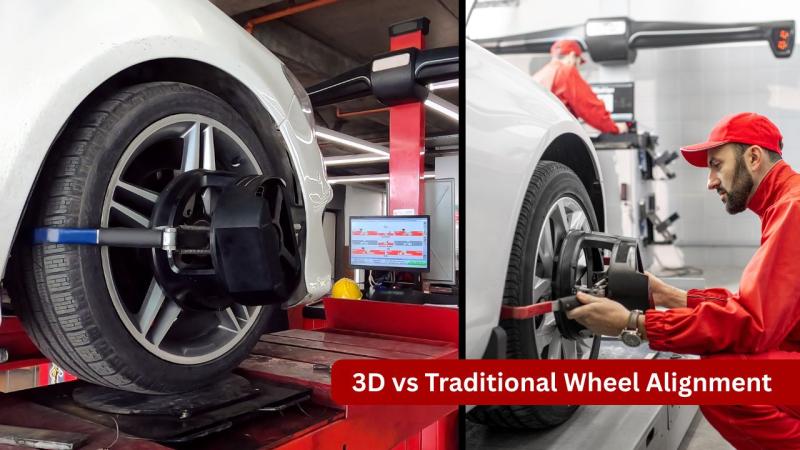
The perfect balance of safety, comfort, and efficiency on the road begins with how well your car's wheels are aligned. There’s no doubt that traditional alignment methods have served mechanics for decades.
However, today’s 3D wheel alignment machine has transformed the way alignment is done with far more precision and speed. If you have ever wondered which method is better for your car, this blog will help you understand everything in the simplest way possible.
Understanding Wheel Alignment: Old vs New
Wheel alignment is the process of adjusting the angles of your car’s wheels so they are set exactly as per the manufacturer’s specifications. Traditional alignment methods depend on manual gauges, lasers, and mechanical sensors.
And 3D wheel alignment uses advanced cameras, imaging sensors, and computer software. Both have the same goal, which is to give you smoother rides, better fuel efficiency, and longer tyre life, but the way they achieve it is different.
Key Differences Between Traditional and 3D Wheel Alignment
Here’s a quick snapshot to help you: traditional alignment is more manual and takes longer, while 3D alignment is faster, more accurate, and technologically advanced. Below are the five major differences that you should know.
Now that you understand the major difference between these two, the choice is yours. If you're looking for quick and accurate results, the advanced tool is the best choice. However, if you are on a budget and can’t spend much, and are ready to adjust to timing and accuracy, the traditional method may be suitable for you.
Where Are These Methods Heading?
When you look at the way the auto industry is moving forward, it is clear that the 3D alignment tool is setting new standards. Traditional methods are not going away completely, but they are being used less in modern workshops.
In fact, the global market for 3D wheel aligners is expected to rise from about USD 175 million in 2025 to nearly USD 275 million by 2035, showing just how much demand is increasing. With cars becoming more technology-driven, the shift toward this updated version will only intensify.
Wrapping It All Up!!
You can surely improve the safety when driving a car and smooth the ride, no matter what you pick: traditional wheel alignment or its 3D version. However, the way they both perform can vary.
For instance, for quick results, greater accuracy, and future-ready technology, 3D alignment is already proving to be the smarter choice. If you are serious about your car’s health, this is the option you’ll want to keep in mind.
Post Your Ad Here
Comments