How Air Pollution and Seasonal Haze Impact Solar Efficiency
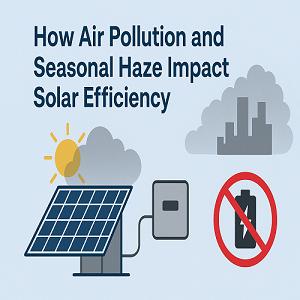
Solar energy is one of the most sustainable and cost-effective power sources available today. However, its performance is not entirely immune to environmental conditions. Among the most significant factors affecting solar output are air pollution and seasonal haze. These atmospheric conditions can drastically reduce the amount of sunlight reaching solar panels, lowering their efficiency. To counter these effects, precise PV Plan Sets and professional PV Design Services play a crucial role in maximizing energy generation and ensuring long-term system reliability.
The Connection Between Air Pollution and Solar Performance
Air pollution consists of tiny particles and gases such as dust, soot, and sulfur dioxide suspended in the atmosphere. When these pollutants accumulate, they block or scatter sunlight before it reaches the surface. This reduction in direct solar irradiance means your panels generate less electricity.
For example, studies show that heavy smog can reduce solar panel efficiency by 10–25%, depending on the pollution level. Additionally, pollution not only affects sunlight transmission but also settles on the panels themselves, forming a thin layer of grime that further restricts light absorption.
Regular cleaning and system maintenance, along with precise PV Plan Sets, can help mitigate this loss by ensuring your panels are positioned and angled for optimal light capture even under hazy conditions.
Seasonal Haze and Its Impact on Solar Output
In many regions, particularly in Asia and parts of the US, seasonal haze caused by agricultural burning, dust storms, or temperature inversions can linger for weeks. During these periods, solar radiation levels drop significantly.
The diffuse sunlight during haze events results in lower energy yield, especially for fixed-tilt systems. Advanced PV Design Services can help overcome this challenge by using data-driven modeling to optimize system layout, tilt angles, and inverter configurations that perform better under reduced sunlight conditions.
How PV Plan Sets and Design Optimization Help
A well-prepared PV Plan Set is more than just a permit document—it’s a roadmap for efficient system performance. These plans detail the electrical design, mechanical layout, and shading analysis of the solar array. By accounting for local weather patterns and air quality data, engineers can design systems that deliver higher performance year-round.
Professional PV Design Services include:
- Site evaluation using solar irradiation and pollution data.
- System orientation optimization to maximize light exposure.
- Performance modeling to predict annual output under varying air conditions.
- Shading and soiling analysis to identify potential energy losses.
Such tailored designs ensure your solar investment performs efficiently, even in areas affected by seasonal haze or pollution.
Conclusion
Air pollution and seasonal haze can significantly reduce the efficiency of solar panels by blocking or diffusing sunlight and leaving dust deposits on panel surfaces. However, with the right PV Plan Sets and expert PV Design Services, these challenges can be effectively managed.
By incorporating environmental factors into the system design phase, solar professionals can enhance output, reduce maintenance costs, and extend system lifespan—ensuring that your solar installation continues to deliver clean, reliable energy year after year.
Post Your Ad Here
Comments