What are the 4 types of Digital Marketing?
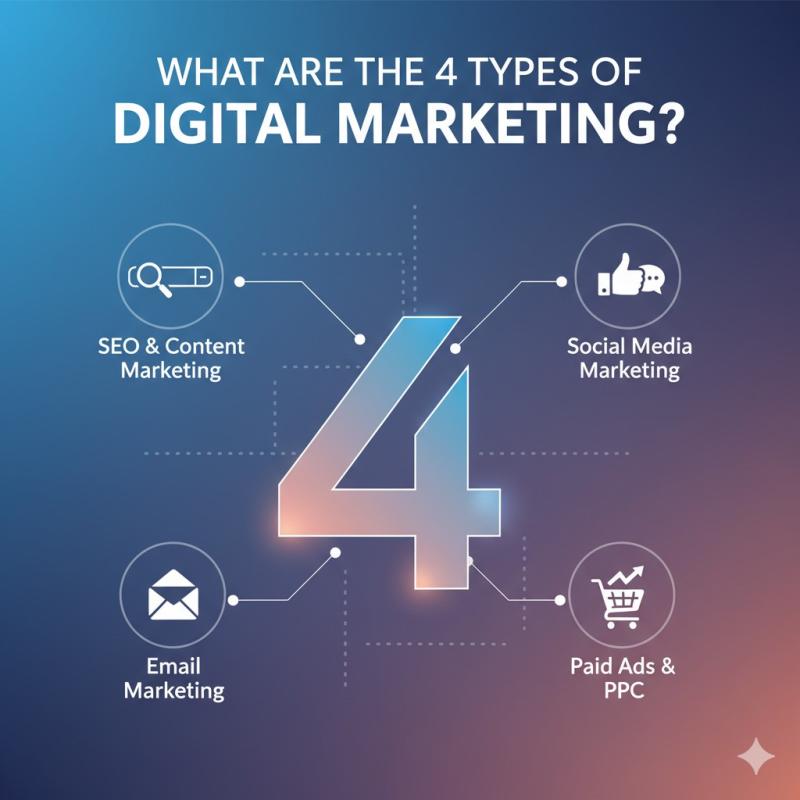
Digital marketing has become the backbone of modern business growth. Whether you run a small local store or a growing company, reaching customers online is no longer optional—it’s essential. But with so many tools and platforms available, it can feel overwhelming to know where to start. That’s where understanding the four main types of digital marketing comes in. These strategies—SEO, PPC, content marketing, and social media marketing—are the foundation of any successful online presence. By knowing how each one works, you can choose the right mix to attract customers, build trust, and grow your business in today’s digital-first world.
What is Digital Marketing?
Digital marketing refers to any marketing strategy that uses an electronic device that may or may not be connected to the internet. Even radio ads and television commercials are digital marketing strategies, though digital marketing has evolved, and new methods can be much more effective. Digital marketing is crucial for competitiveness and relevance within your industry. If your business has no web or digital presence, you're missing out on countless opportunities to reach out to your target audience.
Is Digital Marketing a Skill?
Yes, digital marketing is absolutely a skill. In fact, it's a combination of several skills that work together to help businesses grow online. At its core, digital marketing involves understanding how to reach the right audience through channels like search engines, social media, email, and paid ads. Like any skill, it requires both knowledge and practice. For example, learning SEO (search engine optimization) is a skill on its own, as is running effective PPC campaigns or creating engaging content marketing strategies. Digital marketing also demands analytical thinking-- reading data, tracking results, and improving campaigns over time. Because technology and consumer behavior keep evolving, digital marketing is a dynamic skill set.
Professionals need to stay updated with new tools, algorithms, and trends to stay effective. For business owners, learning digital marketing is valuable because it helps reduce dependency on third parties and gives you more control over your brand's visibility. For professionals, it's a highly in-demand career skill across industries. In short: digital marketing is a skill-- and mastering it opens opportunities for both business growth and career advancement.
Is Digital Marketing a Good Career?
Yes, digital marketing is a great career choice. With businesses shifting online, the demand for digital marketing professionals has skyrocketed across every industry. It offers diverse career paths-- like SEO, social media marketing, content marketing, and PPC advertising-- allowing you to specialize in areas that match your strengths and interests. One of the biggest advantages is flexibility.
Digital marketing careers often allow for remote work, freelancing, or working with global clients. Plus, it's a field that constantly evolves, so you're always learning new skills and staying ahead of trends. For those who enjoy creativity, strategy, and data-driven results, digital marketing can be both rewarding and lucrative. Salaries are competitive, growth opportunities are strong, and the skills are transferable worldwide. In short: Digital marketing is not only a good career-- it's one of the most future-proof careers in today's digital-first economy.
4 types of Digital Marketing:
Search Engine Optimization:
Search engine optimization (SEO) is the strategy of creating content in such a way that search engines like Google will rank your page high on the search engine results page (SERP). Google uses algorithms to decide how relevant your page is to the keywords that the user is searching for. These algorithms update frequently, and SEO strategies must be adjusted just as regularly to remain effective. When done properly, SEO efforts will put your page at the top of the SERP and bring in more organic traffic.
Pros:
1. It increases the brand visibility.
2. It is cost efficient, compared to PPC.
Cons:
1. SEO depends on content and tech.
2. Google's changing algorithms might come in the way of your efforts.
3. It takes time for SEO to work.
The Next Steps
SEO begins with good content. Follow a good content strategy and do keyword research to discover what people search for.
Stay updated on Google's recommendations for content.
Beginners opt for a plug-in that would assist them in optimizing their site (e.g. Yoast for WordPress).
Content Marketing:
Content marketing refers to informational, valuable content like blog posts, how-to videos, and other instructional materials. This type of marketing helps you connect with your audience and answer their questions. It can also help to generate leads and close sales.
Content should be published regularly with the target audience in mind. Ideally, your brand would become a trusted voice within the industry by publishing quality, reliable content. You want your audience to come to you first for information on the latest industry trends.
Pros:
1. It's free of cost.
2. Content is a highly versatile option. It allows you to build your brand by educating, entertaining and inspiring the audience.
3. It fuels all the other types of digital marketing.
Cons:
1. The competition is high, it takes a lot of time to rank organically for target keywords.
2. Consistency and high quality are vital to be effective. Your content must meet your customers' requirements while branding and achieving your business targets.
The Next Steps
Designing a simple and effective content strategy is the key to a promising beginning:
Choose 4 to 5 core themes considering the customer needs and what your brand wishes to communicate to the masses.
Decide the formats: video, audio, articles, or others.
Finalize the channels you will use to post each piece of content.
Social Media Marketing:
With social media marketing, social media platforms are used as a digital marketing channel. Ads can be bought to reach out to a new audience, or you can create a profile for your business on any social media platform and create posts to advertise new products, sales, or freshly published content.
Which social media platform you will use will depend on the type of audience you want to reach. For example, according to Pew Research, Instagram is best for reaching audiences between the ages of 25 and 29, while those 65+ can be best reached through Facebook.
Pros:
1. It has high conversion rates.
2. The efforts multiply quickly as people like, comment, and share your content.
3. Facebook/Instagram ads allow you to target specific customer segments and convey your message to the right people.
Cons:
1. Social media is challenging. The algorithm changes every now and then. Along with that, new content formats are introduced frequently
2. Although it sounds simple to post on social media, you require strategic planning and dedication of enough time to do it consistently and efficiently.
The Next Steps:
Make your social channels a part of your content marketing strategy. Decide on your content creation, the format, and the channels you would distribute your ideas. This marketing technique requires you to create a calendar wherein you can mark the days for posting on a particular channel and the days for posting on the other. Since social media is an interactive platform, you must also respond to your customers in addition to publishing high-quality content. Real conversations help gain trust and improve brand loyalty.
Email Marketing:
When someone visits your website or business, invite them to join an email subscriber list. With their permission, you can send emails about sales, special events, or product releases. Email marketing is often underestimated, and according to Lyfe Marketing, approximately $40 of revenue is brought in for every dollar spent on email marketing.
The most important part of this digital marketing channel is that it should provide value to your audience. Offer them exclusives that they would not receive anywhere else, and you can build a mutually beneficial relationship that will increase brand loyalty.
Pros:
1. Amongst several types of digital marketing, this one is independent of any changing algorithms.
2. Staying constantly in contact with your email list allows you to strengthen relationships, and they are likely to keep you in their minds when they plan to buy.
Cons:
1. Often, customers do not open emails.
2. It gets difficult to find ways to add value so that the customers do not unsubscribe.
The Next Steps
Select an email software such as ConvertKit, GetResponse, or Mailchimp.
Collect your target customer's emails.
Give them a reason to opt for your emails, such as offering step-by-step PDF guides and free design templates.
Pay attention to the regulations.
Maintain consistency and contact your list regularly via the weekly newsletter. Add value to your content rather than just the promotions and sales messages.

Post Your Ad Here
Comments