How Digital Twin Technology is Transforming the Automotive Industry?
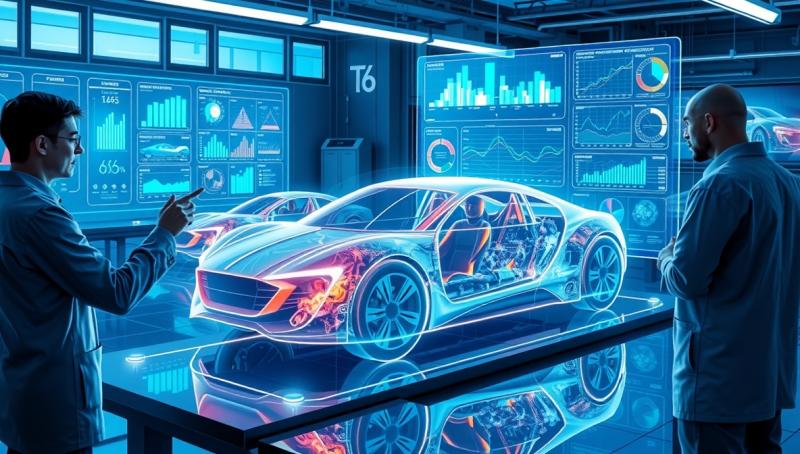
Assume a living atmosphere in which product manufacturing is undamaged and where supply setups are variable and automobiles can detect problems in their spare parts or systems. Digital Twin technology has now made this possible. In the automotive sector, the digital twin technology is customizing the testing, design, maintenance and manufacturing of vehicles. As per the latest survey, the automobile sector is expected to catch $73.27 by 2027. Multiple problems are faced by automakers like unexpected vehicle damages and costly revivals, disturbance in the supply chain due to manufacturing delays, and more. This article covers the way how digital twin technology is helpful for the automotive sector.
Knowing the Digital Twin Technology
Digital twin technology customizes the automotive sector by improving product advancement, allowing modernized examination, and evaluating vehicle performance throughout the lifecycle. This enables the hologram manufacturing of vehicles and their setups. This replicates real-world situations for autonomous vehicle examination, decreases the requirement for expensive physical models, propels design cycles, and assists predictive maintenance.
Digital Twin Methods that Bring Transformation in the Auto Sector
Product Design and Development
Quicker Modelling - Despite creating significant physical models, architects can examine and produce various imaginary prototypes, accelerating the development and design procedure.
Improved Decision-Making - Digital twins offer an imaginary atmosphere for engineers to examine different materials, configurations and elements, resulting in excellent decisions in the architectural phase.
Enhanced Sustainability - The requirement for energy and materials in the architectural procedure is reduced, advertising excellent environmental sustainability by decreasing the cost on physical models through software development.
Testing and Validation
Autonomous Vehicle Development - Autonomous driving is possible throughj digital twin technology. This allows automakers to replicate complicated driving pictures. This can also test advanced driver-support setups in a secure and imaginary atmosphere and teach self-driving algorithms.
Safety Testing - Crash examinations, airbag development depiction and other dangerous situations are handled by the digital twin technique without time-consuming and costly physical examinations.
Performance Replication - Producers can replicate how aerodynamics, a vehicle’s engine and other setups will perform under different situations, involving various road situations and weather, to evaluate total performance and fuel efficiency.
Functioning and Manufacturing
Predictive Maintenance - Digital twins can anticipate problems while requiring maintenance by evaluating real-time data from the vehicle and its elements. This enables tactical rather than responsive repairs and increases a product’s essential life.
Real-Time Control and Monitoring - The consistent evaluation of a vehicle’s performance is possible with Digital twins. This allows real-time improvements and adjustments to setup logic.
Fleet Management - Schedule charging, predictive maintenance needs and evaluating paths for electric vehicles and self-driving is done with Digital twins. Such technology assures reliable and seamless fleet functionalities.
Data Integration and AI
Integrated Data Platforms - Digital twins associate vehicle telemetry, AI prototypes and data from sensors. This offers an exclusive visual of the product throughout its lifecycle.
Continuous Improvement - Real-time details gathered from digital twins of incorporated vehicles enable consistent enhancement of vehicle performance and AI algorithms through over-the-air upgrades.
Advantages of A Digital Twin Technology for AutoMakers
A digital twin technology provides important benefits to automakers, increasing reliability and invention around every stage from design to after-sales service.
Major Benefits
Allows real-time optimization of making lines, vehicles and supply chains for enhanced quality control that finds faults before cars leave the manufacturing plant.
Anticipating maintenance utilizes sensor data to predict device damage. This decreases expensive downtime and unassumed repairs.
An imaginary model enables quick examination and replication of new designs. This accelerates advancement and decreases the requirement for physical models.
Evaluates and automates production procedures by recognizing bottlenecks and enhancing workflow efficiency, reducing functional prices.
Improves the association between engineering, design and production teams through distributed three-dimensional projects. This assures all shareholders operate with upgraded and appropriate details.
So, digital twin technology reviews how the auto sector manufactures, designs, examines and maintains vehicles. Automobile manufacturers obtain a robust device to accelerate invention, enhance protection, decrease prices and improve sustainability by producing imaginary copies of elements, cars and complete production setups. Digital twins make the complete lifecycle of a vehicle more reliable and consistent from real-time fleet management and smarter product design to predictive maintenance and autonomous vehicle evaluation. Digital twin technology also transforms the hospital sector through hologram healthcare. To know more about holographic displays, get in touch with the Vision3D customer care number. To learn more about Vision 3D, call now: (+91) 89719 53451.

Post Your Ad Here
Comments