Darjeeling First Flush vs Second Flush: A Complete Guide
When
tea lovers talk about the finest Indian teas, Darjeeling tea almost always comes
up. Often called the “Champagne of Teas.” Nestled in the foothills of the
Himalayas in West Bengal, India, Darjeeling tea has earned worldwide fame for
its delicate aroma, complex flavors, and limited seasonal harvests. What makes
it truly special is the way its taste evolves with each flush, or plucking
season. Among these, the Darjeeling first flush tea and the second flush tea are the most
celebrated, and understanding the difference between them helps tea lovers appreciate every sip with greater depth.
What
is a “Flush” in Tea?
A “flush” in tea refers to the season during
which the tea leaves are plucked. Because the tea plantation depends on weather and
soil conditions. Tea leaves develop different qualities depending on the time
of year. In Darjeeling, the primary flushes are:
First
Flush – harvested in early spring, usually from late February to April.
Second
Flush – harvested in late spring to early summer, typically May to June.
Monsoon
Flush – harvested during the rainy season, July to September.
Autumn
Flush – harvested in October to November.
Of
these, the first and second flushes are the most prized for their unique
flavors and aromas.
Darjeeling
First Flush Tea
Harvesting
Season
The
first flush begins just after winter dormancy, when new shoots emerge on the
tea bushes in late February or March. The plucking continues until April,
depending on the weather. Because these leaves are the first growth of the
year, they are extremely tender and delicate.
Appearance
First
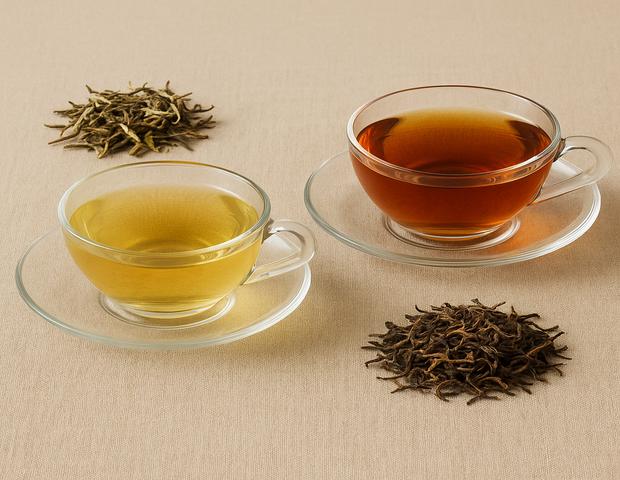
flush teas are often light greenish or golden in dry leaf form. Once brewed,
the liquor is pale golden, sometimes leaning toward light amber.
Flavor
Profile
Delicate
and Floral: The first flush is often described as having a subtle, almost
ethereal quality.
Astringent
and Fresh: Because the leaves are young, they produce a brisk and lively cup
with a fresh, grassy undertone.
Muscatel
Hints: While less pronounced than in the second flush, some early hints of
muscatel (a grape-like flavor) can be detected.
Aromatic
Complexity: Notes of wildflowers, citrus, and fresh-cut grass are common.
Brewing
Notes
To
fully appreciate the delicacy of a first flush, it is best brewed at a slightly
lower temperature (around 80–85°C or 175–185°F) for 2–3 minutes. Over steeping
can bring out bitterness.
Darjeeling
Second Flush Tea
Harvesting
Season
The
second flush occurs from May to June, when the tea bushes have had time to
recover and absorb more nutrients from the soil and warmer weather. The leaves
are slightly larger and more mature compared to the first flush.
Appearance
Second
flush teas have a darker, more coppery appearance in their dry form. When
brewed, the liquor ranges from amber to deep orange, richer than the pale tones
of the first flush.
Flavor
Profile
Muscatel
Character: The hallmark of the second flush is its pronounced muscatel flavor—a
complex taste reminiscent of ripe grapes, stone fruits, and sometimes honey.
Full-Bodied:
Compared to the first flush, the second flush has a richer, rounder mouthfeel.
Balanced
Sweetness: Notes of caramel, roasted nuts, or malt may emerge, balancing out
the briskness.
Mature
Aroma: The fragrance is deeper, with fruity and woody undertones.
Brewing
Notes
The
second flush can withstand higher temperatures (90–95°C or 194–203°F) and
slightly longer steeping times (3–4 minutes). Its robustness makes it more
forgiving than the delicate first flush.
Which
One Should You Choose?
Choose
First Flush if you prefer:
- Light, refreshing teas with a floral bouquet.
- Briskness and a clean finish.
- A tea that feels like spring in a cup—fresh, youthful, and subtle.
Choose
Second Flush if you prefer:
- A richer, fuller cup with fruity notes.
- The famous muscatel flavor unique to Darjeeling.
- A tea that pairs well with both sweet and savory foods.
Many
tea drinkers enjoy both flushes, switching according to mood or season—lighter
first flush in spring and summer, and robust second flush in cooler months.
Why
Both Flushes Are Special
What
makes Darjeeling tea remarkable is not just the flush but the terroir. The cool
Himalayan climate, unique soil composition, and altitude create conditions that
cannot be replicated elsewhere. Both first and second flush teas express this
terroir in their own ways—one as a delicate prelude, the other as a grand
performance.
Tea
estates in Darjeeling often take great care in hand-picking and processing
these leaves to maintain quality. This artisanal effort, combined with seasonal
differences, ensures that each flush remains distinct and celebrated.
Final
Thoughts
Comparing
Darjeeling first flush and second flush is like comparing spring blossoms with
summer fruit. One delights with its youthful freshness and subtle floral charm,
while the other captivates with richness, complexity, and the signature
muscatel character.
Neither
is objectively better—it depends on what you enjoy in a cup of tea.
Connoisseurs often treasure both, savoring the first flush for its ephemeral
delicacy and the second flush for its bold maturity. Together, they showcase
the remarkable range of flavors that Darjeeling tea has to offer, making it
truly deserving of its title: the Champagne of Teas.

Post Your Ad Here
Comments