The Role of AI in Reshaping Product Innovation
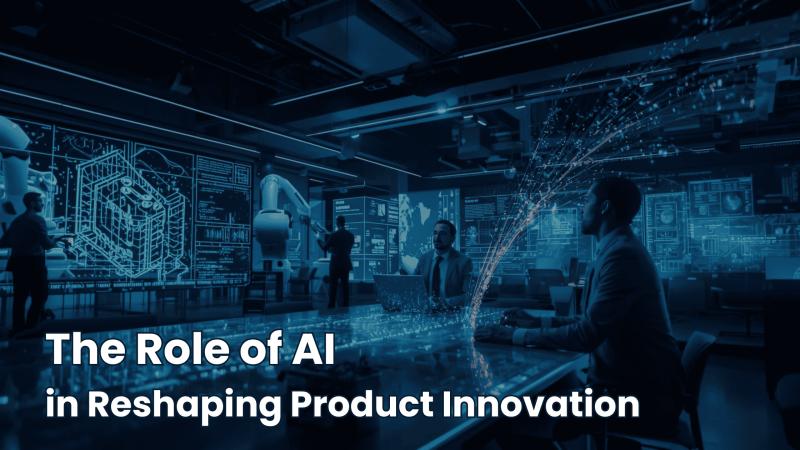
Innovation has always been the fuel of business growth, but the way products are created, tested, and launched is changing faster than ever. Artificial Intelligence (AI) is no longer just a supporting tool. It has become the driving force behind modern product innovation. From smarter market insights to personalized experiences, AI is rewriting the rules of how companies bring ideas to life.
This shift is more than just adopting new technology. It represents a mindset change in how businesses approach creativity, efficiency, and customer needs.
What Does AI Mean for Product Innovation?
In the past, product innovation followed a linear process: market research, design, prototyping, testing, and launch. While effective, this model often took months or even years. AI changes this cycle by providing real-time insights, predictive analytics, and automation at every step.
It helps businesses move from being reactive to proactive. Instead of waiting for customer feedback, companies can anticipate market needs before people even ask for them. This agility is one of the main reasons AI is becoming indispensable in today’s product strategies.
Key Ways AI is Transforming Product Innovation
Smarter Market Research and Consumer Insights
AI tools can analyze vast amounts of customer data, from purchase history to online behavior. This allows companies to uncover patterns and preferences quickly. Instead of guessing what consumers want, businesses can identify unmet needs and design products tailored to specific audiences. This reduces the risk of launching products that do not resonate.
Accelerating Product Design and Prototyping
Generative AI is changing the way products are designed. With its ability to create multiple design iterations in seconds, teams can test different concepts rapidly. 3D modeling powered by AI also allows engineers and designers to simulate real-world performance without building physical prototypes, cutting both costs and development time.
Predictive Analytics for Demand Forecasting
Launching a new product always involves uncertainty, but AI helps reduce the guesswork. Predictive models analyze historical data and current market signals to forecast demand with higher accuracy. This ensures that companies produce the right quantity, optimize inventory, and avoid costly overproduction.
Enhancing Customer-Centric Development
Consumers now expect personalization at every stage. AI makes it possible to build adaptive features within products, whether it is a smart home device that learns user habits or a mobile app that recommends tailored services. By focusing on personalization, businesses create stronger emotional connections with customers.
AI in Supply Chain and Manufacturing
AI is also reshaping the production side of innovation. Predictive maintenance reduces machine downtime, computer vision improves quality control, and smart logistics streamline distribution. These advancements ensure that innovative products are not only designed well but also delivered efficiently.
Benefits of Using AI in Product Innovation
Faster time-to-market with shorter design and testing cycles
Cost efficiency by reducing the need for physical prototypes and minimizing operational waste
Customer alignment through products developed with real consumer insights
A competitive edge by adopting trends earlier and building stronger differentiation
Challenges and Considerations
While AI is transforming product innovation, it is not without challenges. Businesses must ensure that the data fueling AI is accurate and unbiased to avoid flawed outcomes. Data privacy regulations also add another layer of complexity.
Another challenge is the talent gap. Many organizations struggle to find professionals skilled in both product innovation and AI technologies. Finally, companies need to balance automation with human creativity. AI can suggest solutions, but it cannot replace human intuition and empathy in product design. which is why ai in legacy software modernization has become an essential step before adopting advanced AI-driven innovation strategies.
Future Outlook: What’s Next for AI and Innovation?
The future of product innovation with AI looks promising. Expect to see more sustainable design approaches where AI helps minimize environmental impact through optimized material use. Generative AI Integration will become standard across industries, helping businesses experiment with bold ideas at a fraction of the cost.
Additionally, organizations will rely more on AI Transformation Services to embed intelligence into every part of their innovation process. Even traditional companies will embrace modernization, becoming critical to keeping older systems relevant in a fast-changing digital ecosystem.
Conclusion
AI is not just reshaping product innovation, it is redefining it entirely. By combining data-driven insights, predictive analytics, and automation, businesses can design products that are faster to market, more customer-centric, and better aligned with future needs.
The companies that succeed will be those that view AI not as a tool but as a partner in innovation. As industries continue to evolve, the role of AI will only grow stronger, making it one of the most powerful drivers of creativity and progress in the modern business world.

Post Your Ad Here
Comments