Air Purifiers vs. Indoor Plants: Which Cleans Your Air Better?
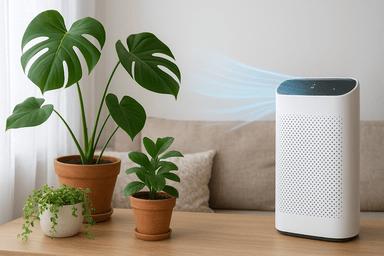
The quest for cleaner indoor air has never been more important. With growing concerns about allergens, germs, and pollution inside homes and offices, people are looking for effective solutions. Two popular options often come up: air purifiers and indoor plants. While both contribute to air quality, their effectiveness varies significantly.
Do Indoor Plants Really Purify the Air?
Indoor plants add beauty to a room and may slightly reduce certain pollutants. Some studies suggest plants can absorb toxins like formaldehyde and benzene. However, the scale is very limited. To make a noticeable difference in air quality, you’d need dozens of plants in a single room—something that’s not practical for most households.
Plants are excellent for mental well-being, stress reduction, and aesthetics, but when it comes to serious air purification, they simply can’t compete with modern technology.
Why Air Purifiers Are More Effective
Unlike plants, air purifiers are designed to capture fine particles, allergens, and even microscopic pathogens. A high-quality air purifier to kill germs uses HEPA and activated carbon filters, and in some cases, UV or medical-grade technology to neutralize harmful microorganisms.
Air purifiers offer:
-
Comprehensive filtration: Traps dust, pollen, mold spores, and pet dander.
-
Pathogen control: Specialized filters target bacteria and viruses.
-
Odor removal: Activated carbon absorbs chemical pollutants and smoke.
-
Consistent performance: Works continuously, unlike plants that only have a mild effect.
Air Purifiers for Viruses and Bacteria
During cold and flu seasons—or in households with compromised immune systems—an air purifiers for viruses and bacteria system can be a game changer. These devices are built with medical-grade filters to reduce airborne germs, providing cleaner and safer air for the whole family.
Choosing the Right Purifier for Germ Protection
Not all purifiers are the same. If your goal is to combat airborne pathogens, choosing an air purifier for viruses and bacteria ensures you’re targeting the right contaminants. Look for:
-
True HEPA filters (captures 99.97% of particles down to 0.3 microns)
-
Activated carbon (absorbs gases and VOCs)
-
UV or specialized filtration for germ neutralization
The Best Option for Peace of Mind
If you want a solution beyond aesthetics, investing in an air purifier that kills germs and viruses is the most reliable choice. While plants provide small benefits and psychological comfort, a virus air purifier ensures cleaner, healthier air every hour of the day.
FAQs
1. Are indoor plants enough to clean indoor air?
Indoor plants can slightly improve air quality, but they are not effective enough to eliminate germs, allergens, or chemical pollutants.
2. Do I really need an air purifier if I already have plants?
Yes. Plants are helpful, but they cannot filter viruses, bacteria, or fine particles like a purifier can.
3. What’s the best air purifier for health protection?
A medical-grade unit such as an air purifier to kill germs is best for reducing pathogens and harmful pollutants indoors.
4. Can air purifiers help during flu season?
Absolutely. Air purifiers for viruses and bacteria significantly reduce airborne germs, helping prevent the spread of seasonal illnesses.
5. How often should I replace air purifier filters?
HEPA filters typically need replacing every 12 months, carbon filters every 2–5 years, and pre-filters every 3 months for best performance.

Post Your Ad Here
Comments