SEO Case Study: Optimizing Site Hierarchy For New England's Largest Real Estate Portal
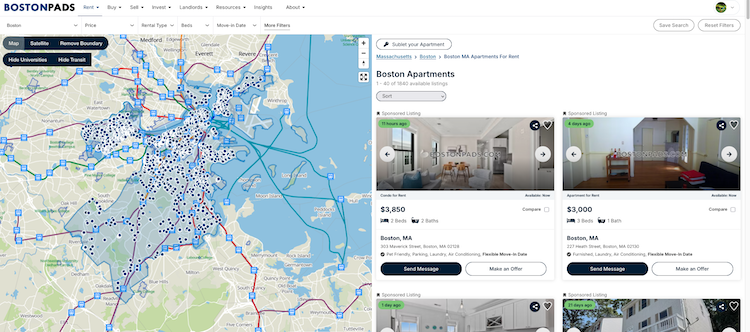
When I started working on Boston Pads’ website, my objective was clear: increase organic traffic for apartment search keywords in Boston. This was my path to providing a positive ROI for the client, and it would be the make or break of a successful campaign.
One of the key strategies was optimizing on-site SEO. I created a page hierarchy under the main Boston apartments landing page to target long-tail keywords. These subpages would combine to strengthen the page authority of the parent page while creating unique listing pages to target more specific searches such as ‘1 bedroom Boston apartment’ or ‘pet friendly boston apartments’. Here’s a behind-the-scenes look at how I approached it.
Step 1: Establish a Clear Page Hierarchy
The first thing I did was audit the site’s existing structure. For a city like Boston, it was crucial to organize content logically.
/boston-apartments/ – The main landing page for all Boston apartment listings
/boston-apartments/studios/ – Listings specifically for studio apartments in Boston
/boston-apartments/pet-friendly/ – Listings for pet friendly Apartments in Boston
/boston-apartments/no-fee/ – Listings for Boston Apartments with no broker’s fee
This hierarchy mirrors how users search for apartments. People often look for a city first, then a more specific apartment query for more relevant results. Structuring the site this way not only improves user experience but also sends clear signals to search engines about the content’s relevance and taxonomy.
Step 2: Optimize Each Page Around a Specific Keyword
Next, I focused on keyword targeting. Each page in the hierarchy had a unique focus:
The main /boston-apartments/ page targeted broad terms like “Boston apartments” and “apartments in Boston.”
Child pages targeted more specific keywords like “furnished apartments in Boston”
I made sure the page titles, meta descriptions, headings, and body content naturally incorporated these keywords while still being reader-friendly.
Step 3: Internal Linking to Strengthen Site Authority
Internal links are a powerful but often underutilized SEO tactic. I ensured that the main Boston apartments page linked to all subpages and vice versa. For example, on the Boston 1 Bedroom apartments page, I included links back to the main /boston-apartments/ page and to nearby neighborhoods. This not only improves crawlability for search engines but also keeps users exploring the site longer.
Step 4: Leverage Content to Answer User Questions
SEO isn’t just about keywords—it’s about solving problems. I added frequently asked questions and neighborhood descriptions that answer common questions renters have, such as “What’s the average rent for a 1 bedroom apartment in the South End?” or “How many 2 bedroom apartments in Allston are available?” By structuring content in a hierarchy under their parent pages, each page had a clear purpose and provided value to users.
Step 5: Monitor Performance and Iterate
After implementing these changes, I tracked traffic, rankings, and user engagement. Performance clearly indicated improvement in keyword rankings so the same logic was applied to the neighborhood listings pages such as South Boston apartments and Fenway apartments.
Pages with clear hierarchy, targeted keywords, and internal linking consistently outperformed unoptimized pages. Even more interestingly, the parent pages seem to benefit from having child pages placed underneath them. So the result was not only showing improved rankings and traffic for long tail keywords, but also for the more broad queries that the parent pages were optimized for.
Key Takeaways
Working with a site like Boston Pads taught me that effective on-site SEO starts with structure. Organizing content into a logical hierarchy, targeting specific keywords for each page, linking internally, and focusing on user intent creates a strong foundation for long-term search visibility.

Post Your Ad Here
Comments